Politics & Government
Fairfax County Ends Tree Commission In 9-1 Vote, Restructures EQAC
Fairfax County supervisors voted 9-1 to dissolve the Tree Commission and unanimously restructured EQAC into a new panel.


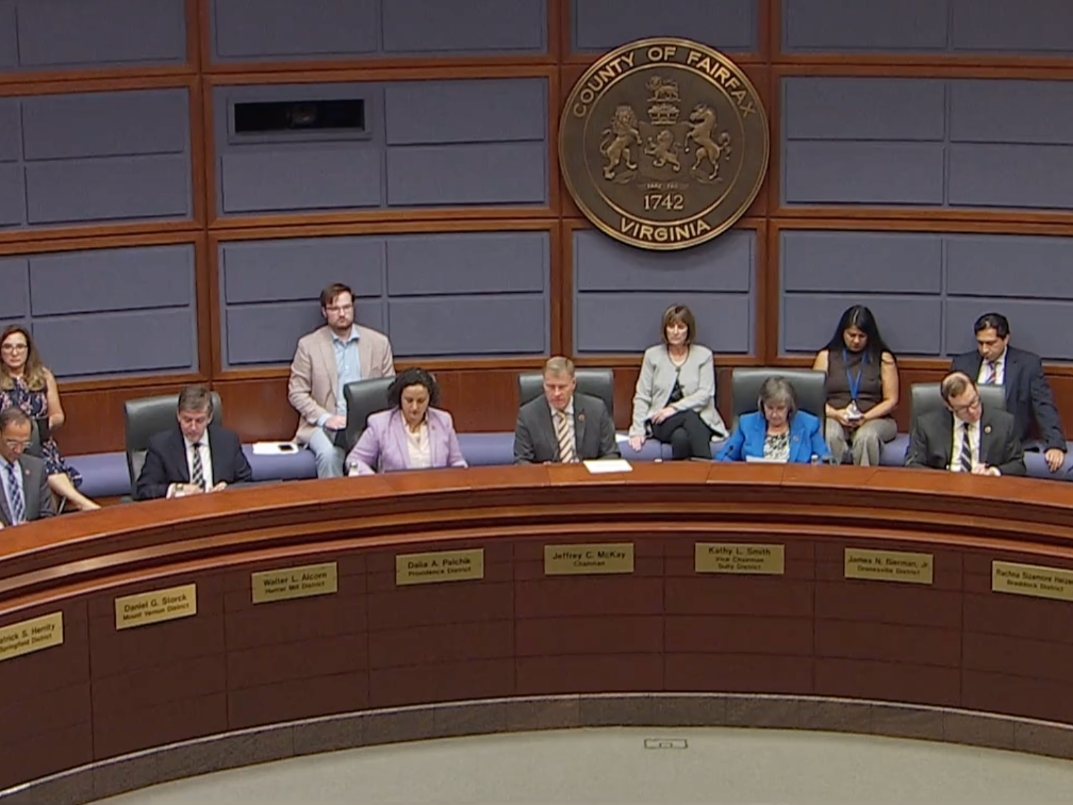
FAIRFAX COUNTY, VA — The Fairfax County Board of Supervisors voted 9-1 Tuesday to dissolve the county’s 53-year-old Tree Commission before unanimously restructuring another longtime advisory group into a new Fairfax County Environmental Commission.
Supervisors repealed Article 9 of Chapter 122 of the Fairfax County Code, which established the Tree Commission and assigned it responsibilities involving the county’s urban forest. The new Environmental Commission will assume an advisory role on trees and natural resources, although the adopted bylaws do not carry forward each of the Tree Commission’s specific duties.
In a follow-up action, the board renamed the Environmental Quality Advisory Council, or EQAC, and approved bylaws for the new 15-member commission. All terms of members appointed to EQAC before Tuesday expired with the board’s action.
Find out what's happening in McLeanfor free with the latest updates from Patch.
What The Board Approved
Sully District Supervisor Kathy Smith moved to repeal the Tree Commission provisions, and Board Chairman Jeff McKay seconded the motion. McKay, Smith and supervisors Jimmy Bierman, Pat Herrity, Andres Jimenez, Rodney Lusk, Dalia Palchik, Rachna Sizemore Heizer and Dan Storck voted for the repeal. Hunter Mill District Supervisor Walter Alcorn cast the only opposing vote. No supervisor abstained.
Smith then moved to adopt the resolution restructuring EQAC and approve the new bylaws. Palchik seconded that motion. All 10 supervisors — McKay, Smith, Alcorn, Bierman, Herrity, Jimenez, Lusk, Palchik, Sizemore Heizer and Storck — supported the second motion by voice vote, with no opposition or abstentions recorded.
Find out what's happening in McLeanfor free with the latest updates from Patch.
The new Environmental Commission will include one representative from each of Fairfax County’s nine magisterial districts, one member appointed by the board chairman, three at-large members and two students. At least two seats must be filled by people with experience or expertise in forestry and natural resources.
The panel will meet monthly except in August and December. Its annual work plan must include trees and natural resources as a focus area.
The commission will also prepare a concise annual report based on its work plan. That reporting structure replaces EQAC’s broader Annual Report on the Environment, according to the board package.
The director of the county’s Office of Environmental and Energy Coordination will appoint a temporary chair until the new commission elects officers.
Supervisors Debate Whether Tree Focus Will Be Diluted
Alcorn said eliminating a 15-member commission dedicated to trees and replacing it with two reserved seats for forestry and natural resources would inevitably reduce attention given to trees.
“I don’t think there’s any way around the reality that eliminating the Tree Commission deprioritizes trees,” Alcorn said. “I don’t know how you could look at it any other way, because in the environmental world, expertise is everything.”
Alcorn said the reorganization risked replacing specialized advice from residents with a more generalized structure. He urged the county to preserve expertise as it reorganizes its boards, authorities and commissions.
Other supervisors argued that the broader panel would put tree specialists at the center of discussions about interconnected environmental issues.
McKay rejected suggestions that the change would weaken the county’s environmental commitments. He said the new panel could better weigh environmental priorities that sometimes compete with one another.
Also See ...
- Fairfax Board Allows Early Site Plan Review For 1,900-Home Prosperity Project
- Fairfax County Honors Reston Multicultural Festival’s 25th Anniversary
- Fairfax Revises Tree Commission Plan Before Tuesday’s Hearing
“This is a structural change that does absolutely nothing to change the environmental goals of this board that we are steadfast in supporting,” McKay said.
Bierman questioned county staff about whether the new commission could continue advising supervisors on the urban forest, reviewing government actions affecting trees, recommending changes to the Tree Action Plan, conducting outreach and creating a tree-focused subcommittee. Staff said the commission could perform those functions and that repealing Article 9 would not change the county’s other tree-protection requirements.
Storck supported the consolidation but said the new commission should consider adding explicit attention to conservation, natural resource restoration, invasive plants and animals and wildlife and habitat. He also questioned restrictions in the bylaws concerning the number of committees the commission could create.
Environmental Groups Opposed Dissolution
Six speakers addressed the board during Tuesday’s public hearing, with several arguing that the new structure would reduce independent oversight, specialized expertise and opportunities for residents to participate.
Tree Commission Chair Barbara Ryan said in prerecorded testimony that the commission’s exclusive attention to the urban forest had been its strength for more than five decades. She urged the board to require the successor panel to discuss trees at every meeting, preserve the Tree Commission’s existing reporting and outreach responsibilities and reserve at least three seats for people with tree or natural-resources expertise.
Lynne Mulston, president of the Reston Citizens Association, said the projected savings were small compared with the value of independent advice on land use, stormwater, infrastructure and climate decisions.
“Saving $20,000 while reducing independent oversight would be penny-wise and pound-foolish,” Mulston said.
Jennifer Falcone, secretary of Citizens for Great Falls, acknowledged that the county had increased the reserved forestry seats from one to two but said that remained a steep reduction from a 15-member commission focused entirely on trees.
County staff recommended the change after concluding that parts of the Tree Commission’s work overlapped with EQAC. Dissolving the Tree Commission is projected to save about $20,000 in meeting-facilitation costs and approximately 600 staff hours annually. The more concise reporting planned for the Environmental Commission is expected to save another 400 staff hours annually, though the board package identified no direct financial savings from the EQAC restructuring.
The Tree Commission was established in 1973. EQAC was established in 1971 and received its original charter in 1972. Smith said advisory bodies have changed throughout the county’s history as environmental needs and government operations evolved.
“Change has happened over time, and it’s what keeps us moving forward,” Smith said.
Get more local news delivered straight to your inbox. Sign up for free Patch newsletters and alerts.