Politics & Government
VA Judge Blocks Redistricting Amendment, State To Appeal
A VA judge has ruled a redistricting amendment is unconstitutional, citing misleading ballot language; the attorney general will appeal.


Loading...
TAZEWELL, VA — A Tazewell County Circuit Court judge has blocked a constitutional amendment that sought to redraw Virginia’s congressional districts from being certified, ruling Wednesday that the legislative process used to advance the measure was unconstitutional.
However, state Attorney General Jay Jones told WJLA that his office would immediately appeal the judge's decision.
Judge Jack Hurley ruled in favor of the Republican National Committee and other plaintiffs, effectively neutralizing the results of a special election held just one day prior. The court’s decision permanently enjoins state and local election officials from certifying the April 21 results or taking any action to implement the new maps.
Attorneys for the Commonwealth of Virginia objected to the ruling, citing sovereign immunity and arguing that the relief granted was "outside the scope of the Plaintiffs’ Complaint." The court denied the state's motion to stay the judgment pending an appeal.
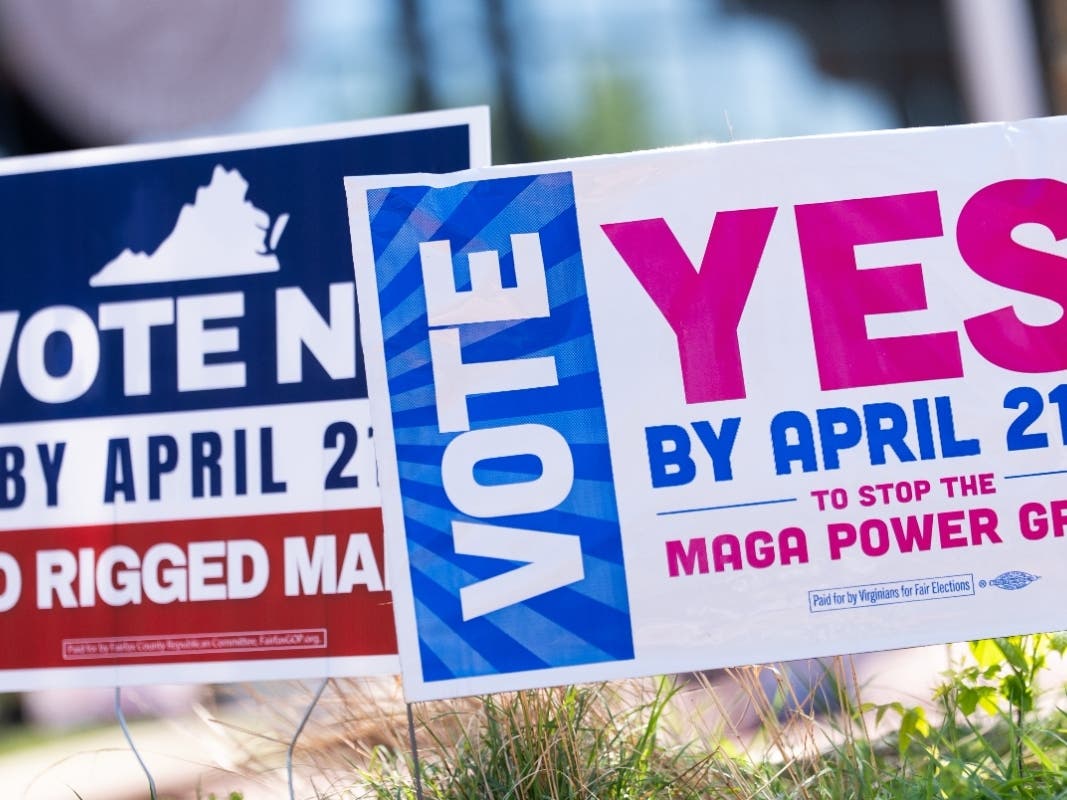
Ultimately, the Virginia Supreme Court will decide whether Democratic lawmakers violated procedural rules when they referred a constitutional amendment to the ballot authorizing the new U.S. House districts that could help Democrats win as many as four additional seats in the state. If so, that could invalidate the map voters narrowly approved Tuesday.
President Donald Trump on Wednesday tried to undermine the Virginia result by leveling groundless accusations of fraud similar to ones he made after losing the 2020 presidential election. He called the Virginia vote “RIGGED” and “Crooked” in a post on his social media site and added, “Let’s see if the Courts will fix this travesty of 'Justice.'”
Wednesday's ruling stopping certification came from a separate case that Republicans filed with the same lower court judge, whose initial ruling against the initiative was put on hold by the state supreme court.
The biggest legal wild card is held by the U.S. Supreme Court. Its conservative majority could throw out a requirement under the Voting Rights Act that in areas with a large minority population, mapmakers draw districts that are more favorable to the election of minority candidates.
More On Judge's Ruling
In a detailed ruling, the court found that the General Assembly bypassed several mandatory constitutional hurdles. Specifically, the court declared that House Joint Resolution 6007 violated state law because it represented an "invalid expansion of the General Assembly’s call to the Governor for the 2024 Special Session."
Furthermore, the ruling stated that the amendment failed to meet the requirements of the Virginia Constitution, which mandates that such measures be passed by two different sessions of the General Assembly with an intervening "ensuing general election of the House of Delegates." According to the court, that election "cannot occur until 2027."
The court also took aim at the specific legislation, HB 1384, which set the ballot language for the referendum. Judge Hurley wrote that the bill violated the Constitution’s Submission Clause because it presented a "flagrantly misleading question to the voters" and failed to "accurately describe the proposed amendment as it was passed."
Other violations cited by the court included:
- Timing Violations: The amendment was submitted to voters for early voting on March 6, 2026, which the court ruled was "sooner than the required ninety days after passage."
- Procedural Errors: The legislation violated the Form of Laws Clause because it embraced "more than one object" and its title did not "accurately describe its subject matter."
- Local Prohibitions: The bill's requirement for specific satellite offices was deemed an unconstitutional attempt to enact "local, special, or private laws for the designation of places of voting."
The court found that if the results were certified, U.S. Representatives Ben Cline and Morgan Griffith "would be irreparably harmed by their districts changing at this juncture."
The Associated Press contributed reporting.
Get more local news delivered straight to your inbox. Sign up for free Patch newsletters and alerts.