Community Corner
Shelter And A Hot Meal: How Fairfax Churches Help As Hypothermia Shelters
Shelters and rotating Fairfax church sites host the hypothermia program, providing hot meals and shelter for those in need this winter.


FAIRFAX, VA — It hasn't been easy experiencing homelessness since 2017 for R.J., who lived under a giant tarp with about a dozen other people and stayed in the crowded Eleanor Kennedy Shelter in the Route 1 corridor.
But on this particular December evening, the Fredericksburg native enjoyed a hot meal and socially distanced shelter inside Fairfax Church of Christ. R.J. doesn't have to worry about finding a place to sleep during the colder months, thanks to Fairfax County's hypothermia program.
The initiative began in 2005, providing emergency shelter to ensure that homeless residents don't have to sleep outside during winter months. Facets, one of the local nonprofits serving the homeless in Fairfax County, has been involved with the program every step of the way.
Find out what's happening in Viennafor free with the latest updates from Patch.
Hypothermia involves the body losing heat faster than it can create heat due to prolonged exposure to the cold, causing a drop in the body temperature. Symptoms can include shivering, exhaustion, confusion, fumbling hands memory loss, slurred speech or drowsiness.
Severe hypothermia — when the body temperature falls below 84 degrees — can be fatal.
Find out what's happening in Viennafor free with the latest updates from Patch.
Joe Fay, the executive director of the nonprofit Facets, noted that Fairfax County's hypothermia program began in response to a few unhoused residents dying outside in the cold.
"The county said, 'We can't have this'," Fay said.
The hypothermia program was the second program Facets has started. The nonprofit began in 1988 with a nightly meals program serving central Fairfax County. Today, Facets provides a variety of services for residents who are homeless or experiencing poverty, including supportive housing apartments and food distributions.
During the COVID-19 pandemic, Facets has also stepped up to meet a growing demand for food assistance and runs a quarantine shelter for those needing COVID-19 isolation. Fairfax County's quarantine shelter program had been set to end in September, but it was extended through March 2022 due to the emergence of the coronavirus delta variant.
Areas covered by hypothermia program
Fairfax County's four major regions serving homeless people are the Falls Church/Bailey's Crossroads areas, Route 1 corridor, central and western Fairfax, and north county/Reston area. While there is a no-turn-away policy for homeless families all year, shelters become no-turn-away shelters for individuals during the hypothermia program.
In the Route 1 corridor, shelter is provided by the Eleanor U. Kennedy Shelter and Rising Hope United Methodist Church. Similarly in the Reston area, the Embry Rucker Shelter uses extra space to accommodate the hypothermia program in the winter.
The Bailey's Shelter serves people in the greater Bailey's Crossroads area and is open seasonally from Dec. 1 through March 31.
Central Fairfax County is the only region without an overnight shelter for homeless people. There is the Katherine Hanley Family Shelter for homeless families, and the Lamb Center is a daytime drop-in shelter providing essential services to guests. But homeless individuals do not have a shelter in this region, except during the hypothermia program.
R.J. feels safer in the Fairfax area hypothermia shelters compared to some past experiences as a homeless person. When living in the tarp with a group of people in the Route 1 corridor, he recalls it feeling unsanitary and unsafe. Inclement weather only added to the hardships.
"When it rained, it was pretty bad. When it got cold, it was even worse," he said.
After staying at the Eleanor U. Kennedy Shelter and Bailey's Shelter, R.J. is now living at the hypothermia shelter sites and visits the Lamb Center for necessities during the day. He called the Lamb Center a "blessing" for providing services such as clothing and showers.
Another hypothermia program participant, Sabre, has experienced homelessness and incarceration multiple times after leaving the foster care system at age 18. Living in a tent, the 27-year-old didn't think he needed the hypothermia program until one rainy night when his tent was soaked and he "was freezing."
After deciding to go to the hypothermia program, he got into housing late last year. But he is now back on the streets and using the hypothermia shelter again. His goals involve getting an ID card, getting help with alcoholism, and joining the Lamb Center's jobs program. He works occasional jobs to earn money and is on the waiting list for a permanent job.
R.J. and Sabre are a few of the hypothermia program participants in the central and western Fairfax areas. Faith community sites around Fairfax and Centreville host the program on a rotating basis. For the Facets program in central and western Fairfax, Fay said about 40 churches are participating, taking turns to host shelter over 18 weeks.
The Fairfax Presbyterian Church hosted the Facets program the week of Dec. 5, and Fairfax Church of Christ hosted the program during the week of Dec. 12. At Fairfax Church of Christ, church volunteers served meals while Facets staff oversaw the program. Sleeping bags were spaced out for social distancing inside the church's hall. In the other half of the hall, tables and chairs were set up for serving food and dining.
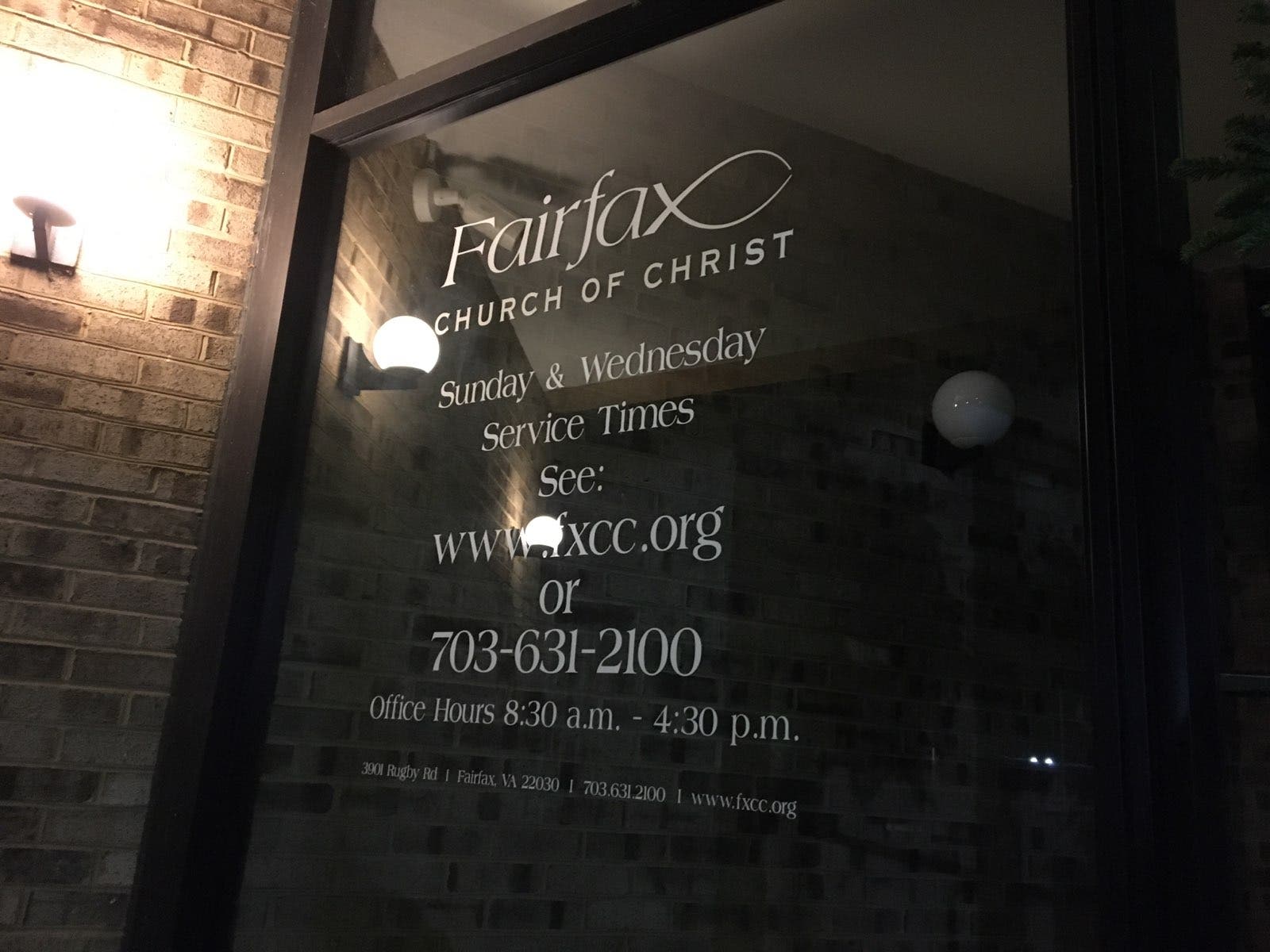
Because churches may use their facilities for in-person services, Fay says the space may need to be packed up each night of the hypothermia program. If the churches need the space on a particular day, the hypothermia shelter items will be put in a church storage room until the night.
Last year's program had been in one location — the county-owned former Container Store site in Tysons — rather than churches due to COVID-19. But churches still pitched in by providing meals during their scheduled weeks, Fay said.
"They were great," Fay said. "We said we'll staff, and they'll come with meals."
Fay noted that many of the participating churches have been doing so for 15 or 16 years. Newer participants often pitch in to take a few days for another church and get more involved with the program.
While nonprofits such as Facets see the hypothermia program as a necessary service, a common goal is a push for more housing opportunities with services homeless people need such as regular case manager check-ins.
"One thing we'd all like us to have is more permanent supportive housing," said Fay.
Fairfax County's hypothermia program served an estimated 215 guests each night in 2020. The 2021-22 program will run through March 31, 2022. Find out more about Fairfax County's hypothermia program here.
Anyone who sees a homeless person at risk of hypothermia is asked to call the police non-emergency number at 703-691-2131. Reports of a person in distress should be directed to 911.
Get more local news delivered straight to your inbox. Sign up for free Patch newsletters and alerts.