Community Corner
Mother Of Man Killed By Police Is Still Seeking Accountability
This year, Seattle's police watchdog cleared two officers in the 2019 shooting death of Ryan Matthew Smith. His mother is not convinced.


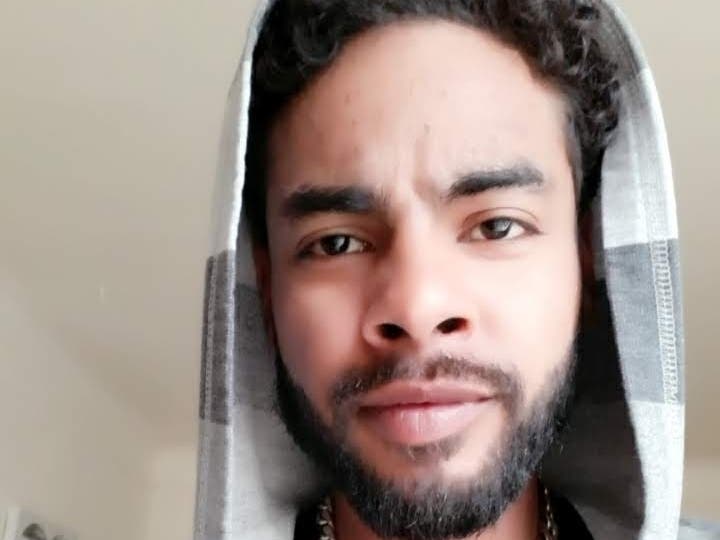
SEATTLE, WA — Rose Johnson had waited months to hear whether the two Seattle police officers who shot and killed her son would face any sort of disciplinary action. In February, the city's police watchdog released its findings, clearing everyone involved.
Ryan Smith, 31, died on May 8, 2019, after his girlfriend called 911 from their Queen Anne neighborhood apartment, saying Ryan was drunk, armed with a knife and threatening to kill her and himself.
She told the dispatcher she had barricaded herself in the bathroom and said "he needs help."
Find out what's happening in Seattlefor free with the latest updates from Patch.
Body-worn-camera video released by the Seattle Police Department shows one officer rushing down a hallway as two others yell commands to open the door and attempt to break it down. The door collapses, and Ryan can be seen standing in the hallway with his hands at his side.
The officers scream at Ryan to get on the ground and drop the weapon. He steps toward the doorway, and the police take a few steps back down the hallway. As he approaches the doorframe, the officers activate their gun-mounted lights and the shooting begins. About six seconds pass from the time the door breaks to the gunfire.
Find out what's happening in Seattlefor free with the latest updates from Patch.
Ryan's girlfriend is heard screaming "do not shoot!" — something she echoes after the shooting, in remarks quoted in the Force Investigation Report.
"I don't even want to be around you guys. You just killed my boyfriend because [he just] had a knife and that was it. You didn't need to kill him."
The two officers who fired shots were identified by police as Ryan Beecroft and Chris Myers. Myers has been a police officer in Seattle for almost 30 years and involved in three previous police shootings.
According to the FIT report, Myers fired eight rounds, and Beecroft fired twice. The King County Medical Examiner found 12 entrance wounds.
In January, the city's Office of Police Accountability concluded both officers had acted in a "lawful and proper" manner, rejecting Johnson's complaints that they had used unnecessary force and failed to follow de-escalation training.
"That's basically absurd," Johnson told Patch after the OPA findings were released this month. "It's morally outrageous. There is body cam that shows exactly what happened, and how it happened, and how quickly it happened."
"Just name one de-escalation technique they used on my son. Just one."
In interviews with the OPA and the police department's Force Investigation Team, one officer said he felt in "imminent danger of being killed or seriously wounded," and another said he perceived Ryan "rushed towards" them. Both officers claimed de-escalation methods or less-lethal force were not feasible, due to the proximity and cramped quarters of the hallway.
Johnson notes that toxicology reports showed her son was heavily intoxicated at the time of the confrontation.
"Worst-case scenario, my son should have just been taken to a mental health facility and had a hold put on him," Johnson said. "Then if you found charges to be brought on him, then that should have happened."
"They did not care about my son's life," Johnson said. "They killed him in six seconds. They shot him 12 times."
In his case summary, OPA Director Andrew Myerberg acknowledged Ryan's impairment but said the officers could not have known the extent when they arrived.
"The toxicology report later performed on the Subject showed that he had an extremely high blood alcohol content at the time he was shot," Myerberg wrote. "While this could explain why the Subject was non-responsive and, as [the officer] described, blankly stared at the officers, they did not and could not have known this at the time."
Myerberg goes on to conclude both officers' use of force was fully in line with the law.
"The questions of whether the officers could have waited longer for compliance, tried a different type of communication, used some other less severe force, or taken countless other actions will always be asked. However, SPD policy and the law prohibits OPA from engaging in exactly this type of hindsight analysis. The issue before OPA is not whether the officers could possibly have done something else, but whether what they did was objectively reasonable under the totality of the circumstances. While recognizing the great pain and anger that the Complainant and the Subject’s friends and family feel, OPA concludes that the use of deadly force here was objectively reasonable and, as such, that it was consistent with Department policy."
For Johnson, the OPA's conclusions fall flat.
"They would look like more decent human beings if they had at least said, 'Hey, we found some areas we can improve in,'" Johnson said. "At this point, just throw your SPD manual out, because you're not following any of it anyway."
"You're not helping them be better people, be better police officers, by constantly saying, 'Oh yeah, you just did everything perfect.'"
In particular, Johnson takes issue with Myers, who she notes was involved in police shootings in 2010, 2014 and 2017.
"I feel that it's wrong that this person has a badge," Johnson said. "He is using his power to basically dictate what people can live and what people can die."
Seattle police did not respond to a Patch request regarding Myers' history and employment.
Last year, Johnson told Patch she felt left behind by a complicated, bureaucratic system, where answers — if they ever arrive — are delivered by stoic messengers and that meaningful support is out of reach. Johnson says her application for victim's compensation was denied, something she intends to appeal, and that repeated phone calls and letters to Seattle's police chief and mayor have gone largely unanswered.
"I would be elated to talk about something [they] did right in the midst of this horrible, horrific tragedy," Johnson said. "They just won't."
Johnson worries her son's death could dissuade people in domestic violence situations from seeking help in the future, fearing an outsized police response.
"This is showing them that they can come to your house, they can break down your door, and they can kill your spouse if they feel the walls are too narrow, or the guy is standing too still," Johnson said.
Johnson says she does not have the money to file a lawsuit, and lawyers advised her winning a case would be unlikely.
"They don't feel they would ever recover anything, because the system is so locked up," Johnson said. "At this point, accountability for me would be for [Myers] not to be a police officer anymore."
Johnson says she received a short reply from Chief Carmen Best, a couple months after her son's death, expressing condolences and leaving the door open for a phone conversation after the investigation concluded. So far, her phone calls have not been returned. According to Johnson, Mayor Jenny Durkan's office has never responded to her emails or letters. Neither office provided a response to Patch regarding their communication with Johnson.
"If your city's officers decided to kill my son, at least have a freaking conversation with me about it," Johnson said.
"The only thing that matters to me is my son, and I'm never going to get him back. I just want somebody to stand up and do the right thing."
In September, a Seattle Community Police Commission task force outlined a series of recommendations to keep family members informed and advocate on their behalf after a loved one is killed by police.
"Many community members regard bureaucratic institutions such as police departments and city government to be complicated and difficult to navigate," the task force wrote. "Historically, when there has been an officer-involved death, community and family members have been unable to receive prompt answers to questions regarding the investigation process."
The CPC said two liaisons should be assigned after a use-of-force incident to provide timely information and guide families through the investigative process.
"In the event of a serious use of force that kills or incapacitates a person, SPD and the investigative body should treat family members and loved ones of that person as they would treat the loved ones of a victim of a violent crime," the task force wrote. "SPD should notify family members with the immediacy with which they would notify the family of a crime victim."
The task force also recommended establishing a fund to support families affected by police use of force. According to the CPC, its recommendations were sent to the City Council for consideration and potential implementation.
Get more local news delivered straight to your inbox. Sign up for free Patch newsletters and alerts.