Politics & Government
Wisconsin Governor Race: Tony Evers Defeats Scott Walker
A late surge of absentee ballots from Milwaukee County put Tony Evers over the top, denying Scott Walker a third term in office.


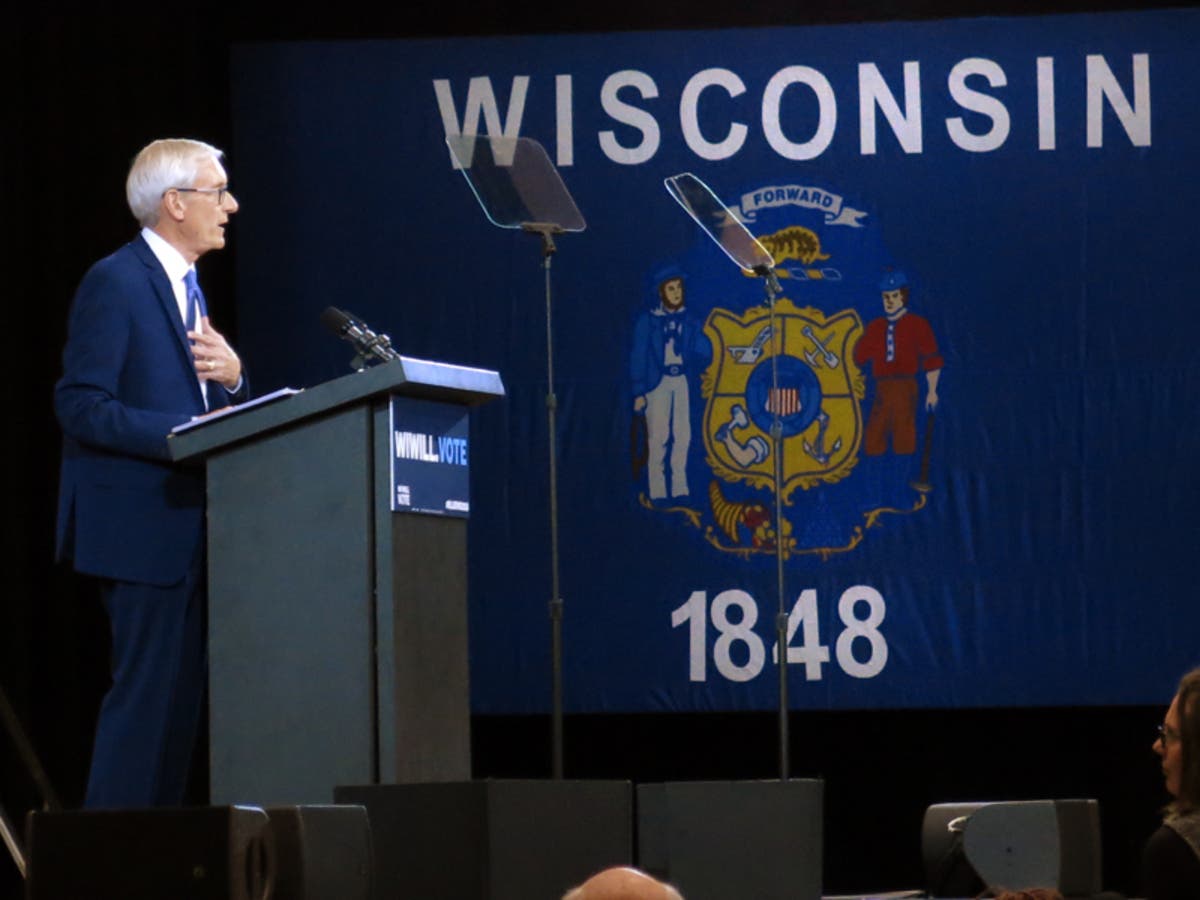
WISCONSIN – Fueled by a resurgent Democratic base, Tony Evers has defeated Gov. Scott Walker, denying the Republican incumbent a third term in office. The Associated Press called the race for Evers just after 1:30 a.m. CDT Wednesday.
Unofficial election night results showed Evers with 1,324,322 votes, or 49.6 percent of the vote, to Walker's 1,293,261 votes, or 48.5 percent of the vote, as of 2:30 a.m. Wednesday.
Wisconsin's race for governor between Evers and Walker appeared to be in a deadlock, until things took a dramatic and unexpected turn several hours after polls closed Tuesday. Early Wednesday morning, with more than 2.5 million votes tallied and 98 percent of all voting districts reporting, Evers led Walker by only 122 votes. Then, news came that Milwaukee County, a Democratic stronghold in the state, had yet to process nearly 50,000 absentee ballots.
Find out what's happening in Waukeshafor free with the latest updates from Patch.
"[Milwaukee County's] amount includes 36,000 in-person absentee ballots and 11,000 absentee ballots by mail. Those votes are expected to favor Democratic gubernatorial candidate Tony Evers, as Milwaukee has long been a Democratic-leaning city," Journal Sentinel reporter Dan Bice wrote early Wednesday morning.
And of those roughly 46,000 outstanding Milwaukee County absentee ballots, Evers took 38,674 and Walker 7,181, Bice reported. The result sent shockwaves through a community of Wisconsin voters who strained to stay awake in the early morning hours to find out who won.
Find out what's happening in Waukeshafor free with the latest updates from Patch.
BREAKING: Democrat Tony Evers wins election for governor in Wisconsin. #APracecall at 1:24 a.m. CST. @AP election coverage: https://t.co/miEWlbTVZW #Election2018 #WIelection
— AP Politics (@AP_Politics) November 7, 2018
According to observers, the news cast a pall over Walker's campaign party at the Ingleside Hotel in Pewaukee early Wednesday.
It wasn't too much later that Lt. Gov. Rebecca Kleefisch issued a statement to the public, saying that the fight was not over.
"We need to prepare ourselves for a long, drawn-out recount that the other side will surely seek. And so tonight I am telling you that we may need your support to help in that effort – resources and volunteers as we never have before," she said in a statement.
But as the Walker campaign angles for a recount, one of their own recount laws they passed in 2017 may be their undoing.
In Nov. 2017, Wisconsin legislators passed Assembly Bill 153, which stipulates that a candidate who loses an election by one percent or less can demand a recount.
Meanwhile, Walker's camp issued another statement early Wednesday, calling many of the ballots into question:
NEW: Statement from @ScottWalker adviser @BrianJReisinger suggests a long fight could be in store. pic.twitter.com/tYb7LoDRuL
— Patrick Marley (@patrickdmarley) November 7, 2018
As the night wore, Evers at least tried to make the best of the close race:
We’re passing the time with a little game of Euchre. pic.twitter.com/rrYHwFNFiF
— Tony Evers (@Tony4WI) November 7, 2018
The Money Race
Walker won the money race between he and his opponent. According to campaign finance reports at the end of October, Walker out-raised Evers this fall, helping him keep a sizable financial edge.
Sign up for Breaking News alerts and the latest Election Results
According to the latest figures released before election day, Walker raised $7.7 million and Evers raised $6 million between Sep. 1 and Oct. 22.
Walker has raised $32.8 million since winning re-election in 2014. Evers has collected $9.3 million after he dove into the Governor's race in April 2017.
According to the latest campaign finance figures, Evers' has big-time union support. The Wisconsin Education Association Council contributed $122,500. Other unions donating including the IBEW, DRIVE PAC, Wisconsin Pipe Traders Association, Carpenters Legislative Improvement Committee, North Central States Regional Council, and the United Association Local 118.
Sharp Differences
In Evers, Wisconsin voters had arguably the state's biggest opponent of ACT 10, the law Walker signed into law in 2010 that restricted collective bargaining for Wisconsin's public educators.
It's hardly a secret that Evers, the head of the Wisconsin's Department of Public Instruction, would work to repeal Walker's landmark legislation. Evers also supports repealing Walker's Right to Work legislation, which which bars mandatory union membership and prohibits unions or employers from requiring non-members to pay dues.
If Evers looks like the anti-Scott Walker in this election, it's likely because he supports unraveling even more Walker-era initiatives, such as the Wisconsin Economic Development Corporation. Evers has gone on record in favor of bringing back the state’s old economic development agency, the Department of Commerce. Walker created the WEDC in 2011 after taking office.
While Walker had been a proponent of lowering taxes revenues - even to the point of creating transportation budget shortfalls that affect state roads -Evers said that he is in favor of raising taxes in specific ways.
Evers said he is interested in an income tax code overhaul "to make the wealthy pay more while giving lower-wage earners a break." He's also been on-record in favor of raising gas taxes.
"It will be our goal to keep taxes reasonable in the state of Wisconsin," Evers said in a Capital Times report, noting that his budget priorities would differ from Walker's.
Walker counters, however, saying that Evers wants to raise the gas tax by a dollar per gallon, while also introducing $7 billion in new spending.
"Tony Evers' plan is more spending and higher taxes. He wants to spend more than $7 billion in new government spending. Who do you think is going to pay for that? You are," Walker said during a recent campaign stop in Waukesha. "Tony's taxes will cost us jobs. They're a recipe for a recession in the State of Wisconsin. We went through that recession - I don't want to go back to the days of double-digit tax increases, record deficits and job losses."
Evers, however, is incredulous that Walker would mis-characterize his taxing ambitions.
"The governor loves to distract from his record around roads," Evers said in a Cap Times article. "I have never said we’re going to raise the gas tax a dollar. It’s ridiculous. Who the hell would, frankly?"
Recent Patch coverage:
- 'Tell The Truth': Obama Rallies Wis. Dems To Get Out And Vote
- Two Polls, Two Results: Gov. Scott Walker Ekes Ahead, Lags Behind
- Walker Catches Evers Plagiarizing Parts Of Budget Proposal
- Is the Democratic 'Blue Wave' Real? Two Wisconsin Races Show Us
- Replacing Paul Ryan, And Other Big Wisconsin Election Questions
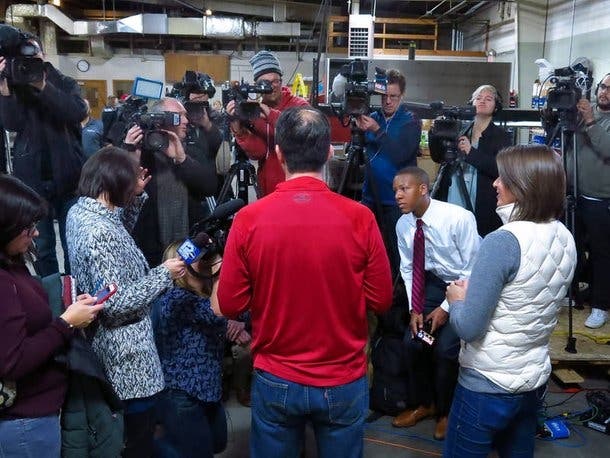
Walker's Toughest Race Yet
Wisconsin Gov. Scott Walker's political path has seemingly never been easy.
He survived mass protests that consumed the state capitol building after proposing and passing Act 10, which limited the ability of public workers of the ability to collectively bargain drew mass protests and demonstrations.
The next year, Walker survived his own recall election by defeating Democratic Opponent Tom Barrett in a rematch of the 2010 election.
Walker put forward a proposal to bring Voter ID to Wisconsin in January 2011. After five years, Voter ID survived many legal challenges before becoming law.
In January 2015, Walker set up a presidential campaign called "Our American Revival." Facing eroding political support and dwindling expenses, Walker suspended his campaign by September, and threw his support behind presumptive nominee Donald Trump.
He survived two John Doe investigations, both of which went on for years as prosecutors investigated Walker's recall campaign financing and at-work campaign activity by Walker staff members when he was Milwaukee County Executive.
Tuesday's election proved to be his toughest challenge yet - and the one he wouldn't win.
Article Images by Scott Anderson/Patch.com
Get more local news delivered straight to your inbox. Sign up for free Patch newsletters and alerts.