Crime & Safety
'He Thought He Was A Hero': Convict Denied Parole For 1988 West End Christian Standoff
The decision was handed down Tuesday by the Alabama Board of Pardons and Paroles for James Larry "Bud" Harvey, who is serving life in prison


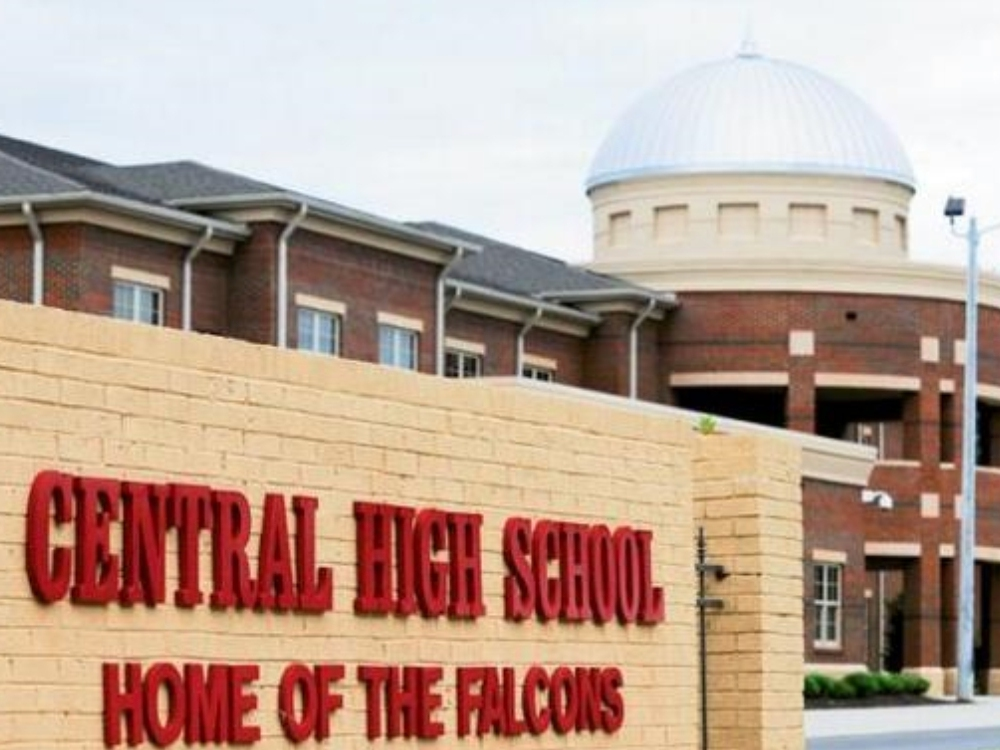
TUSCALOOSA, AL — Whitney Rose DuBose was in the first grade at West End Christian School the morning of Feb. 3, 1988, when two armed gunmen in ski masks prompted a standoff that captured the attention of an entire nation by holding roughly 60 students and adults hostage.
Click here to subscribe to our free daily newsletter and breaking news alerts.
That day, particularly the photos and video broadcast around the world, still lives in the memories of many even outside of Tuscaloosa and the state of Alabama. It was roughly two years after "Baby Jessica" revolutionized the approach to live news events by big networks like CNN and did much to shape the future of the Tuscaloosa Police Department.
Find out what's happening in Tuscaloosafor free with the latest updates from Patch.
"My mother can remember getting the phone call about what was taking place at WEC that day," DuBose told Patch years later. "She had just dropped my brother, Joseph, and I off at school for the day. As panicked as she was, she knew that God and [Assistant Police Chief Ken] Swindle had it all under control."
And 35 years later, the state of Alabama on Tuesday once again denied parole for the Tuscaloosa man serving a life sentence for the standoff that made a national hero out of Swindle, who would go on to be the longtime police chief for the city.
Find out what's happening in Tuscaloosafor free with the latest updates from Patch.
The decision was handed down Tuesday by the Alabama Board of Pardons and Paroles for James Larry "Bud" Harvey, who is serving life in prison for kidnapping.
"The parole board was real good about listening to everything," Swindle told Patch after attending the hearing Tuesday morning in Montgomery with others who were directly impacted by Harvey's actions that rainy February day. "We gave [the parole board] the perspective of a parent of a victim in the school and what it did to the community about just shutting it down and how many thousands of dollars were spent. He just held the City of Tuscaloosa hostage for a month with all of the stuff for his trial and, all of a sudden, we were all over national news. We have never had news media converge on us like that until that day."
Harvey is 77 years old as of the publication of this story and will not see his parole brought up for reconsideration again until he is 83.

It was a rainy Tuesday morning in 1988 when Harvey and another man whom Harvey had initially forced to assist him entered the school in ski masks with semiautomatic rifles and multiple other guns. The standoff lasted 12 hours and was one of the first major live news stories to command a captive global audience during the earliest years of the 24-hour news cycle.
Assistant Chief Swindle was the lead negotiator on the case and news cameras from all over showed him speaking with Harvey as the kidnapper wielded an AR-15-style assault rifle. One news report said Harvey had over 2,000 rounds of ammunition and was angry with various broad issues relating to the federal government and homelessness.
With him for a brief time was 42-year-old John Rhodes, who had been offered $300 at an area unemployment office to help Harvey in his mission, but who ultimately turned himself over to police a few hours after the standoff began.
"We were just so thankful how it ultimately turned out when it was over," Swindle told Patch. "Because when you look around at that time, [Harvey] saw in North Carolina or South Carolina, there had been a school situation and that's where he saw himself being a hero. At the end of the day he thought he was a hero and was going to go on talk shows and he was just making a statement to take care of the kids."
Still, Swindle recalled one point where he learned Harvey had explained to a small child the exact physical details of what would happen to their body if he shot them in the chest with his semiautomatic rifle — a small entry-wound and a large, gruesome exit-wound.
"As the day went on and we negotiated with him, I built trust with him and I got to believing in more things I was doing, and would do, and how he would respond to me," Swindle said of his tactics that day. "We would swap pizza for kids, a TV for kids, and we just established a rapport as the day went on."
Bravery was displayed in abundance by Swindle and others that day, but it's worth noting that the seasoned lawman was careful not to make the situation worse or compromise the trust he had slowly built with Harvey.
"The only reason he eventually came out was he thought he was gonna get a book deal and go on Jay Leno and talk shows," Swindle said. "He was extremely political in his motives and, even though he was jumping around and carrying on, at one point he asked if I was a Republican or Democrat? So you had to watch what you answered so as not to set him off. I told him 'I like some Republicans and like some Democrats, but I'm for the person first,' and he seemed to like that answer."

And from that morning until around 8:30 p.m. that night, negotiations dragged on as Harvey's demands became more eccentric, with the situation eventually culminating in Alabama Gov. Guy Hunt honoring Harvey's request for a pardon hand-delivered via videotape by a law enforcement officer from an unspecified agency.
While Hunt did indeed provide the video pardon, it was ultimately ruled that the pardon was given under duress, thus determined to be invalid and not legally binding.
News camera footage captured the moment when Harvey finally surrendered to police after numerous hostages had been freed. In the grainy film, Harvey is seen walking out of the door and handing the semiautomatic rifle to Swindle, before the celebrated negotiator and future Tuscaloosa Police chief gave the weapon to another officer and sprung into action.
Clad in a white dress shirt and red necktie, Swindled sported an intimidating frame at 6'4" and, along with the help of another officer, slammed Harvey to the ground as cameras rolled to capture the moment.
Of the moment Harvey was dragged to the ground, the late Tommy Stevenson, former associate editor at the Tuscaloosa News, remarked in 2005: "[Swindle] looked like Jim Brown in ‘The Dirty Dozen,’ or an NFL linebacker."
Swindle told Patch that, unbeknownst to many who saw the take down, the tactic of getting physical and having bodies surrounding Harvey was as much for the suspect's safety as that of the children and adults inside the school. This was due to murmurs that parents in the community were going to go home and get their weapons to exact justice on the kidnapper themselves.
"We had talked and met outside right before that," Swindle said. "Harvey would check me each time and, for a long time, he wouldn't let me come in and wouldn't let me go back out, afraid I'd get a gun or handcuffs and come back. He would always check me. And I had went out and we developed a plan that when we got him to the door and got him to step out, that [Tuscaloosa defense attorney] Bob Prince and others were going to pull the door back closed when I took him down so if anything happened he couldn't rushed back in."
The plan went off without a hitch and Harvey was quickly wrestled to the ground, before being shuffled off to the county jail.

"He wasn't hurt at all," Swindle recalled. "I went to the jail after we got everything situated and then kids were all taken care of so I could check on him he wasn't hurt at all. But it helped us to learn anything could happen in Tuscaloosa."
An unsung hero of that day, as pointed out by Swindle, was Tuscaloosa defense attorney Bob Prince, who quickly responded to the scene when negotiations saw Harvey demand the "best attorney in the city."
"I can't say enough good about Bob Prince that day," Swindle said. "Harvey called him down to assist and he never hesitated."
Prince told Patch that, over the years, people have been under the impression that he represented Harvey or was disloyal to the kidnapper as his client in the aftermath of the standoff. However, he was quick to point out that he was summoned under duress and simply answered the call — he never represented him in the aftermath.
Indeed, in a story corroborated by Swindle, Prince said Harvey had called the Tuscaloosa City Attorney's Office to ask for the best attorney in town, only to turn down the first option provided because "they are a politician."
But when Prince's name came up, Harvey agreed.
"I go out there and he wanted me to bring a copy of the Constitution, which I did," Prince told Patch. "When I got out there, I took it to him in a book. He wanted the mayor for some reason, but I walked over there to where he was, and, I'll just tell you, he looked frightening. He was wearing sunglasses, so you couldn't see his eyes and his cap was pulled down and his face was covered and he was holding what would amount to an AR-15 repeating rifle with a clip in it. And here I am wondering what I had gotten myself into."
As a kind of trusted "neutral" party, however, Prince made headway in earning Harvey's trust over the course of their first half-hour together, which saw Harvey stand in the door of an elementary classroom while Prince stood in the hall.
This one classroom became the focus, Prince recalled, as Swindle and others were able to get numerous students and one pregnant teacher out of the building after they had taken shelter in adjacent classrooms.
"We can't control them in that room [with Harvey], but we actually got a lot of folks released, then the state sent their hostage negotiator there and his idea was to frustrate him, which I didn't think was very smart considering he was starting to trust us," Prince said. "He wanted food and they didn't want to bring it to him ... he also said he had been training himself to go a long time without using the bathroom."
Prince's legal career has been a legendary one and fearlessness is a trait that no doubt goes into many of the situations he's encountered. But around 2 p.m. that day in 1988, he truly began to feel scared.
"The governor is still stalling on the pardon at this point and Harvey had me in the hall and he was in the doorway and he said 'they don't think I'm serious. I should show them I'm serious,'" Prince recalled, as worries began to mount that Harvey might be willing to gun down the young lawyer, or worse, turn the gun on the classroom to get his point across to the world outside.
Prince then remembered back to the end of the day after the sun had gone down, when he and Swindle, along with WBRC news reporter Dan Cates, had convinced Harvey that they could come to terms on a book deal. It was this part of the negotiations that proved the difference and Harvey said finally said he was willing to give himself up under the agreed-upon terms.
In Harvey's eyes, as both Swindle and Prince recalled, he had won the day and achieved his goal.
Bud Harvey wanted the world to see that he was an American hero going to extreme lengths to get his message out to a world unwilling to listen to his fringe conspiracies.
Instead, he was slammed to the cold dirt outside of the school building in the cold February air for the entire world to see. The Tuscaloosa News later reported that Harvey was initially booked on 110 charges of kidnapping — a total that was ultimately reduced to six.
At trial, Harvey opted to represent himself and ultimately pleaded guilty before a jury was able to deliberate on the charges. He was sentenced to life with the possibility of parole and has served 35 years in prison as of the publication of this story.
Harvey will now be up for reconsideration for parole in five years. He is currently being held in the Limestone Correction Facility in Madison.
When asked his reaction to seeing Harvey denied parole, Swindle reflected on when he was first sentenced in October 1988 and a judge told Harvey that he must seek psychiatric help.
It was widely reported that Harvey denied that anything was wrong with him and only doubled down on his claims, leading many to believe that, without psychiatric help, he would continue to be a danger to society.
"He could have received help, but I have never known at any point where he sought any help," Swindle lamented, remembering back to the erratic demands that day that seemed to grow stranger with each passing hour. "He had so many different plans. At one point, he wanted $2 million. Another plan, he wanted a travel trailer mobile home to get him out of town. Then a helicopter. There was no rhyme or reason in what he was saying. In his mind, he was saving those kinds and gonna make a statement for them and be their hero and save them instead of going in and doing what he was doing."
When asked over three decades later about the legacy of such an event, Swindle said the Tuscaloosa Police Department made it a point to build its response capabilities, while improving upon training going into the schools or any other dangerous scenarios that could be conceived by law enforcement.
This resulted first in the creation of a 10-person special response team (SRT) for the Tuscaloosa Police Department, which has since grown to roughly 20 members at present — each representing the best officers in the department.
However, Swindle said the main legacy of that cold, rainy day over three decades ago was something much bigger.
"God was there and protected all of us and those kids," he said. "The pastor at that church and school and so many other pastors came over and prayed over all of us. The best of all the legacy is everyone went home safe."
Prince also reflected back and offered a similar sentiment, saying whenever he discusses the standoff with Swindle, talk always turns back to how the situation was one of the incredibly rare instances involving school children where nobody — not a soul — was hurt.
"He didn't shoot anybody, but after that you heard all about killings and school shootings all over the nation," Prince said. "But here, no one got injured. It was a combination of quality police work from Ken Swindle and the Tuscaloosa City Attorney's Office."
Whitney Rose DuBose, now the community relations coordinator and public relations spokeswoman for the City of Northport, was one of the many students carried out in the arms of Ken Swindle that day and also reflected on the legacy of the standoff and the memories that are still fresh over 35 years later.
"[Swindle] made parents feel secure in the bravery, leadership, and expertise he exhibited," she told Patch. "Chief Swindle set the bar high that day. Every single child that was taken hostage that day made it home safely to their families that night. There is something beautiful in that. Some families that go through these same experiences cannot say the same thing."
Have a news tip or suggestion on how I can improve Tuscaloosa Patch? Maybe you're interested in having your business become one of the latest sponsors for Tuscaloosa Patch? Email all inquiries to me at ryan.phillips@patch.com.
Get more local news delivered straight to your inbox. Sign up for free Patch newsletters and alerts.