Politics & Government
Gang of 3 Strikes Down Animal Commission
Council refuses to explore establishing an Animal Commission to save lives and money

As you are probably aware, in December Councilmen Voigts, Robinson, and Hamilton voted to order the City staff to stop looking for any alternative to using the OC Shelter, a high kill shelter that has been skewered in the press by 5 Grand Jury reports and their own internal investigations. OCAC has been criticized for poor leadership, poor management, inadequate training, terrible care, poor service, distorting the data in their reports, and violating the law with regard to their killing practices. It’s hard to imagine a worse place than this, yet the three Councilmen asked Lake Forest staff to cease all efforts to try to find an alternative. That makes Lake Forest the only City in South Orange County that hasn‘t already separated from OCAC (e.g., Irvine, Laguna Beach, Mission Viejo, Laguna Niguel, Aliso Viejo, Laguna Woods, Dana Point) or is actively looking for alternatives (e.g., Laguna Hills, RSM, San Juan Capistrano). Being the only City tied unconditionally to the dreadful OCAC is not a distinction to be proud of.
“The question is not can they reason nor can they talk, but can they suffer?” - Jeremy Bentham
As if this weren’t sufficient cause for concern, on January 19 at the last City Council meeting, the three Councilmen once again turned their backs on people and their pets and insured that more animals will be killed. I asked them to consider establishing an “Animal Welfare Commission” to advise the Council on ways that we could act to reduce the carnage. If reducing the number of animals being killed doesn’t strike a humanitarian cord with you, think of the tens of thousands of dollars that can be saved by reducing the need to pick-up, house, treat, and then kill hundreds of animals every year.
Find out what's happening in Lake Forestfor free with the latest updates from Patch.
In 2014 in the City of Lake Forest, 49 dogs, 57 cats, and 63 “other” animals (e.g., bunnies, possums, birds) were killed at the OCAC shelter. That’s 169 animals that were picked up, housed, treated, and then killed. In addition to these, another 300 dead animals were picked up on our streets, and knowing how poor OCAC service is, this number (300) is an under-estimation because many people get tired of waiting days and sometimes weeks for a dead animal to be picked up, and do it themselves.
We pay more than $600,000 a year for OCAC to provide animal “care” services, and a high proportion of this goes to the killing of animals, looking for stray animals, or picking up dead animals. You don’t have to be a CPA to figure out that taking steps to reduce the animal population will result in significant cost reductions for the City, as well as the pain and suffering of animals that are unwanted.
Find out what's happening in Lake Forestfor free with the latest updates from Patch.
“The love for all living creatures is the most noble attribute of man” - Charles Darwin
What can a City do about this?
There are many ways in which cities are changing their laws to impact the animal population. Here are some examples I mentioned at the Council meeting.
SALE OF PETS
Some cities prohibit the sale of dogs from “puppy mills” and other cities go even further and require that pets being sold in their city be from shelters. This doesn’t stop anyone from buying a pet from a legitimate breeder, but it does limit what’s available in pet stores.
Is it an infringement on the rights of people to buy what they want? Sure. But government is often in the business of infringements. We limit how, where, and when people can buy and use beer, or wine, or alcohol, or guns. We limit what goes into our foods, our water, and what comes over our radios and TVs. The question is always to balance the public good against the infringement.
I don’t have a final opinion about this issue, but I’d like to have a discussion. Making shelter pets more accessible to be adopted would go a long way to reducing the inhumanity as well as the costs.
“A man is really ethical only when he obeys the constraint laid upon him to aid all life which he is able to help, and when he goes out of his way to avoid injuring anything living.” - Albert Einstein
MANDATORY SPAY AND NEUTERING
Many cities (e.g., Long Beach) adopted mandatory spay and neutering so that stray animals do not breed, thus producing even fewer stray animals. Exceptions can be made for people who have a justifiable reason for not wanting their pet neutered (e.g., it’s a show pet), but otherwise neutering would be mandatory. This would not only reduce the stray population it would result in lower costs for spay and neuter services as the volume increases. It would also reduce aggression in dogs, which in turn would probably reduce the incidents of dog bites and dog barking. Another advantage includes less chance of health problems in later life. All of this has cost implications as well as humanitarian concerns. In 2014 we paid for OCAC staff to investigate 900 stray animal reports, 364 bites, 154 barking dog complaints, 74 dog fights, and 56 vicious animal complaints. That’s hundreds of thousands of dollars in expenses that could be impacted.
MANDATORY CHIPING
Many cities require mandatory chipping. This helps identify lost pets and can reduce the time a pet spends in a shelter. It can also reduce the anxiety pet owners experience when they lose a pet. Done in volume, it can cost less than $10. But the savings are enormous by avoiding unneeded shelter time.
“The greatness of a nation and its moral progress can be judged by the way its animals are treated” - Mohandas Gandhi
SPONSORED PET EVENTS
Several years ago I was part of a non –profit group that held two very successful pet events in the City. These events were not only great fun, they provided opportunities for education, for chipping and licensing, and for adoption.
COMMUNITY ACTION
Provide a forum for non-profits, foster and rescue groups to meet periodically with the City and provide input.
CITY-WIDE MARKETING
Education and pet adoption could be facilitated throughout all City forms of media, including the Leaflet, e-newsletters, City website, and city events (as appropriate). This could include a “lost and found” section for the City which would save people time from having to go through every lost and found animal at the shelter. Also a “pet of the week” on the website would help get more adoptions.
FIREWORKS PROHIBITION
In a City with the name “Forest” in it, you’d think that was reason enough to prohibit using fireworks. But research and anecdotes show that fireworks upset animals and increases animal related incidents. Anyone with a pet knows this is true.
LICENSING
Right now we license less than half of the dogs and none of the cats in the City. If we licensed 70% of the dogs and 50% of the cats, we would see an increase in revenue of more than $250,000 per year. Does it make sense to license cats? Some cities (e.g., Long Beach, Winnipeg, Sacramento, Pasadena) do. Some will say “no” but we need to realize that cats can absorb nearly 50% of a shelter budget due to their numbers, their illnesses, and the high euthanasia rate among cats.
“Just as one wants happiness and fears pain, just as one wants to live and not die, so do other creatures” - Dalai Lama
TRAP/NEUTER/RELEASE
Trap/Neuter/Release (TNR) have been extremely successful in reducing admissions of cats by an average of 10% to 25%, and over time, have resulted in eliminating entire feral cat colonies. “Cat Help Desk” and TNR reduced admissions by 10% per year in Washoe County. From 2006 to 2014 they declined from 8103 to 4938. TNR in Clark County reduced cat admissions from 18,000 to 8,000 from 2009 to 2015. After starting TNR Albuquerque admission of cats dropped 25% in the first year and euthanasia dropped 76%. This is another opportunity to act in a humanitarian manner and reduce expenses.
SUMMARY
There are many actions a City could take to (a) reduce the number of unwanted pets, (b) reduce the admissions to the shelter, and (c) increase the adoptions from the shelter. I’ve listed a few here, but I’m sure there are more. These measures are not only humanitarian in nature, but they also have enormous cost implications to increase revenue and reduce expenses. Do they make sense? I think so, but I’d be open to hearing the pros and cons so that a good decision could be made.
I asked Councilmen Voigts, Robinson, and Hamilton to join with me and create an Animal Welfare Commission to look at these issues and report back to the Council so that we could consider adopting some or all of these measures. Voigts, Robinson, and Hamilton ignored my request. Coming on the heels of their vote to order staff to stop looking at alternatives to using the OCAC shelter, even though we had 4+ months before we were going to be forced to make a decision, one has to wonder what’s going on. Considering the fact that every single other City in South Orange County is already using a no-kill shelter and the others are proactively looking for one, it makes their behavior even more bizarre.
“Never, never be afraid to do what’s right, especially if the well-being of a person or animal is at stake” - Martin Luther King
ABOUT THE AUTHOR
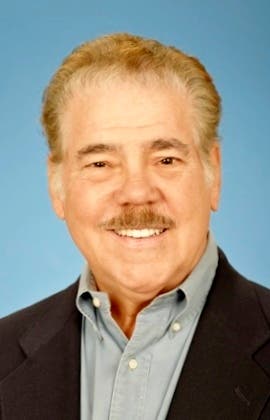
Dr. Jim Gardner is on the City Council for Lake Forest. You can check him out on LinkedIn and/or Facebook and you can share your thoughts about the City at Lake Forest Town Square on Facebook. His comments are not meant to reflect official City Policy.
Dr. Gardner has office hours every Tuesday from 4 pm to 6 pm at the City Hall. In addition, he holds a Town Hall meeting every quarter. The next meeting will be on Jan 30 at 2 pm at the Foothill Ranch Public Library
e=n&*