Local Voices
Sharks of the California Coastline: It's not only Great Whites
During sharktober ocean goers focus on the great white shark off the central coast, but there are many more species living beneath us.

By David McGuire
As a surfer and open-water swimmer, I frequently encounter wildlife in the ocean. My workouts normally take place in Aquatic Park with the San Francisco Dolphin Swimming and Rowing Club, but my friends and I frequently take longer swims in the ocean. Last summer my fellow Night Train Swimmers friend Simon Dominguez was denied completion of his quest to complete his Golden Gate Bridge to Southeast Farallon Island by adverse currents, a raw bleeding neck and a circling white shark.
Occasionally we encounter sharks, but most often it’s the wind, waves and angry sea lions. Thanks to efforts of ocean advocates across our state, our coastal ocean and the Bay are getting healthier. Herring, anchovy and recently market squid are feeding larger fish like salmon and halibut, marine mammals and indirectly the sharks.

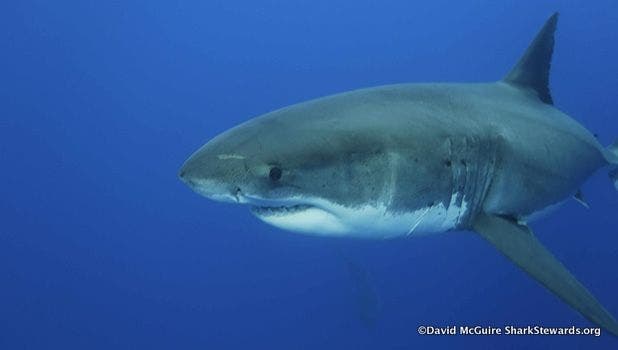
Inserted into this intricate and complex ocean food web are the predators, including the white sharks. White sharks return to our coastline after a great migration in the late summer and fall months, with coastal observations peaking in October—the month we call Sharktober. The breaching white shark caught on the surf cam outside the line up at my local surf beach gathered a lot of attention last month, but most sharks rarely make the news.
Around 11 species of sharks inhabit the Bay or use it as a feeding or breeding ground, with another 15 or so living outside in the waters of the Greater Farallones National Marine Sanctuary. These include the lovely leopard shark, a beautifully patterned houndshark that grows to six feet. This is the most common shark in the Bay, giving birth to live pups in the shallow parts of the estuary that have healthy eelgrass beds and wetland habitat. Their close cousins, the brown smoothhound and soupfin sharks, also mate and give birth to their live young in the Bay. Many of these sharks range along the outer coastline in rocky habitat and kelp, and are frequently caught by anglers.
Find out what's happening in San Franciscofor free with the latest updates from Patch.

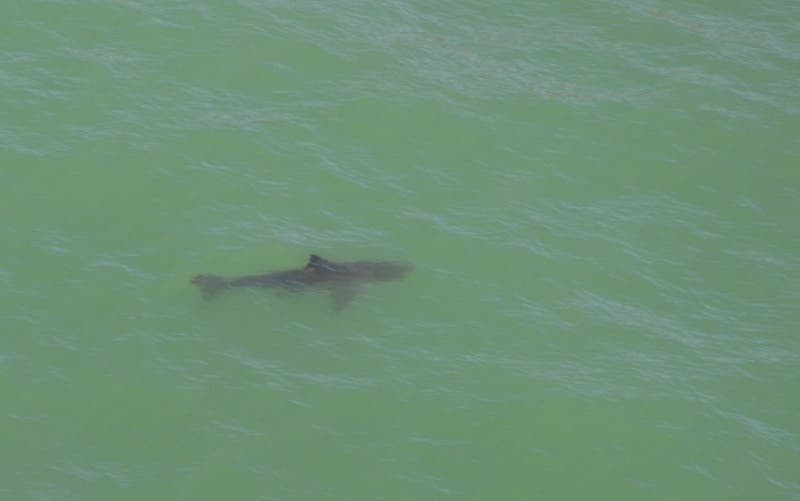
Another shark commonly confused with the great white shark, is the salmon shark. These sleek, dark sharks are occasionally seen along the waterfront along Ocean Beach, and even inside the Bay. These sharks can make acrobatic leaps out of the water in pursuit of their favorite prey (salmon) and can sometimes be observed from boats. In the past few years of unseasonably warm seawater, thresher sharks, normally an open water species, have also been observed leaping clear of the water nearshore.
Ordinarily a deeper water species, the spiny dogfish swims in deeper waters and is a favorite food for sevengill sharks.
Rays are another member of the scientific grouping Elasmobranchii, which includes sharks, skates and rays. These “flat sharks” breed, forage and give birth in the muddy waters that play such an important role in the bottom ecosystem—which includes mud, sand and eelgrass beds. Bat rays are the most common in the Bay and popular among pier fisherman, who call them “mud marlin” for their fighting ability. The largest bat ray caught in the Bay measured nearly 11 feet in length and weighed 464 pounds!
Find out what's happening in San Franciscofor free with the latest updates from Patch.
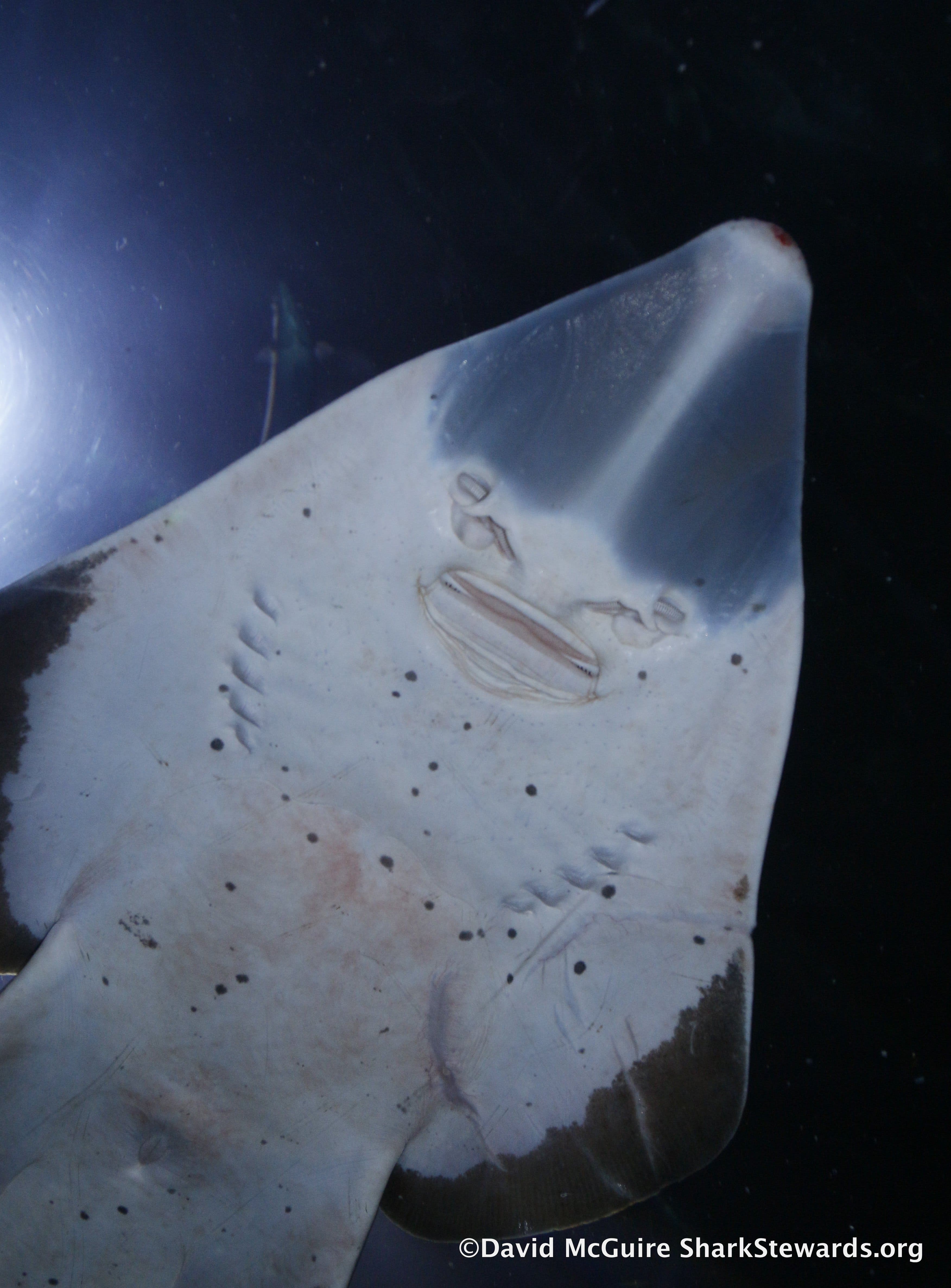
Another type of ray is the shovelnose guitarfish, which represents something of a transition between a shark and a ray. Like the leopard sharks and smooth hounds, these fish forage on mollusks like clams as well as octopus, crustaceans and small fish. Other cousins include the big and longnosed skates, seldom seen and generally not targeted by anglers, yet important for maintaining the health of the bottom. Top-down influence of large sharks is important, but so too are bottom-up impacts of the rays, skates and ground sharks. These sharks and rays eat dead and decaying materials and stir up the bottom providing oxygen in a process called bioturbation.
Swimming, stand up paddle boarding and surfing along our coastline can be a wild experience, but most of the excitement passes unseen beneath our hands and our fins, and the importance of these "other" sharks is also typically unregarded. The San Francisco estuary and our central coast provide critical habitat for these important fish, and sharks play a critical role in the health and balance of marine ecosystems. Many species of sharks are threatened with extinction, and the history of habitat loss and commercial shark fishing has played its own role in reducing local shark populations. Increasing species and habitat protection like under the Marine Life Protection Act, and providing best fisheries management practices are necessary to help ensure their survival and the health of our oceans.
This Sharktober, Shark Stewards is celebrating all sharks and rays with a series of educational and fun events to help save sharks. Join us on our Farallon Islands Expedition Sunday November 13th, learn about sharks and why we save them.
Learn more at www.sharkstewards.org.