Politics & Government
Suspect DNA Tests Challenged In Court
The California Supreme Court will rule on whether the voter-approved DNA swap of arrested suspects is legal.
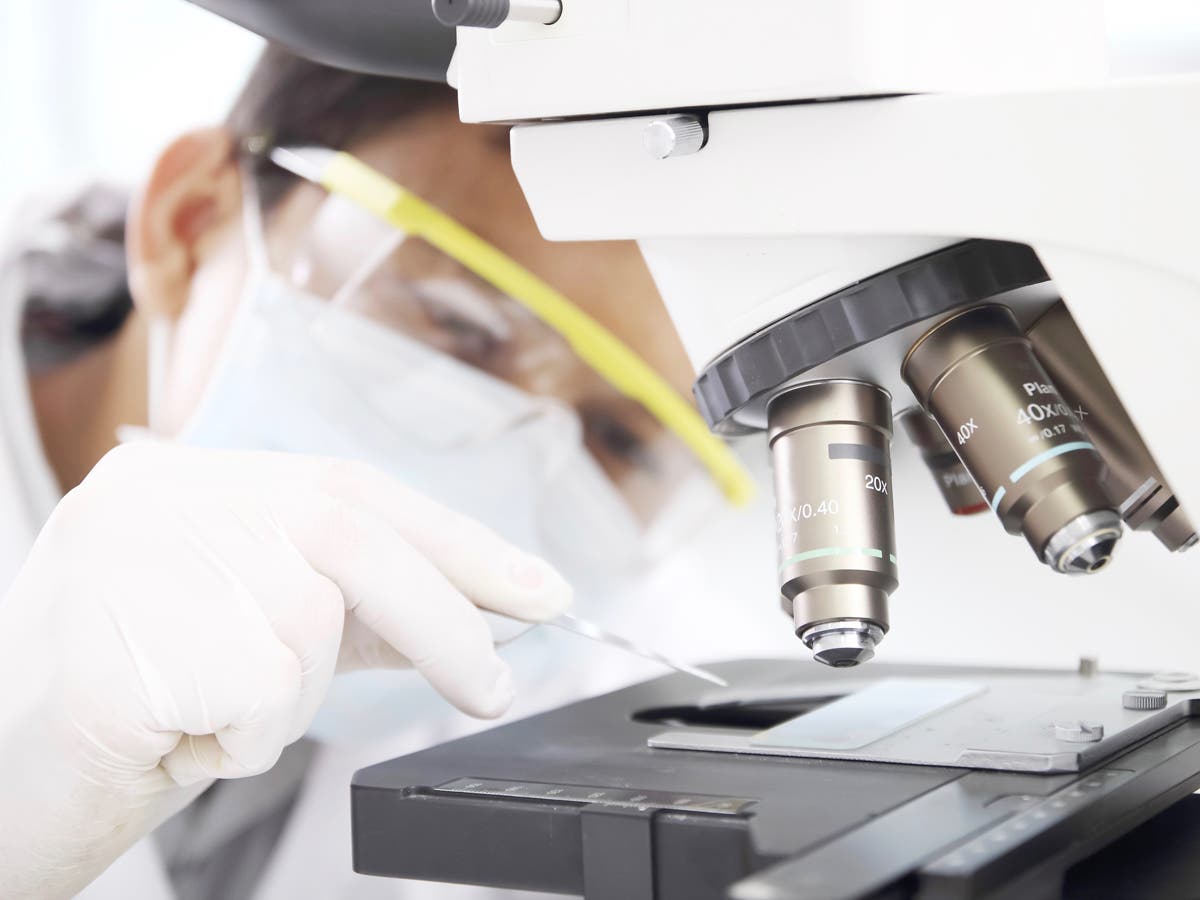
CALIFORNIA — A voter-approved law that requires DNA testing of anyone arrested on suspicion of a felony was challenged before the California Supreme Court in San Francisco Wednesday.
Mark Buza, a San Francisco arson suspect who refused to give a DNA swab after being arrested in 2009, claims the law violates the state constitutional rights to privacy and freedom from unreasonable search.
His attorney, J. Bradley O'Connell, told the court, "Huge amounts of private information can be obtained
so readily.
Find out what's happening in San Franciscofor free with the latest updates from Patch.
"This is a warrantless, suspicionless search. The search we're talking about is a core constitutional concern. It's a body invasion," he said.
O'Connell argued that fingerprints provide adequate identification and that DNA collection is invasive because it reveals sensitive genetic information that is then stored in state and national databases.
Find out what's happening in San Franciscofor free with the latest updates from Patch.
Buza, who gave a cheek swab of DNA after he was convicted of arson of a police car, is not challenging post-conviction collection of DNA, but rather only the collection of DNA from people who have not been convicted of a crime.
His lawyers say that more than 30 percent of people arrested in California are not convicted of a crime, including some who are never charged with a crime, and that they are entitled to keep their genetic information private.
Lawyers from the state attorney general's office, defending the law, say DNA collection is minimally intrusive, more precise than fingerprints and useful for providing identification related to possible past or future criminal conduct by the suspect.
Deputy California Solicitor General Michael Mongan told the court, "What we understand in this state and this society is that if you are arrested, the police will get your identification."
The seven-member court panel took the case under submission after hearing more than an hour of arguments and will issue a written ruling within three months.
The law requiring DNA of all arrestees was enacted by voters as part of Proposition 69 in 2004. The measure gradually expanded the categories of people whose DNA must be collected, and the mandate applying to all
arrestees went into effect on Jan. 1, 2009.
Three weeks later, at 3 a.m. on Jan. 21, 2009, Buza was arrested after a San Francisco police sergeant spotted a parked police car on fire and saw him run into a wooded area while carrying a bottle of gasoline and oil.
Buza refused to give a cheek swab after his arrest.
At his trial, he was convicted of arson, possession of an incendiary device, vandalism and the misdemeanor crime of refusing to give a DNA sample. He admitted to setting the police car's tires on fire and said his purpose was to protest corrupt government.
Buza was sentenced to a year and four months in prison, including six months for refusing to provide a DNA swab immediately after his arrest.
In his appeal, he challenged the DNA misdemeanor conviction.
State attorneys contend the California law is in keeping with a 2013 decision in which the U.S. Supreme Court said a somewhat similar Maryland law did not violate the federal Constitution.
Buza's lawyers argue the California case is different because the Maryland law applies to people arrested for violent felonies, as opposed to any felony, and because the California Constitution has broader privacy rights.
State lawyers appealed to the California Supreme Court after a state Court of Appeal panel in San Francisco struck down the California law in December 2014.
— Bay City News; Image via Shutterstock