Health & Fitness
Bike Laws Test Connecticut
A proposed bill would require Connecticut cyclists to ride single file. Lawmakers should be asking serious questions about the function of streets, safety and what's best for our communities.

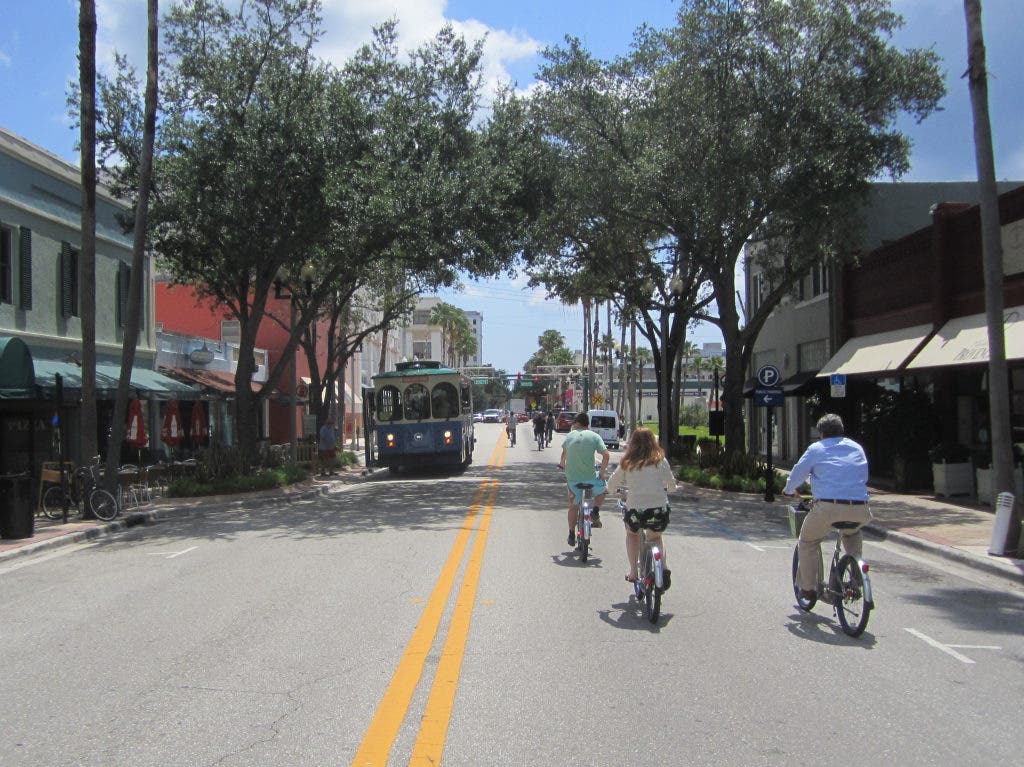

A proposed bill by state Senator Kevin Witkos has caused a stir in the bicycle community and riled up all kinds of road users. In the bill (SB103), the Senator has introduced new language that would “require persons riding bicycles on a roadway to ride single file, rather than two abreast as currently allowed.”
To those who didn’t know that cyclists are allowed to ride side-by-side, or even that they’re allowed on the road, this might seem like a necessary fix. But the debate this bill has sparked is an important one and it’s about more than day-riders wanting to ride next to each other on the weekends.
The real question that’s central to this debate (and one that more policymakers should be asking themselves) is this: What are our streets for?
Find out what's happening in Cantonfor free with the latest updates from Patch.
When asked this question, I think most people in Connecticut would agree that the streets are for getting us quickly where we need to go, by car. When we come up behind somebody on a bike, hogging the lane or delicately hugging the edge, we may get frustrated and impatiently squeeze past. Many people honk at cyclists to get out of their way, give them angry glances or yell at them as they pass… or sometimes worse. Trust me.
Fortunately, cyclists are now protected by a Connecticut law requiring drivers to give three feet of clear distance when passing. This is good for their safety, but police claim it’s causing more drivers to cross the yellow line. And this is why the Senator has introduced SB103 – to make it easier for cars to pass cyclists while giving the required three feet.
Find out what's happening in Cantonfor free with the latest updates from Patch.
The problem is that this law – like others already on the books – takes an environment that’s already harsh and dangerous to cyclists and makes things even more challenging. It further strips cyclists of their right to use the public right-of-way, treats them as marginal road users and emboldens some drivers’ sense of entitlement to the streets.
In preparing early recommendations for bicycle planning in the Town of Avon, I received a report of all collisions involving cyclists since 2009; there were ten. Cyclists were at fault in only two cases. In three cases, drivers hit cyclists while turning. In another three, drivers sideswiped cyclists while passing. And unlike fender-benders, all ten collisions involved injuries. In other words, the biggest threat to cyclists’ safety is drivers. Speeding, distracted driving and impatience pose the greatest risks on our streets, not cyclists.
Maybe in a perfect world, drivers and cyclists would each have their own road networks and never get in each other’s way. This is how things are done in bike havens like Copenhagen and increasingly in big cities like New York and Chicago. But this isn’t possible everywhere, so we also need to learn how to share the roads (as the state has been subtly urging since 2009).
This brings me back to the central question – what are our streets for? Streets are often the public space in front of our homes where we meet our neighbors and streets connect us to our communities, no matter what vehicle we choose. Our lawmakers, road designers and police need to acknowledge this and continue protecting Connecticut’s most vulnerable users, rather than making sure they never get in the way of cars. A growing number of states allow cyclists full use of a travel lane – for their own safety – when the road is too narrow to share side-by-side. As in Connecticut, many states offer extra legal protection to vulnerable road users. Designers in places like Portland, Oreg., have figured out how to create “neighborhood greenways” – streets that are shared by drivers, cyclists and people on foot. These are all steps in the right direction.
As cyclists become more common on our roads and policymakers work towards making our communities safer and more vibrant, we certainly need to revisit our laws. But we also need to make sure we maintain a healthy dialogue, keep a clear focus on our ultimate objectives, and protect all of the state’s residents, no matter what their preferred mode of travel.