Health & Fitness
Serafina Says That's ALOT of Vitamins!
A look at the exceptional concentration of vitamins in microgreens, and the quantity needed to reap the benefits.
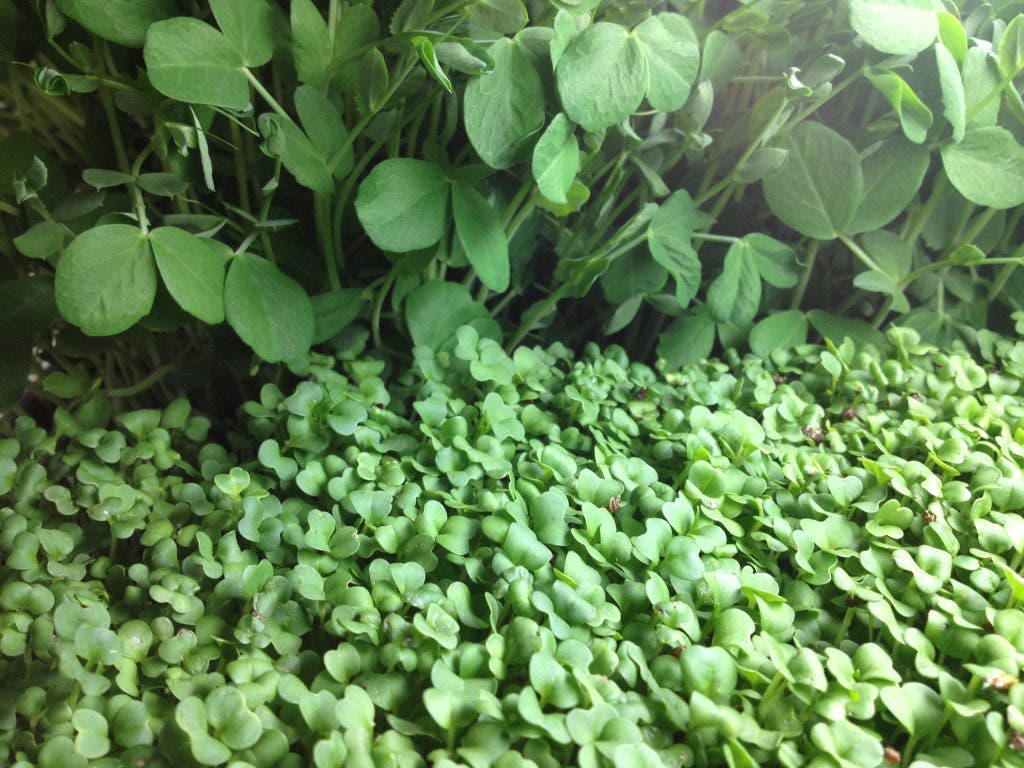

Vitamin Concentrations in Microgreens
While at the Farmers' Markets talking with folks, I frequently talk about how broccoli microgreens have 50x the quantity of anti-oxidants than the mature broccoli plant, and how mustard microgreens are higher in vitamins A and K than the full-grown mustard leaves. These types of statements are easy to find on nutrition discussion boards, but in conversations, I commonly get the question: How much do I have to eat to get these exceptional nutritional benefits?
Well, I finally have the answer.
In 2012, the Journal of Agricultural and Food Chemistry published a scientific study on the vitamin concentrations in microgreens. The study analyzed Vitamin K1 (phylloquinone), Vitamin C (ascorbic acid), and carotenoids (fat-soluble antioxidants that scavenge free radicals) levels in 25 organically grown commercial microgreens. The analysis compared the vitamin levels between varieties of microgreens and between the microgreen and its mature plant. To summarize the results, microgreens contain considerably higher concentrations of vitamins and carotenoids than their mature plant counterparts. Read on.
Vitamin K1 (essential for liver health, healthy blood clotting and strong bones) ranked highest in bright red and green microgreens, with red cabbage and cress microgreens scoring very high. Per gram, red cabbage microgreens have a Vitamin K1 concentration of 2.77 μg/g as compared to 0.04 μg/g of the mature cabbage plant - a 6825% increase! For those of you who want to calculate the vitamins in your box of Serafina Says Farm microgreens, a 1.5 ounce box of microgreens = 42.5 grams of sprouts.
Vitamin C (an essential anti-oxidant and immune booster) was found to be in higher concentrations in microgreens than in mature plants. Red cabbage scored high again with 147 mg/100 g - 6 times higher than 24.4 mg/100g of mature cabbage! So gram per gram, microgreens provide considerably more nutrition than mature plants. China rose radish (the variety we grow) had more than 90 mg/100g, equal to 1.5 times the recommended daily allowance (RDA).
Carotenoids (helpful for preventing cancer and protecting from heart disease among other benefits) - there are over 600 types of carotenoids, and this study analyzed the microgreens for concentrations of Vitamin A (think beta-carotene of carrots and sweet potatoes), lutein and zeaxanthin, violaxanthin, and tocopherols (Vitamin E). Again, all microgreens tested scored higher than mature plants for vitamin density-- that is to say, even the lowest scoring microgreens were on general higher than than the highest scoring mature plants. And those microgreens grown in light were found to be higher in vitamins than those grown 'blanched', or in the dark.
So in summary, you do not need to eat more microgreens than you would eat of the regular vegetable to receive infinitely more benefits. And since microgreens taste so good, are so beautiful, and are easy to add to any meal -- you really have a miraculous superfood in microgreens.
Add some to your meals this week, and enjoy!