Politics & Government
Candidate Profile: Patrick Kennedy For Ward 2 Seat On DC Council
Patrick Kennedy is a Democrat running in the June 2 Primary and the June 16 Special Election for the vacant Ward 2 seat.


WASHINGTON, DC — There are 29 candidates running for the D.C. City Council in the June 2 primary. In addition, candidates will be facing off in a June 16 special election to fill the vacant Ward 2 seat.
Patch asked the candidates to describe their qualifications and visions for the District.
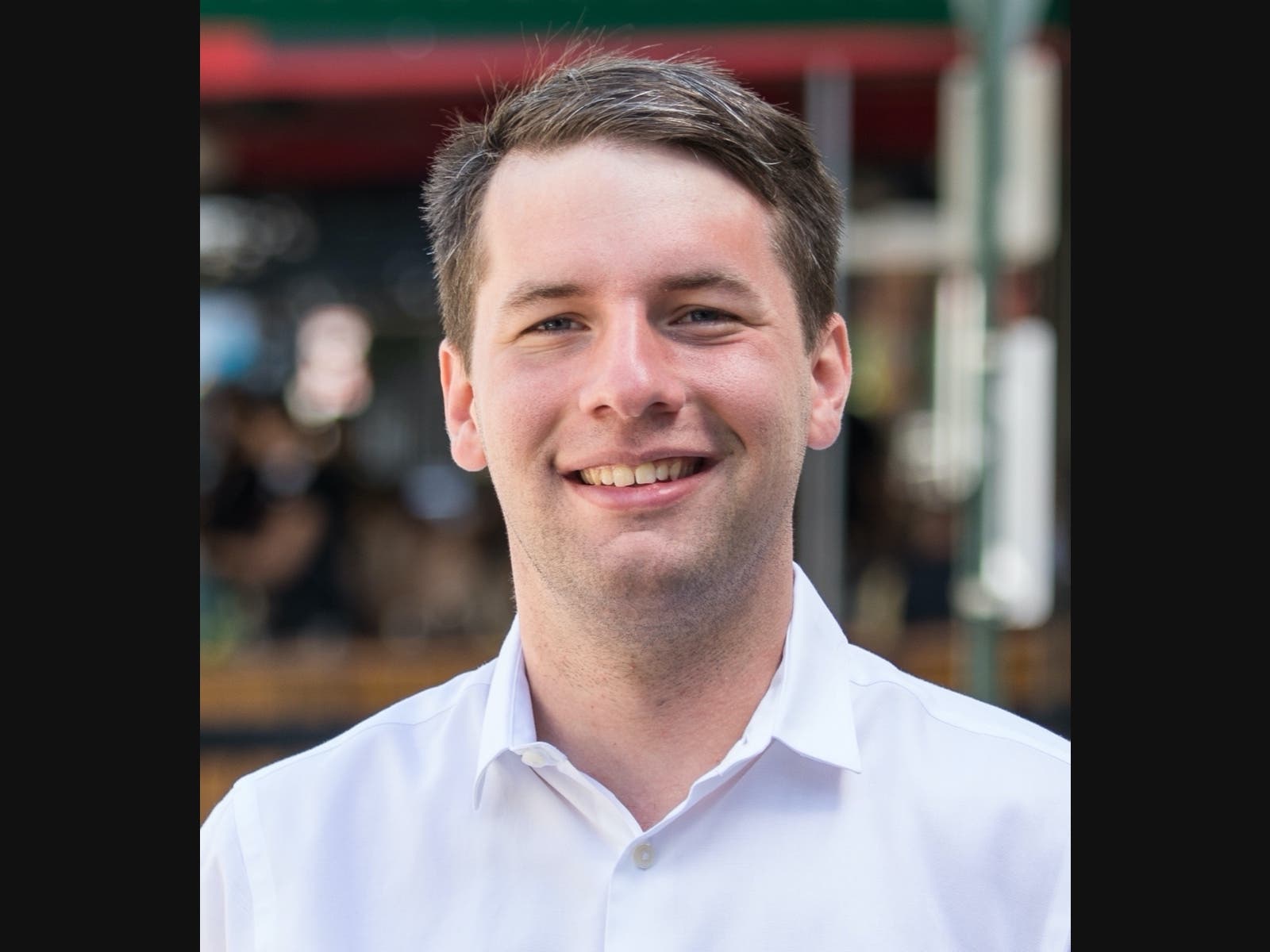
Patrick Kennedy, 28, is a Democrat running in the June 2 Primary and the June 16 Special Election for the vacant Ward 2 seat.
Find out what's happening in Washington DCfor free with the latest updates from Patch.
Family
Thomas Kennedy, Father
Shirley Kennedy, Mother
Lili Kennedy, Stepmother
Sean Kennedy, Brother
Find out what's happening in Washington DCfor free with the latest updates from Patch.
Does anyone in your family work in politics or government?
N/A
Education
The George Washington University, B.A., Political Science with a Public Policy Focus, 2014
Occupation
Education Consultant, CRP Incorporated (2016-Present) (on leave)
Previous or Current Elected or Appointed Office
Advisory Neighborhood Commissioner, 2A01 (2013-present)
Chair, ANC 2A, (2014-2017, 2020-present)
DC Democratic State Committee, Ward 2 representative (2014-2018)
Campaign website
PatrickForWard2.com
What makes you the best candidate for this office?
My service has been rooted in serving the people of Ward 2 and I have tangible accomplishments in this ward that demonstrate my ability to bring people together, navigate challenging issues, and help advance our education, health care, and transportation priorities in an honest and transparent fashion.
This is demonstrated by the fact I have the most Ward 2 donors of any candidate in this race, a reflection of my intent to focus my time and energy on the needs of the people whom I represent. I also have endorsements of most of the elected leaders in this ward, and a diverse range of organizations and individuals. They include the Sierra Club, several labor unions, Council Chair Phil Mendelson, and more. The relationships, trust, and knowledge I have developed in every neighborhood through years of service as well as at the Council level will allow me to hit the ground running on day one. Most important, my diverse support base ensures that I possess the ability to understand and balance the various sensibilities that exist in this ward.
How will you help the city recover from the economic impact of the coronavirus?
It’s important for the District government to step in, as it can, where gaps exist in the federal response. That’s why it was important that Events DC set up a $5 million assistance fund for undocumented immigrants, for instance, given the federal government’s unwillingness to provide anything for the community.
We’ve also seen, thus far, that the federal Paycheck Protection Plan loans are often ill-suited to the needs of businesses (and workers). Businesses need to be floated financially through this crisis so that they can make their underlying payment obligations (debt, inventory, rent/mortgage, etc.); making forgiveness of loan payments contingent on businesses keeping people on payroll doesn’t benefit workers if they can earn more on unemployment than they can on payroll. If there is little or no customer demand or way for the business to operate profitably under social distancing rules, then the objective should be keeping the business solvent until it can reboot under economically viable conditions.
Workers should be taken care of through a functional UI system (something the District can control, and is responsible for, which it has failed to deliver thus far), and the provision of benefits that some employers otherwise provide (like health insurance, for instance).
Beyond that, we need to work with Congress to get the District its proper share of alloted federal relief money, and lobby to make the stimulus funding more flexible so that it can be used to replace lost tax revenues. That will enable the District to defer or forgive property tax payments, and expand grant programs like the initial $25 million small business grant fund that was quickly exhausted.
Expanded relief will also be critical in the District’s push to enhance its healthcare infrastructure, especially scaling testing, tracing, and treatment services to a level adequate to reopen the local economy and loosen or remove social distancing restrictions.
We have about $1.4 billion in reserves set aside for use in moments like these, and we can use some of that on immediate needs for businesses and residents, but it will be depleted quickly at the current rate of spending relative to revenues, and much of it must be paid back quickly per federal law set up to govern the District’s financing. Given that we’ve lost more than half of our sales tax revenue due to the economic shutdown, and that we will likely see ripple effects for years to come in lost economic/tax activity, we should take care to ensure that we have the resources to cover our revenue shortfall and spend sustainably for the duration of the pandemic and its aftermath, however long that may be.
Throughout the coronavirus pandemic, Mayor Muriel Bowser has talked about the longstanding inequities that have been exposed by the coronavirus. She also has talked about this being an opportunity for the city to address those inequities. What are your thoughts on this?
This is absolutely the time to scrutinize our current spending, root out government waste or inefficiencies, and review approaches that other world-class cities have adopted which have proven to help improve quality of life for all residents. In the short-term, this may mean providing direct relief to people out of work and to small businesses to ensure that their basic needs can be met. It also means addressing health care inequities east of the Anacostia River so that more people have access to quality care on a regular basis. Most important, it means never losing sight of the need to scrutinize how we can improve government services so that the same level of service we expect in Ward 2 occurs elsewhere in the District.
What do you see as the biggest issue besides the coronavirus recovery facing D.C.?
The skyrocketing cost of living and doing business here is clearly the top issue, whether that is expressed in terms of our housing crisis, the enormous cost of child care, or escalating rents that have made it difficult for small retail businesses especially to survive. COVID-19 only compounded these issues. Addressing them will entail a combination of targeted investments, policy changes, greater sensitivity to the needs of small businesses, and an understanding of how these challenges perpetuate and underline the disparities that exist in our city.
What is your position on statehood for D.C.?
I have been a staunch advocate for statehood and was even arrested while protesting for this cause in 2012. I received a commendation from Congresswoman Eleanor Holmes Norton in the Congressional Record for those efforts and have continued to support D.C. statehood. The lack of COVID-19 stimulus funds for D.C. relative to the states underscores the need to continue the fight for DC statehood.
What accomplishments in your past would you cite as evidence you can handle this job?
When Francis-Stevens School was facing closure in 2012, I worked with parents, teachers, and neighbors in support of a plan to increase neighborhood attendance rates and merge with School Without Walls High School. The result: A complete turnaround. A school with less than 200 students now has over 550 (about 40 students overcapacity), rising test scores, and a wait list of more than 800.
When street changes were being considered in Foggy Bottom and Dupont Circle to establish a protected bike lane connecting the two neighborhoods, I worked with DDOT to expand the scope of the study to include a corridor along 20th Street. By expanding the options in the study, we were able to meet the needs of neighbors, cyclists, and advocates. The end result: A Protected Bike Lane could move forward, a street could be made safer, and residential parking spaces could be preserved.
Finally, when George Washington University Hospital was pursuing a helipad, I led multiple community meetings over the course of a year with representatives from the hospital and neighbors. The end result: An agreement which secured community support for changing a law that had prohibited its construction, addressed neighborhood quality of life concerns, and has already saved lives.
The common theme to my approach: inclusivity. I have worked with and for the people of Ward 2 at the grassroots level, and I’m prepared to take that work to the next level by representing you on Council.
The best advice ever shared with me was:
Ask questions, listen, and be comfortable in your own skin.
What else would you like voters to know about yourself and your positions?
My vision for the ward and the District is forward-thinking, but balanced. It takes into account the needs of our seniors, our families, and our Ward 2 small businesses.
I’ve had the pleasure of serving on or working with several of the key organizations that underpin our neighborhoods -- civic associations; Villages; parent-teacher organizations; ANCs -- so I understand that I alone cannot do the work of enhancing our communities.
What I am prepared to do is bring a positive, results-driven vision to the ward that is grounded in the communities that I serve and never loses sight of the need to be fair-minded, focused, and strategic as we make decisions with our taxpayer dollars.
Read Other Ward 2 Candidate Profiles:
Get more local news delivered straight to your inbox. Sign up for free Patch newsletters and alerts.