Community Corner
National Zoo Hatches Very First Hooded Crane Chick, a Threatened Species
Smithsonian staff successfully artificially inseminated a female hooded crane and hatched the chick in mid-June.


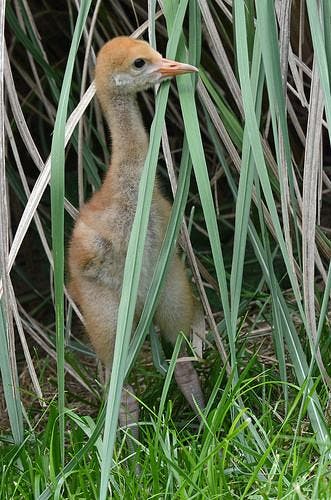
The Smithsonian National Zoo has just welcomed a brand new resident to the park: the very first hooded crane chick. The hooded crane is a threatened species, with only 8,000 of them in the wild. They are classified as vulnerable by the International Union for Conservation of Nature, which is just one step away from endangered.
The National Zoo just added one more to the population, as staff from the Smithsonian Conservation Biology Institute (SCBI) were able to hatch the first hooded crane chick at the zoo on June 14, according to a statement. Staff used artificial insemination to impregnate female hooded crane Tempest. Mr. Crane, the male, is the father of the chick.
"SCBI is now home to eight of the 26 birds in the Hooded Crane Species Survival Plan in North America," the statement notes. "SCBI has a successful crane breeding program. In addition to the birth of this hooded crane chick, 40 white-naped cranes have been born at SCBI. Twenty of those chicks were born as the result of artificial inseminations."
Find out what's happening in Washington DCfor free with the latest updates from Patch.
SCBI has a major role as part of the Smithsonian's global efforts to save threatened wildlife species. SCBI has research programs in Front Royal, Virginia, where it is headquartered, in addition to the National Zoo. SCBI also has research stations and training sites around the globe.
"SCBI scientists tackle some of today's most complex conservation challenges by applying and sharing what they learn about animal behavior and reproduction, ecology, genetics, migration and conservation sustainability," the statement adds.
Find out what's happening in Washington DCfor free with the latest updates from Patch.
The hooded crane breeds in Siberia, and possibly Mongolia. Most of the population winters in southern Japan, as well as South Korea and China.
Image via Smithsonian National Zoo
Get more local news delivered straight to your inbox. Sign up for free Patch newsletters and alerts.