Politics & Government
2013 Legislative Session Reaches Critical Juncture
With only three days left before the day 30 deadline, known as Crossover Day, we've now arrived at the critical juncture of the 2013 Legislative Session, Bill Heath reports, in this weekly letter to the editor.


Dear Editor
The pace under the Gold Dome is quickly gaining momentum as we move closer to day 30 – the last day a bill may travel to the opposite chamber for consideration. With only three days left before the day 30 deadline, known as Crossover Day, we’ve now arrived at the critical juncture of the 2013 Legislative Session. In order for legislation to remain on the table for consideration, before moving to the House all Senate bills must report out of their respective committees and pass their final litmus test– the Senate floor.
This week, SB 197 passed favorably out of committee. This bill would ensure the confidentiality of information related to citizens who are issued weapons carry licenses. SB 197 would also prohibit the creation or maintenance of any databases containing information on citizens who are issued weapons carry licenses. I’ve sponsored this bill because I believe that creating a registry of gun owners is extremely intrusive. This is hardly the way to treat law-abiding citizens who just want to exercise their Constitutional rights. My fellow bill sponsors and I intend to maintain the privacy of legal gun owners.
Find out what's happening in Dallas-Hiramfor free with the latest updates from Patch.
On Wednesday, HB 142 passed the House with only four dissenting votes and is now being considered in the Senate. Although this bill would ban lobbyists from providing certain gifts, it also includes a lengthy list of exceptions from the ban for certain trips, dinners and “educational or informational” meetings.
There has been a lot of discussion around the Capitol that this legislation, as it currently stands, does not do enough to eliminate loopholes, and I agree. We’ve only scratched the surface of what needs to be done to reassure citizens that officials are not being unduly influenced. If we’re going to enact “sweeping” ethics reform, let’s not simply sweep the crumbs under the carpet and leave the T-bone steak sitting on the kitchen table. Additionally, when a bill is full of exceptions to a rule, it makes me question whether we really need it on the books.
Find out what's happening in Dallas-Hiramfor free with the latest updates from Patch.
The bottom line is this: passing stricter ethics laws doesn’t make good people out of bad people. As the old saying goes, you can lead a horse to water but you can’t make it drink. There is no perfect solution to ethics reform. No matter how many rules we put in place, individuals who want to find a way around the system will do so.
An additional concern I have with HB 142 is its potential to limit first amendment rights. While I spend a great deal of my time focusing on defending the second amendment, I am just as adamant about protecting all the rights granted to us by the rest of the Constitution. HB 142 would require anyone attempting to influence the actions of a legislator, other than their own, to register as a lobbyist and pay a $25 fee. This registration process could deter citizens from participating in the legislative process, thus inhibiting freedom of speech and the rights of citizens to get involved in their state government.
Over the last few weeks, the House has passed a couple of significant tax bills. These bills were assigned to the Senate Finance Committee. HB 266 encompassed changes that were necessary due to recent changes in the federal income tax code. Those changes were projected to save Georgians $79 million over the next four years. HB 80 dealt with changes in how motor vehicles would be taxed. The bill, as passed by the House, represented an overall $141 million tax increase over the next four years. The details were the disturbing part. HB 80 increased taxes by $291 million on purchasers of automobiles while providing decreases for those leasing ($96 million) or renting ($54 million) vehicles.
The Senate decided to combine the bills into one measure and with a little handy work, came up with a substitute that was predicted to save taxpayers $179 million over the next four years. The problem was that the purchasers of new cars would be expected to pay an additional $190 million over the next four years while providing a $151 million break to those who operate “Buy Here Pay Here” car lots. I had to oppose the legislation due to the huge tax increase imposed on all new car purchasers to provide a huge tax cut to a very small and different segment of the population.
Several other bills passed the Senate this week including SB 61, SB 70, SB 72, SB 82, SB 120, SB 125, SB 68, SB 103, SB 135, SB 143, SB 115, SB 134, SB 137, SB 139, SB 10, SB 128, SB 140, SB 142, SB 122, SB 136, HB 57, and HB 266. These bills may be read by visiting www.legis.ga.gov.
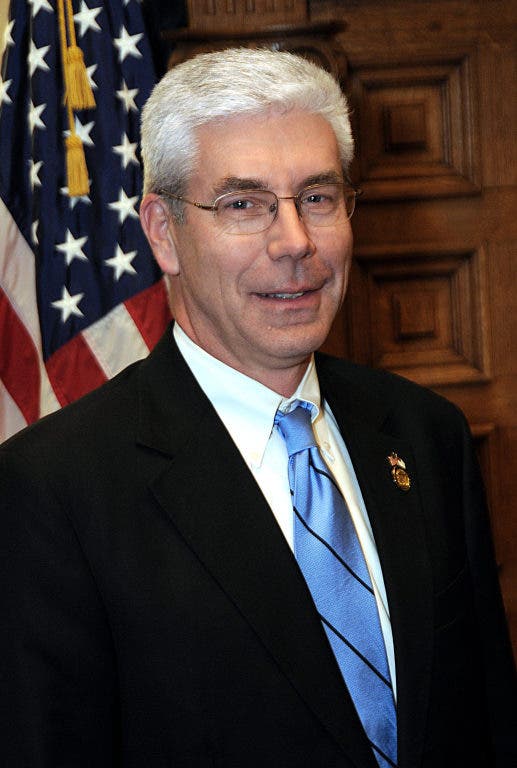
Sen. Bill Heath, R-Bremen
Get more local news delivered straight to your inbox. Sign up for free Patch newsletters and alerts.