Politics & Government
Paulding Farmers, Ranchers Qualify for USDA Assistance
The U.S. Department of Agriculture designated neighboring Douglas County as a primary natural disaster due to drought. The designation also opens up aid to those in Paulding County.


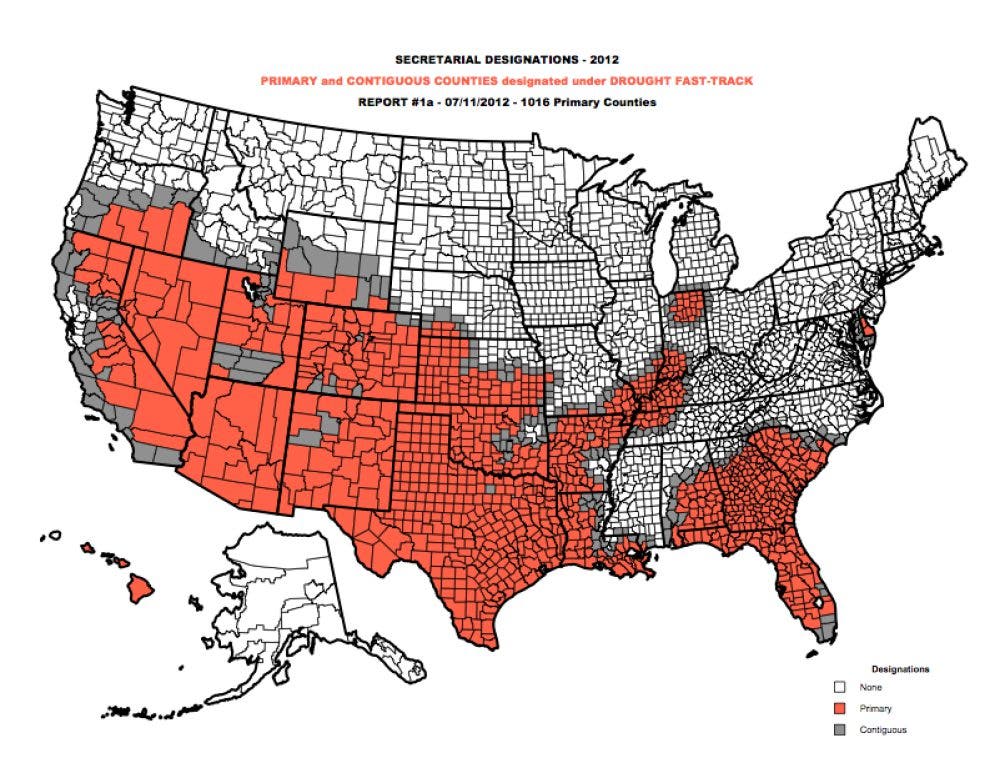
The U.S. Department of Agriculture has designated Douglas County as a primary natural disaster area due to damages and losses caused by the recent drought. The designation also will impact Douglas’ neighboring counties, including Paulding.
"Our hearts go out to those Georgia farmers and ranchers affected by the recent natural disasters," said Agriculture Secretary Tom Vilsack in a news release. "President Obama and I are committed to ensuring that agriculture remains a bright spot in our nation's economy by sustaining the successes of America's farmers, ranchers, and rural communities through these difficult times. We are also telling Georgia producers that USDA stands with you and your communities when severe weather and natural disasters threaten to disrupt your livelihood."
Farmers and ranchers in Paulding as well as Carroll, Cobb and Fulton counties also qualify for natural disaster assistance because they are contiguous to Douglas.
Find out what's happening in Dallas-Hiramfor free with the latest updates from Patch.
All other Georgia counties that would be eligible under 7 CFR 759.5 (a) already have been designated as primary natural disaster areas.
All counties listed above were designated natural disaster areas Monday, making all qualified farm operators in the designated areas eligible for low interest emergency (EM) loans from USDA's Farm Service Agency (FSA), provided eligibility requirements are met. Farmers in eligible counties have eight months from the date of the declaration to apply for loans to help cover part of their actual losses. FSA will consider each loan application on its own merits, taking into account the extent of losses, security available and repayment ability. FSA has a variety of programs, in addition to the EM loan program, to help eligible farmers recover from adversity.
Find out what's happening in Dallas-Hiramfor free with the latest updates from Patch.
Recently, USDA effectively reduced the interest rate for EM loans from 3.75 percent to 2.25 percent, and adjusted the payment reduction on Conservation Reserve Program (CRP) lands qualified for emergency haying and grazing in 2012 from 25 to 10 percent.
Additional programs available to assist farmers and ranchers include the Emergency Conservation Program, Federal Crop Insurance, and the Noninsured Crop Disaster Assistance Program. Interested farmers may contact their local USDA Service Centers for further information on eligibility requirements and application procedures for these and other programs. Additional information is also available online at http://disaster.fsa.usda.gov.
Vilsack also reminds producers that the department's authority to operate the five disaster assistance programs authorized by the 2008 Farm Bill expired on Sept. 30, 2011. This includes SURE; the Livestock Indemnity Program (LIP); the Emergency Assistance for Livestock, Honey Bees, and Farm-Raised Fish (ELAP); the Livestock Forage Disaster Program (LFP); and the Tree Assistance Program (TAP). Production losses due to disasters occurring after Sept. 30, 2011, are not eligible for disaster program coverage.
Get more local news delivered straight to your inbox. Sign up for free Patch newsletters and alerts.