Community Corner
The Art and Science of Pruning
February is a good time of year to prune many plants. Learn how to prune your woody plants properly.



February is upon us and it is time to get out the pruning shears! Many shrubs can be safely pruned beginning in February and into March in Paulding County.
Pruning in the correct manner and at the proper time can help to maintain the size and shape of your woody plants, improving their appearance and appealing to the artist in every gardener. Pruning also plays an important role in the health, productivity and well-being of woody plants, appealing to the scientific side of a gardener. Three techniques that are important to understand if you are pruning woody plants relate to tool sanitation, proper cutting technique and pruning time.
Always use clean pruning shears and be sure to sanitize the shears after each use. This is easy to do by dipping them or wiping them in either 70 percent isopropyl alcohol or a 10 percent bleach solution. If you are pruning a diseased plant, it is a good idea to sanitize after each cut, in order to reduce the chances of spreading the disease from limb to limb.
Find out what's happening in Dallas-Hiramfor free with the latest updates from Patch.
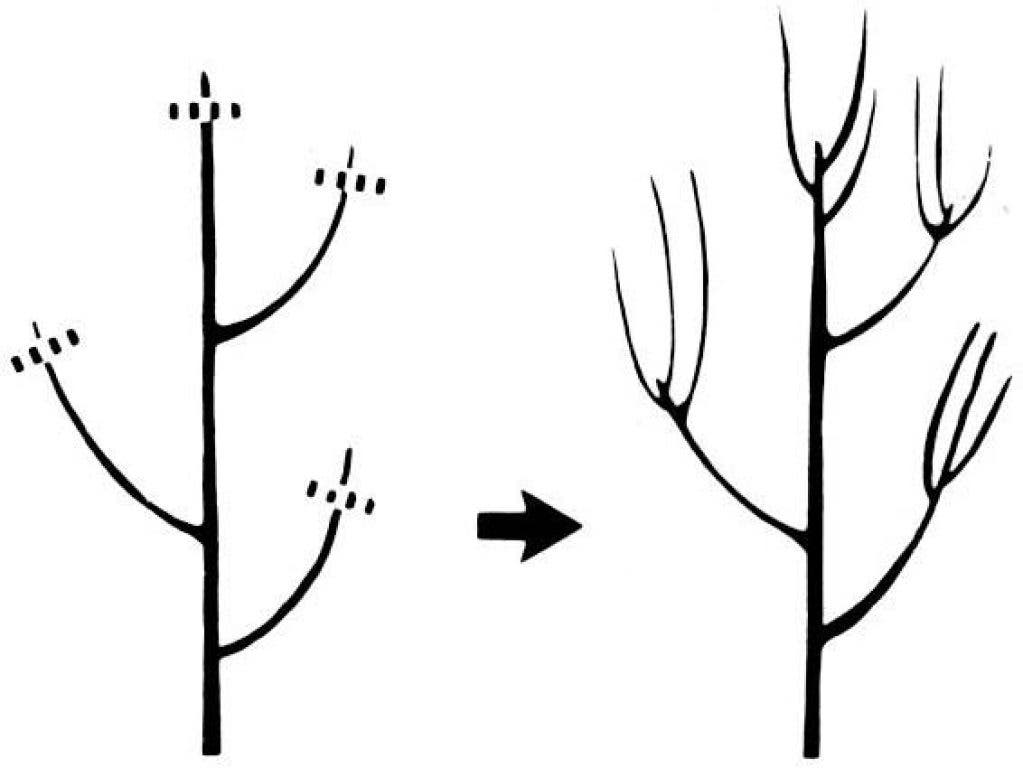
Heading cuts and thinning cuts are the two main types of pruning cuts used in the landscape. In a heading cut, shoot tips are removed (figure 1), while in a thinning cut (figure 2), an entire shoot is removed at its base on the main stem. Cooperative Extension generally recommends using thinning cuts to keep your plants healthy and encourage a natural shape, but sometimes a heading cut is useful to help create dense regrowth on a plant.
Take care when making cuts to look for the raised ridge of bark around the shoot that you will be pruning and make your cut so that that ridge is left intact (figure 3). Tissue in this ridge of bark will help promote healing of the cut. It is also important to cut close enough to this ridge not to leave a stub, which can also slow the healing process. Use the three cut method (figure 3) to accomplish this: 1. Cut a notch above where you plan to make your final pruning cut;.2. Cut the branch off above the notch to remove the weight of the branch (this will leave a stub). 3. Make your final cut just above the branch bark ridge to remove the stub, leaving a clean opening to heal.
Find out what's happening in Dallas-Hiramfor free with the latest updates from Patch.
After you prune, you may notice some weeping from the area, but don't worry—this is a normal part of the plant's healing process.
Shrubs that should be pruned at this time of year include Crape myrtle, Beautyberry, Camellia, Japanese Barberry, Boxwood, Rose of Sharon, Nandina, Grandiflora Roses and Fragrant Tea Olive. Exceptions to the late winter/early spring pruning rule are spring flowering shrubs, such as azaleas, hydrangeas, forsythia and flowering dogwoods, which should not be prunted until after they have flowered. As a general rule, plants that flower in spring should be pruned after they have flowered, so hold off on pruning your azaleas, unless you don't mind losing your flower buds for the spring!
For a complete listing of shrubs that can be pruned at this time of year, see the University of Georgia Cooperative Extension publication "Basic Principles of Pruning Woody Plants" which can be found online at http://pubsadmin.caes.uga.edu/files/pdf/B%20949_2.PDF, or can be obtained from the Paulding County UGA Cooperative Extension Office.
For more information on your lawn and garden, contact a Master Gardener or the County Extension Agent at our office by calling 770-443-7616 or look for us online at www.ugaextension.com/paulding.