Schools
Q&A: Gregory Wolcott, District 68 Assistant Superintendent
New District 68 Assistant Superintendent of Teaching and Learning Gregory Wolcott says he has the best job in the district.
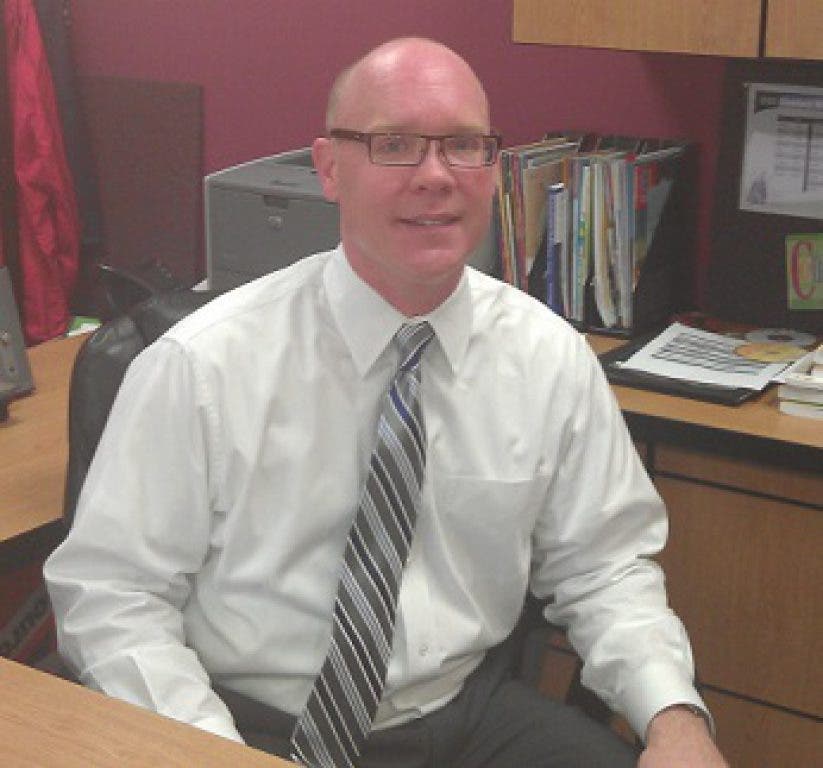
Gregory Wolcott took over as the new assistant superintendent of teaching and learning for in July. He had already served three years as the district's director of assessments and initiatives.
He lives in Oswego with his wife Lynn and two children.
Q: You just moved into this position, so what were you doing before this?
Find out what's happening in Woodridgefor free with the latest updates from Patch.
A: I actually student taught in the district at and got my first job at . I taught third and fifth grade at and then I taught first grade at for a couple of years. Then I left the district. I went to Wheaton, then I was assistant principal and reading coordinator in Park Ridge. Then I came back to the district and I was principal at for five years. And then I moved to the district office to be director of assessment and initiatives.
Q: What did you do as director of assessments and initiatives?
Find out what's happening in Woodridgefor free with the latest updates from Patch.
A: Response to Intervention (RTI) was a big push from the state, so I had piloted that program at with our staff there. When it became a mandate with the state that all schools did that, then I moved to the district office to really get that started. So for the last three years, we systematically put that in place. First, starting it out in kindergarten through second grade through all the buildings, then third through sixth grade at all the buildings. And then at the junior high. So getting that in place as well as really working more closely with how the assessment data can actually drive student instruction and how teachers can make better informed decisions when they take all of that into consideration. So that's pretty much what the last three years have been.
Q: What do you do now as assistant superintendent of teaching and learning?
A: We had an assistant superintendent for curriculum and instruction and she retired. So I took everything I have been doing -- the assessment initiatives for the last couple of years -- with me to this position and added on her responsibilities. I have all her responsibilities, which are planning all the instructional programs for the district to ensure a continuum of services from birth in the district until they go to high school.
I coordinate all the grants; we have a zero to three grant that we use with Metropolitan Family Services. Kids who are at risk from birth, we work with the parents and Metropolitan Family Services to provide support to them; from that then into our early childhood program into our "preschool for all" program then into kindergarten through eighth grade.
With that comes all the titles - the "preschool for all" director, bilingual director, and ESL which has been a huge change in our district because up to 20 plus percent of our population is ELL now - English Language Learners. I'm coordinating our Title 1 students and our Title 1 programs. Title 1 grants are all based on free and reduced (students who are in poverty situations who receive free or reduced lunch). The federal programs provide funding for us to help provide support for those students. We are now up to 40 percent of our students in our district are free and reduced.
So I'm managing those specific programs but then the instructional program as a whole. How do we make sure that every child is moved to the next level, that they are continually challenged and provided opportunities for growth?
Q: So you're kind of a busy guy?
A: Yes, but I have the best job in the district. Because I have the fun stuff. I don't have to worry about buses and things like that.
Q: Did you grow up around Woodridge?
A: I lived in Downers Grove for a while, moved to Ohio, then my dad got cancer so we moved to Houston for him to get treatment. And then I came back to school at Benedictine (University) in Lisle. I got my undergrad at Benedictine, my master's from Aurora (University). And I've been here ever since. We're the perfect size district, a great, diverse community.
Q: Where do you live now?
A: I live in Oswego. I have a four-year-old son and a six-year-old daughter. My wife was a teacher at and so that's how we met. We were both teaching at . She was a teacher at both of those schools until she had my daughter and then she stayed home to raise the two of them. She has the hardest job.
Q: What are your goals for the school year as assistant superintendent?
A: Our number one goal is trying to meet the needs of every student. We talk about how every learner comes into the classroom with their own DNA -- their own desires, their own needs and their own assets. We really need to find out those things and then adapt our instructional techniques so that we can teach them the standards in a way that they can learn it.
That's our big focus, finding out all those things about them, building that background with them, building those relationships with them, and then finding out what it's going to take to move every child. With that then, we have to focus on insuring that we have that full continuum of services so that we have the programs in place so that every child is challenged.
We're going to look at the DNA of every child but do we have a way to make sure that we know that we can move them? We're looking really closely at our ELL population right now. We did not make AYP, which is adequate yearly progress, with that group of students. So we're really looking and auditing our service delivery for those students to see what we need to do to help assist them.
Now that the Common Core standards have been adopted by the state, the new standards are much more rigorous. It's now determining where we are as a district, how does our current curriculum match to that? And really figuring out where we stand with that because of the way the new standards are. It is a game-changer in education.
We are at the most exciting time in education because this is really going to change how we do things. But because it's going to change so much of what we do, it's developing a plan to implement those.
When you look at the Illinois State Achievement Test (ISAT), the "exceeds" category will be the "meets" (category) on the Common Core. So it's that much more rigorous. We really have to change a lot of what we do to get there. It's so exciting but it's such a huge change. So it's really laying out the systematic way we're going to train our teachers, prepare them so that they have the skills and tools they need to continue to do the great things that they do given these new demands.
Q: What do you like most about working in education and how do you see yourself helping kids?
A: First of all, I miss teaching. I miss the relationships with the kids. I miss that from being a principal, as well. But it is so exciting to know that we are really laying the groundwork for their future and when I'm in the schools, to see the kids and the excitement. It's just kind of rejuvenating.
A perfect example of this with the RTI piece that we really got going, that's really based on taking those kids who are really struggling and providing them with support. It's really cool to get emails that say "My child started in first grade, and was really, really struggling, and they're so successful now."
So knowing that we really helped to get those programs in place and support the teachers to allow them a better way to do their job, I think that's where the excitement comes now. The (school) board every year brings all the kids back that have been lifers in the district. So it's really cool to see some of those kids that we started with in pre-k and how successful they are; they were in at-risk preschool, and where they are now. That's the exciting part. That's kind of what I get joy from.
Q: You also teach at Concordia College?
A: Yes, I think it's been five years. I teach graduate classes there for people who are getting their master's in curriculum instruction or their master's in leadership. I teach research classes and leadership classes.
Q: How different is it to teach graduate students compared to elementary school students?
A: We tell our teachers -- we say every child brings their own DNA -- every adult has their own DNA, too. It's the same thing. It's practice what we preach. It's kind of the same thing, finding out where every adult is and figuring out what their desires, needs and assets are. It's fun for me because I learn so much.
I remember seeing way back when I was student teaching at , in the bathroom there was a little sign that said, "To teach is to learn twice." That's totally what I experience in my grad classes because when I'm teaching I'm learning so much from what those people are going through and I think it makes me better in this job.
Q: What other interests do you have outside of work? What do you like to do when you're not here?
A: I spend a lot of time with my family. And then I love golf. I'm a big golfer.