Politics & Government
Maryland Opioid Epidemic: New Laws Tackle Addiction
Anne Arundel's top prosecutor says insurance red tape hindered help for a family member in treatment for addiction, plus new laws proposed.


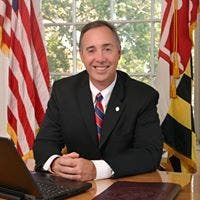

ANNAPOLIS, MD — Maryland's governor on Tuesday proposed new legislation aimed at fighting the state's opioid addiction crisis. But the personal story of Anne Arundel County's top prosecutor illustrates two of the issues that contribute to the problem: physicians who prescribe heavy-duty painkillers when they may not be needed, and red tape that complicates efforts by families to get someone into a treatment program, and then keep them there.
The press conference led by Gov. Larry Hogan Hogan was held at Anne Arundel Medical Center in Annapolis. Hogan said that he did not fully appreciate the scope of the opioid epidemic until he began traveling around Maryland during his gubernatorial campaign three years ago. He said when he asked people across the state what their community's biggest problem was, regardless of whether they were from a rural, urban, wealthy, or poor community, "the answer was always the same: heroin."
State's Attorney Wes Adams, R-Anne Arundel, spoke about the recent death of his brother-in-law, who he said died of an opioid overdose. Adams said his brother-in-law became addicted to opioids after being prescribed painkillers following a surgery about eight years ago. He said he moved in and out of rehab centers and periodically became clean, only to relapse later.
Find out what's happening in Annapolisfor free with the latest updates from Patch.
Adams noted the obstacles from the medical and insurance industries that he and his family faced as they tried to keep his brother-in-law in treatment. He also expressed consternation over recently being prescribed a substantial supply of Oxycontin, an opioid pain-killer, following a medical procedure, despite telling his doctor that he was only experiencing moderate pain.
He said that the only major side-effect his pharmacist warned him of was constipation, despite the well-documented risk of addiction that use of the drug carries.
Find out what's happening in Annapolisfor free with the latest updates from Patch.
Experts say that many heroin users in the state are people who became addicted to prescription narcotics following an injury or surgery, then begin to use cheaper illicit heroin when they can no longer obtain prescriptions for legal opioids.
SEE ALSO:
- Heroin and Opioid Crisis Hits Record High in Maryland
- Heroin Crisis: Desperate Families Wonder If Anyone Cares
- Heroin Epidemic Escalates Across Maryland
- 3 Die from Heroin Overdoses in One Day: Harford Sheriff
- $3M Targeted at Fighting Maryland's Heroin Epidemic
- Heroin Addicts Dealt Hope By County Police Chief
- 'I Really Like Getting High': Anne Arundel Heroin User
New Legislation Targets Addiction Crisis
Lt. Gov. Boyd Rutherford — whom the governor has directed to focus on opioid addiction — said the governor would sign an executive order that will create an Opioid Operations Command Center, a "virtual" task force charged with organizing training and funding for local anti-addiction teams, as well as collecting data on opioid use and abuse.
Both Hogan and Rutherford appeared optimistic but acknowledged that the problem of opioid addiction is worsening in Maryland. Anne Arundel County Executive Steve Schuh said that, at the start of his tenure a couple years ago, there was one overdose per day and one death per week from opioid abuse in his county. He said those figures have risen to two overdoses per day and two and a half deaths per week.
Proposed legislation includes:
The Prescriber Limits Act would prevent doctors from prescribing more than seven days worth of opioid painkillers during a patient's first visit or consultation. The law exempts patients going through cancer treatment and those diagnosed with a terminal illness.
The Distribution of Opioids Resulting in Death Act would introduce a new felony charge carrying up to 30 years in prison for people convicted of illegally selling opioids or opioid analogues that result in the death of a user. Rutherford said the law would carry protections for people who were selling to support their addiction.
And the Overdose Prevention Act authorizes the collection of and review of non-fatal overdose data and would make it easier for people to fill prescriptions for naloxone, a drug that can counteract the effects of an opioid overdose.
Drug Treatment Plan
Hogan’s proposed fiscal year 2018 budget includes $4 million in new spending to increase support for those struggling with heroin and opioid addiction. In addition, the budget contains $1.3 billion for mental health and substance use disorders, including $159 million dedicated to existing non-Medicaid substance use disorder treatment programs.
In addition, the Maryland Department of Health and Mental Hygiene recently received a Medicaid waiver renewal for its HealthChoice Program. This will allow Maryland Medicaid to reimburse for residential substance use treatment services delivered in large facilities, known as Institutes for Mental Diseases, greatly expanding the number of facilities in Maryland that can offer treatment services.
This waiver will also authorize the state to pursue presumptive eligibility for people leaving jail or prison through its Medicaid State Plan. In the coming weeks the state will amend its Medicaid State Plan to create this eligibility option, which will supplement Maryland Medicaid’s current jail enrollment and care coordination strategy.
— Story By JACOB TAYLOR, Capital News Service, with additional reporting by Patch Editor Deb Belt; file photos of Anne Arundel County State's Attorney Wes Adams and Maryland Gov. Larry Hogan
Get more local news delivered straight to your inbox. Sign up for free Patch newsletters and alerts.