Sports
Q&A: Roxbury Latin Athletic Trainer Walter Norton, Jr.
Former Celtics conditioning coach working to "change the culture" surrounding RL fitness training.
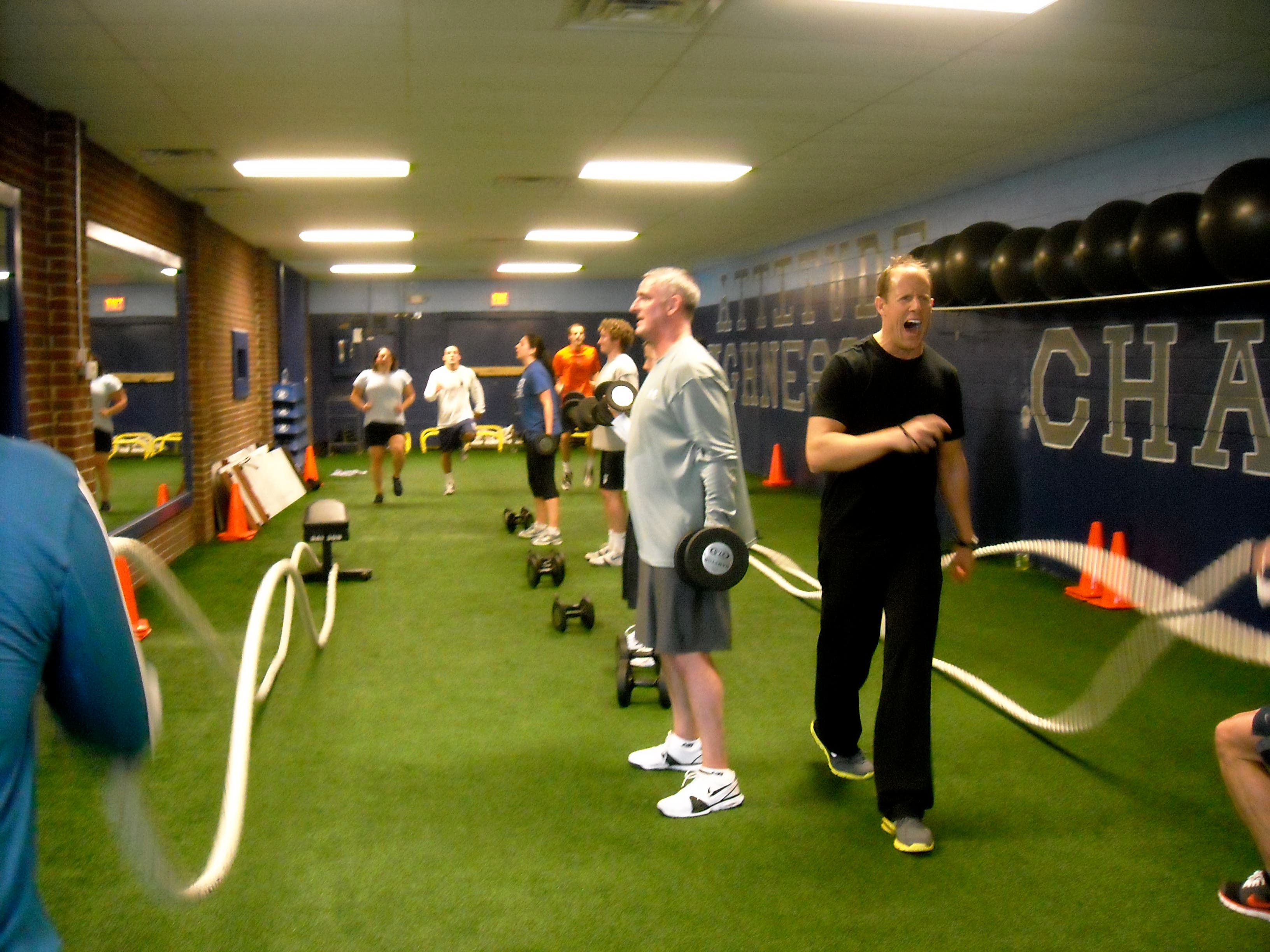
Walter Norton, Jr. boasts quite a resume as an athletic trainer. Since graduating from Boston University in 1993, where he studied Human Movement, he has worked with Boston University hockey, the Boston Bruins, the New England Revolution, the Boston Breakers, Harvard basketball, and a number of Olympic athletes. Norton prepared Ben Affleck for his role in The Town, and won an NBA Championship in 2008 as a Strength and Conditioning coach with the Boston Celtics. He's also opened multiple fitness-based businesses.
This year, Norton began working with Roxbury Latin twice a week. Patch caught up with him to discuss his time at the school, its culture, and the workout he provides for the Red Foxes.
West Roxbury Patch: How did you become involved with Roxbury Latin?
Find out what's happening in West Roxburyfor free with the latest updates from Patch.
Walter Norton, Jr.: I've been fortunate enough to work with a guy named Ron Broggi for an extended period of time. He's a Roxbury Latin graduate, and he has worked downtown, in downtown Boston, where I've trained a group of guys who work together for an extended period of time before their companies went separate ways. They all still work fairly close together from a proximity standpoint, but they no longer work for the same company. I came to meet Rob, and I've been training him for five years now, perhaps even longer, and he suggested one day - he's always been a strong Roxbury Latin supporter, not just financially but actually being there and being active. And he was hoping we could do something, and I said let's give it a shot, and we were fortunate to lay out a plan that we thought could work, and it's going from there. He's the real impetus behind everything and he and [RL Athletic Director] Tony Teixeira have been terrific.
Patch: Tony and head football coach Pat Ross have both been excited about the work you're doing at the school. How have you felt in terms of fitting in and becoming a part of the school's culture?
Find out what's happening in West Roxburyfor free with the latest updates from Patch.
Norton: Well there wasn't a lot to expect. I wasn't overly familiar with the culture at a school like that. I knew what it's reputation was academically - certainly it's peerless, and there's a bunch of things that go with the history of Roxbury Latin that I was aware of because I've known Rob, again, for five-plus years. So I had a decent idea about how some things were, but it's very different to hear an audio history and then go and see it, and see how the kids are, and see how the culture at the school is, and see what they're used to and what they have and what they've had made available to them, and what they have and haven't been exposed to. So I would say the people there have made it very easy for me, and I've always enjoyed kind of starting things from scratch; I've started a number of businesses from the ground up and I really enjoy the building of something from zero to whatever in terms of gaining momentum, but I would say I was a little surprised at the beginning based on how little some of the kids have done or been exposed to. I've trained a bunch of kids in that [the Independent School] League that those kids compete against, and a lot of the kids, a lot of the hockey players, a lot of the football players, a lot of the athletes in general had been participating in organized strength and conditioning programs for a long time. And I was surprised by how few of the kids were.
It's different. If you've been a coach somewhere for 10 or 20 years, it means you've been established, you've done fairly well, it means you've given a lot of time to the kids, because obviously it's not the most financially rewarding situation. But in those 20 years, a lot of things have changed from how kids prepare themselves for sports and how sometimes you see kids starting to specialize and play a sport year-round. So I think it's also a period of transition for the coaches and getting them used to what we're doing, and we're trying to expand the program, to make it a little bit better. I'm currently there two days a week, and we've accomplished quite a bit, and it's been very neat. But to get a larger exposure, we're trying to expand it to three days a week and really give the kids the opportunity to not just train around the game schedule, but get some of the kids who are not in-season to take their training seriously as preparation for their upcoming season. So it's been a great learning experience, and I haven't been disappointed one day yet - in fact, they've made it more than easy for me - but we've reloaded the facility and it still needs some work, but it's much improved, and we've gone about changing the culture for some of the kids.
But I think what it's going to take is a little bit more immersion and just time to continue to build. But I would say there's been plenty of time where I say, 'Wow, I'm not sure we can even cover all the kids that are training today,' because there's so many that want to train, and that's a direct contradiction to when we started. The first couple days, there weren't many kids and they were still getting used to their perceptions of what a strength coach was. I know they had someone in there previously, but again, not everyone in our field is the same, so it was a little bit different.
Patch: Describe the type of workout you provide. What makes your program different from other high schools?
Norton: We've been fortunate that I started a long time ago. I founded a business called Mike Boyle Strength and Conditioning that's been in existence for 15 years. When we started, we had a decent idea of what strength and conditioning was, and at one point we had the largest strength and conditioning program in the country, training 450 kids a day. But there's always an evolution of what you continue to learn and what you read via research online, in articles, journals, etcetera, and then what you see that works. You base half of it on the research and half of it on the empirical notion of what works for one person might not work for groups of people - if you're training a team versus training individual people. And then you find some things you like and things come in cycles.
But I would say, the way it's structured right now, we do a little bit of everything. Sometimes it's geared towards building muscle mass and getting stronger, and sometimes it's much more geared towards getting kids faster or quicker or more explosive. All of those are very valid topics. Certainly we're trying to get kids much more explosive, much faster, teach them how to train direction, get their torsos stronger, and then carry as much lean muscle mass as possible without sacrificing any speed. But there are certainly other things we do. We have rehab exercises we do. The program is evolving all the time based on the amount of time we have and the fact that we're trying to expose the kids to as many things as possible. And the program I run there is probably different than, if one of those kids came to my business in Andover, they would see a slightly different program just based on what we do.
Patch: How have RL student-athletes responded to your program?
Norton: The students have been great. The kids are awesome. They work hard. They enjoy being challenged. They are collectively a group of smart kids. And quite frankly some of the younger kids have responded very, very well. So the ages haven't been detrimental; we have kids from seventh grade all the way to seniors in high school, and that part has been fantastic. The kids have certainly taken to it, and more importantly they've put forth a great effort on a regular basis. So that part has been very cool, and they're very receptive to coaching, which totally makes my job easier.
Patch: Any closing thoughts?
Norton: Like I said, everything's been terrific and we've been trying to establish just basically a new culture there at a school that didn't have a lot and is probably gaining a lot of ground on a bunch of the other schools in [the ISL] in terms of facilities and approach to strength and conditioning. A bunch of the other schools - Milton Academy, Belmont Hill, BB&N - have kind of had people in place and bigger, nicer facilities, but Roxbury Latin has certainly stepped up and said, "We want to change the culture here," and make this something that our kids can not only enjoy but more importantly respond to in a positive way so that they get physically better.