Schools
Farmington Schools Shift Focus from New Hires to Existing Staff
Assistant Superintendent Dave Ruhland says professional development is a priority.
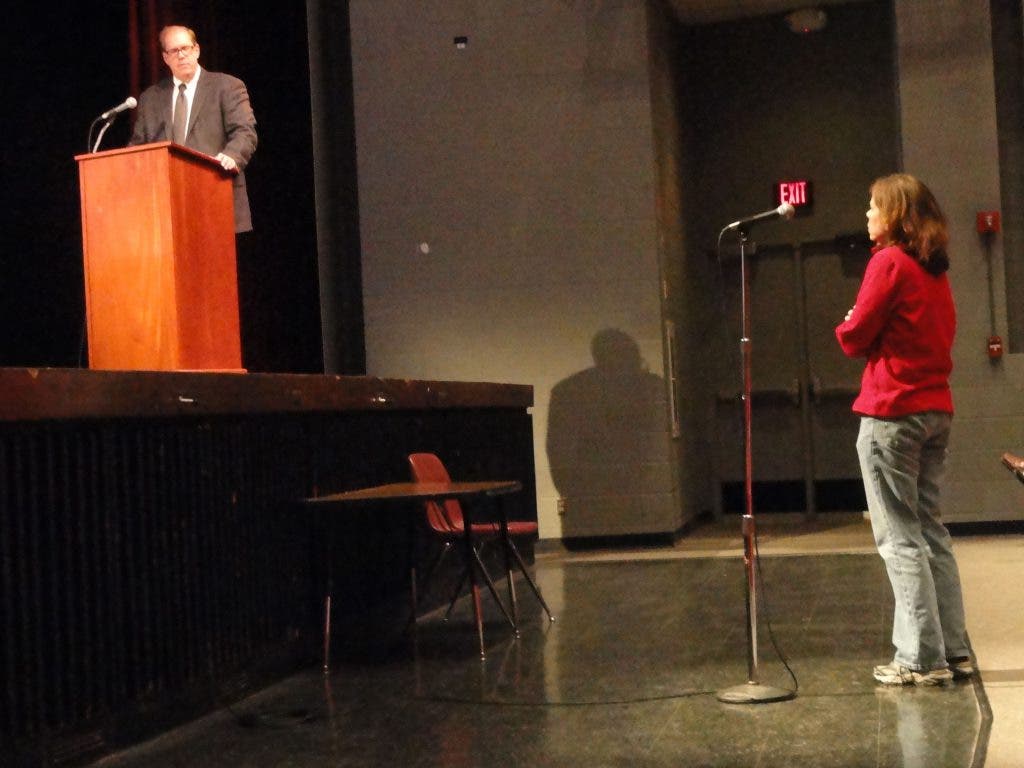
The function of the school district’s human resources department has always been a mix of hiring new workers and serving the staff already working for the schools, assistant superintendent David Ruhland said.
But these days, the district hasn't been hiring much, thanks to smaller budgets that force the district to maintain a leaner staff.
The focus has shifted to professional development of the existing staff to help them meet district goals in the areas of high academic standards, cultural competence and integrating technology in school operations and academics.
Find out what's happening in Farmington-Farmington Hillsfor free with the latest updates from Patch.
And the focus has remained sharp, despite some serious tensions and challenges this year, Ruhland told officials at Tuesday's Farmington Public Schools Board of Education meeting.
“With or without the legislature, we had already begun work on our evaluation process,” Ruhland said, alluding to recent education reform bills that have been proposed in Lansing. The most recent bill, signed into law July 19, reforms teacher tenure to include performance considerations, rather than reliance on a number-of-years-worked pecking order.
Find out what's happening in Farmington-Farmington Hillsfor free with the latest updates from Patch.
One of the big shifts when the district started considering how to change teacher evaluations was changing the perception of evaluations themselves, he said.
There had to be a “shift from a culture of 'evaluation means discipline' to one in which evaluation means growth,” he said. “Our focus has gotten more laser-like in terms of merit pay and tying evaluation to student success.”
But human resources’ efforts don’t solely focus on teachers, he added.
“It’s those secretaries, bus drivers and paraprofessionals” who also contribute to education, Ruhland said. And that’s where much of the internal tensions played out this year. In February, the district sought proposals to privatize non-instructional services. It solicited and considered bids for nutrition, custodial, maintenance and transportation services.
“It was very hard on our community,” Ruhland said.. “It was very hard on our staff.”
In the end, officials voted against privatization. And Ruhland said that as tough as the process was, he’s convinced it was successful.
“I can’t think of one single example where I had a staff member be anything less than professional,” he said.
Another challenge this year was continuing with the district’s technology plan. The technical staff in each building was reduced to a central help desk and call center of technicians, which presented a significant challenge to teachers and staff.
Still, the district is moving forward with making all the facilities wireless-computer accessible, to promote the concept of “anywhere, anytime learning,” Ruhland said. The district is also providing Wiki and Moodle training for faculty, and upgraded its voice mail system to fully integrate email.
“So when I get a voice mail, I get an email alert,” Ruhland said. And all users on the system can listen to voice mail messages directly through their computers.