Health & Fitness
Grafted Eggplant, Pepper and Tomato Plants are Here!
Grafted vegetable plants combine disease resistance with greater flavor and quality. They are catching on in the USA. Check your local garden center.
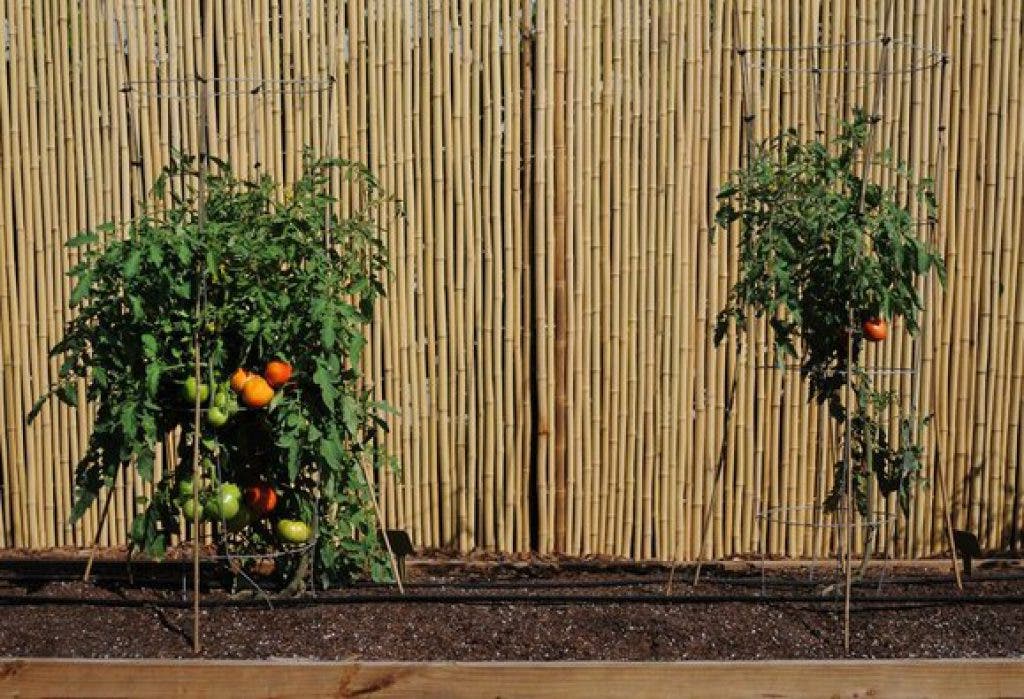
Get ready for grafted vegetable plants. Some catalog companies offer grafted tomato, pepper, eggplant, watermelon, melon, and cucumber plants. Our local garden centers could be offering them this year. Check them out! Grafting
is not new. It has been used in agriculture for centuries to improve fruit
flavor and quality. Fruit trees and grape vines are just two examples.
Grafted vegetables enjoy widespread use in Asia and Europe. The USA is catching up, especially with organic farmers and backyard gardeners.
What is grafting? Grafted veggies are created when the top part of one plant (the scion) is attached to the bottom or root system of another plant (the rootstock). Once fused, the rootstock contributes vigor and disease resistance while the scion is chosen for exceptional fruit flavor or quality. Grafting is a very labor intensive process.
Find out what's happening in Edinafor free with the latest updates from Patch.
Benefits. The result of grafting is a plant that is more vigorous and productive than the variety would be without the special rootstock.
Grafting can be effective against a wide range of diseases, such as Verticillium Wilt, Fusarium Wilt, Corky Root Rot, Root-Knot Nematodes, Bacterial Wilt, Tomato Mosaic Virus, and Tomato Spotted Wilt Virus. Grafting may also inhibit Early and Late Blight and Blossom End-Rot.
Find out what's happening in Edinafor free with the latest updates from Patch.
Grafted plants are reputed to be more tolerant of temperature extremes, which we have seen in Minnesota (and elsewhere). Remember the hot, cold, wet, dry summer of 2012? Other benefits include:
- Can be grown in containers
- Environmentally friendly technique
- Excellent value for the cost
- Flavor of an heirloom (scion)
- Greater disease resistance (rootstock)
- Greater productivity-yield
- Larger fruit (typically)
- Longer harvest-season
- More effective uptake of water and nutrients
All of these benefits mean that you, the home gardener, can plant earlier in the season and harvest your crop over a longer period of time.
Handle with care! Okay, so your grafted plants are in your little hands. Now what? Handle them with care. Do not bend or put pressure on the graft. This could break or damage the graft. Planting is similar as with any other tomato plant. However, you must keep the graft above the soil line so any external roots that form on the scion do not come in contact with the soil.
Grafted plants almost always need staking or supports. Prune the suckers to ensure that the plant’s energy goes into fruit production and not excessive foliage.
A few seed catalog companies are offering grafted vegetables—J.W. Jung Seed Co., W. Atlee Burpee & Co., Totally Tomatoes/Vermont Bean, Gurney’s, Territorial Seed Company—to name a few. Cucumbers and other curbits
have been grafted, however, tomatoes are by far the most prevalent (along with
some Pepper and Eggplant varieties). Here are some of the varieties available:
Tomatoes: Amish Paste, Big Beef, Big Rainbow, Big Zac, Black Krim, Brandywine Pink, Brandywine Red, Celebrity, Celebrity, Cherokee Purple, Copia, Defiant, Early Girl, Gardener’s Delight, Goliath Original, Indigo Rose, Indigo Rose, Juliet, Legend, Momotaro, Mortgage Lifter, Mountain Magic, Pineapple, Rutgers, San Marzano, San Marzano Gigante 3, SunSugar, Sweet Million, and Yellow Pear;
Cucumbers: Fitness, Iznik, and Quatro;
Peppers: Big Bertha Hybrid, California Wonder, and Jalapeño; and
Eggplant: Epic (Dusky) Hybrid, Ping Tung, Rosa Bianca.
You may see these plants identified as “grafted plants” or “super plants. And they are not cheapos. Expect to pay about $16 for two and $7 for each additional plant.
And just for fun, Sutton Seeds (since 1806) from the UK has a wider selection of grafted plants. They have a location in Canada if you want to try ordering across the border. Sutton has single grafted plants (1 plant, 1 fruiting stem, 1 variety). These include tomatoes, cucumbers, peppers, and eggplant. Their double grafted plants (1 plant, 2 fruiting stems, 1 variety) include three tomato selections. Closer to home, Territorial Seed Company offers both single and double tomato varieties (6), single pepper (2) and eggplant (1) varieties.
Back in the USA, Cornell did a study of two cucumber varieties, Manar and Diva (March, 2010). The grafted plants of both varieties produced more pounds per plant than did their un-grafted counterparts—6.4 more pounds with Diva and 0.9 pounds with Manar. That converts to 6.5 more fruit for Diva over its un-grafted counterpart and 4.1 more fruit for Manar.
Grafted plants may be new in the USA, but they are not a novelty item. They combine disease resistance with great flavor and quality. As production costs come down, look for these plants at the local level. Contact your favorite garden center—got grafted veggies?
Questions? Comments? Please contact me on this blog or at larryc@cci4360.com