Politics & Government
Options Limited for Dealing with Edina Coyotes
Tactics used in rural areas not applicable in cities like Edina.


Yedda Marks has seen one circling her backyard on Garrison Lane four different times since early March, eyeing her two West Highland Terriers.
Robert Bennett, whose small dog was attacked, thinks the city is “surrendering” to the problem and a more aggressive (i.e., shooting) approach regarding the intruders is necessary.
Police Chief Jeff Long says the police department wants to take a safe approach and not do anything too radical.
Find out what's happening in Edinafor free with the latest updates from Patch.
Mayor Jim Hovland foresees the need for “new strategies” to be developed because he believes the problem is not going away.
Welcome to the world of modern day intrusion into urban areas by wild animals that have previously lived exclusively in rural areas and the wilderness of America.
Find out what's happening in Edinafor free with the latest updates from Patch.
Residents of Edina, meet your newest neighbor: the coyote.
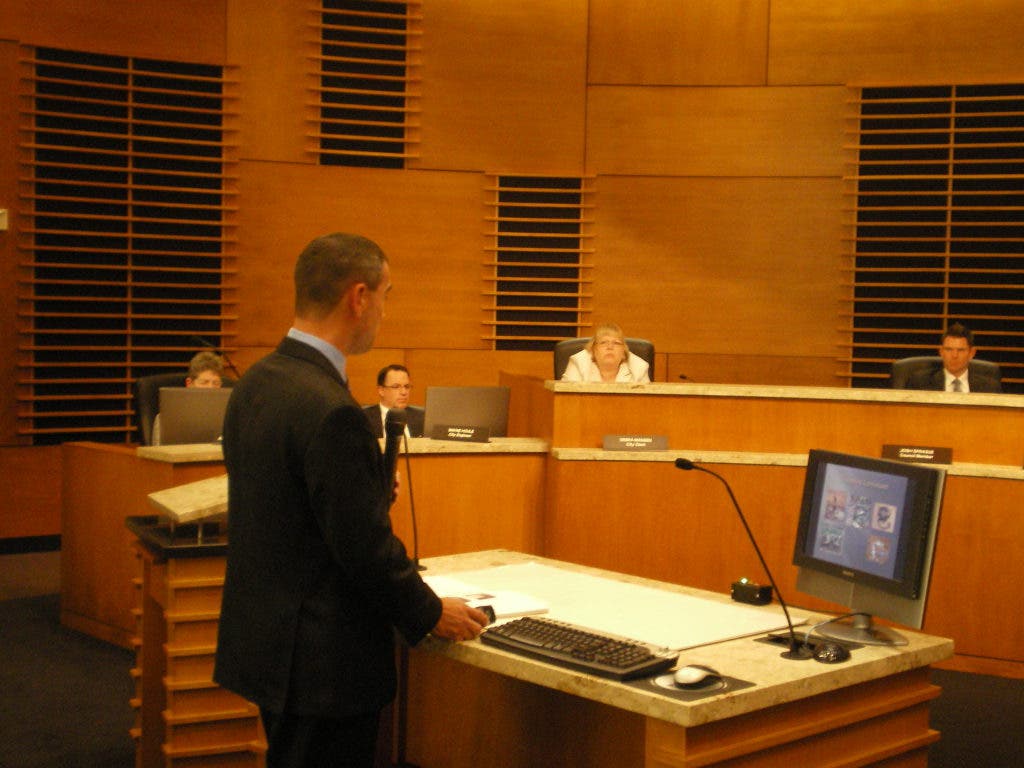
At Tuesday night’s regular meeting of the Edina City Council, Police Chief Long said coyotes are a “serious issue, not just in Edina, but throughout much of the metropolitan area.”
Long opened his presentation by describing the coyote: a wild dog which averages about 30 pounds in weight in the summer and up to 60 pounds in the winter; a carnivore that eats small mammals such as rabbits and mice; a loner that, unlike wolves, do not live in packs; and who routinely avoids people.
Throughout parts of the country which—until recently—had never played host to coyotes, communities like Edina are spotting an increasing number of them and other animals like foxes and bears.
What to do about them is not a simple answer.
Long said traditional control tactics such as shooting, trapping or poisoning, while workable in rural areas, are not practical or safe in densely populated places like Edina.
“Besides the obvious dangers of discharging firearms even by trained marksmen in a place like Edina, they are very hard to hit,” Long said. “Coyotes can run up to 45 miles per hour and inherently run a zigzag pattern.
“They don’t routinely stand still and become a much easier target like a deer.”
He added that trapping and poisoning pose risks to domestic pets as well as children.
“We are attempting to educate people on what precautions to take,” he added.
Long encouraged area residents to keep an eye on kids and smaller pets—which are especially vulnerable—when they're outdoors, in addition to being diligent about keeping garbage cans indoors and securely covered.
Mayor Jim Hovland, while praising the approach, predicted the problem will undoubtedly grow and new thinking is in order.
He said that the current approach, while good for the time being, will need to be replaced by some other tactics in the future and he wants “new ideas to be considered.”
The police department and city do not currently deal with wild animal problems because they are not equipped or trained to do so. Residents, under current ordinances, are responsible for wildlife on their property, and can contract with companies who specialize in dealing with the problem.
In the meantime, Marks would prefer to see local officials take some additional precautions. She suggests the city regularly post reported sightings on its website so residents have an idea of where coyotes are traveling.
“I feel somewhat like a prisoner in that I now won’t even let my dogs out to run about in the backyard," Marks said. "Even though it is completely fenced in, I worry that a coyote could jump that fence. I will not risk even standing outside with the dogs off leash in the event a coyote could jump the fence and I could not secure both dogs at the same time.”
Chief Long assured the City Council his and other departments are doing all they can with the resources they have, but are going to be continually looking at ways to improve the situation and protect the citizens, their property and pets.