Arts & Entertainment
The Spirit of 1776: Fort Lee’s Retreat to Victory
Celebrate the Spirit of 1776 in Fort Lee - join Fort Lee's annual "General Washington's Retreat to Victory" Saturday at 11:45 a.m.

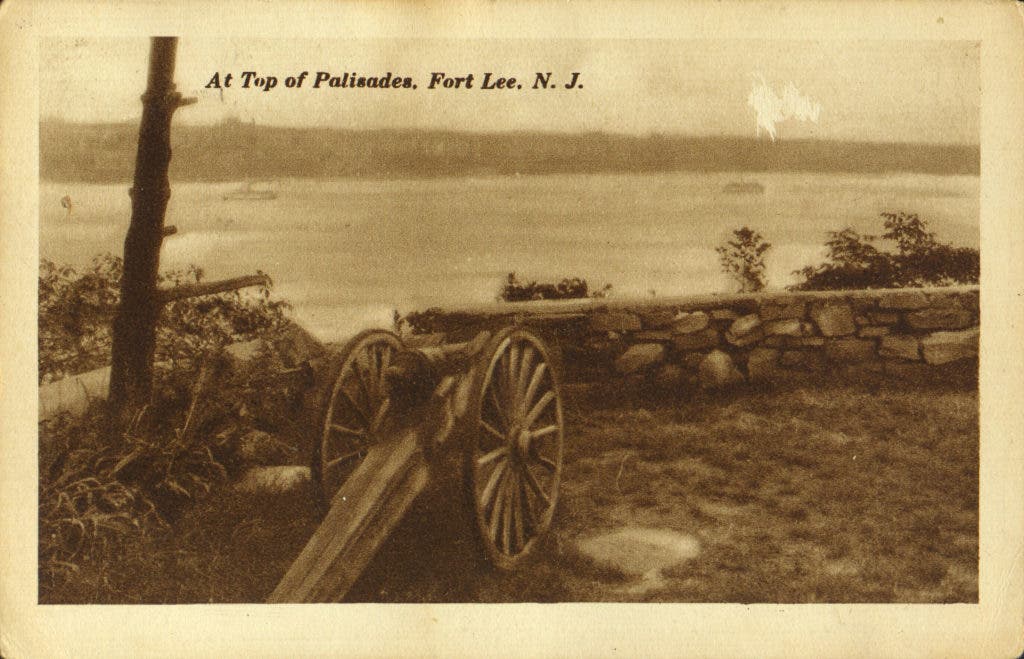


The fall of 1776 here in Fort Lee was cold and bitter as the winds echoed off the cliffs of the Palisades. Perched high atop this natural fortress, General George Washington observed his forces on both sides of the Hudson River, here in Fort Lee and across the river at Fort Washington. On November 16, General Washington and Fort Lee commander General Nathanael Greene watched in horror from the bluffs of Fort Lee as the British captured, and later imprisoned, some 2,000 American soldiers.
Less than a week later, under cover of darkness and rain, the British invaded New Jersey with the intention of capturing Fort Lee. Washington ordered his army to retreat. The American army, led by General Greene, retreated up present day Main Street in Fort Lee, and down the hill through present day Leonia, to Liberty Pole in Englewood, across the New Bridge and then south to the city of Hackensack.
Patriot, writer and American soldier Thomas Paine was with General Washington’s Army in Fort Lee, and as part of that same Army he participated in this retreat through New Jersey southward, leaving Northern New Jersey to the British. Washington retreated successfully across the Delaware River at Trenton by December 8, 1776. The British on the other side of the Delaware were well equipped and numbered 10,000 strong.
Find out what's happening in Fort Leefor free with the latest updates from Patch.
Washington’s army was much fewer in number, and troops were short on both supplies and hope. In addition to the men lost at Fort Washington, General Washington worried about losing another 2,000 men when their enlistments ran out in December.
Washington wrote, “If this fails, I think the game will be pretty well up.”
Find out what's happening in Fort Leefor free with the latest updates from Patch.
Something was needed to save the fledgling nation at this time of crisis.
Thomas Paine was determined to keep the game going, and here was where the famous imagery of Paine writing on drumhead by campfire came into play. The fate of this young nation rested on Paine’s quill pen and his ability to wrap this retreat in a blanket of nobility, purpose and cause - cause for the continuation of a struggle larger than any single military engagement.
Paine spoke not of defeat but of hope when he wrote in The Crisis Papers, “The harder the conflict, the more glorious the triumph.”
Paine asked to leave camp so he could finish the work and have it printed in Philadelphia. The American Crisis was published on December 19, 1776, and the author’s signature was "Common Sense." The tide was about to turn for General Washington and his men and for the cause of liberty.
Immediately, General Washington realized the power of Paine’s words. He ordered that his officers read The Crisis Papers to the troops prior to their Christmas night crossing of the Delaware to attack British forces occupying Trenton. The result was a successful engagement in Trenton and a subsequent victory for American forces in Princeton. Washington also used the pamphlet as a selling tool to encourage soldiers to reenlist. The stirring words had enormous impact and resulted in an infusion of new recruits. The return of former enlisted militiamen bolstered Washington’s forces. In fact, the most important weapon General Washington had in his arsenal was the quill pen of Thomas Paine.
The American Crisis was read throughout the colonies despite the difficulty of getting it printed. In the winter of 1776-1777, many presses closed down in fear of the British, the high cost of paper and newspaper subscriptions and the scarcity of post riders due to ever-present danger.
Paine’s writings literally resuscitated the American Revolution. And the words he wrote about Fort Lee in The American Crisis will echo throughout our borough on Saturday (Nov. 19) as we reenact that critical time in 1776 - all of us in Fort Lee are truly the winter soldiers of General Washington’s cause, so let us all come together tomorrow in to celebrate the immortal words of Thomas Paine from The American Crisis:
These are the times that try men's souls: The summer soldier and the sunshine patriot will, in this crisis, shrink from the service of their country; but he that stands it now, deserves the love and thanks of man and woman. Tyranny, like hell, is not easily conquered; yet we have this consolation with us, that the harder the conflict, the more glorious the triumph. What we obtain too cheap, we esteem too lightly: it is dearness only that gives every thing its value. Heaven knows how to put a proper price upon its goods; and it would be strange indeed if so celestial an article as freedom should not be highly rated.