Politics & Government
Sherrill’s Budget Looks To Free NJ From Health Plan Chokehold
"These annual double-digit increases are threatening the fiscal health of all levels of government."


The price of New Jersey’s state health benefits plan is expected to remain sky-high, officials say – and it will likely have an impact on many homeowners’ property taxes.
Gov. Mikie Sherrill introduced her first budget proposal in March, warning that New Jersey is looking at a $3 billion structural deficit: one of the worst gaps in the nation.
Earlier this week, the New Jersey Assembly Budget Committee began a series of hearings on the Sherrill administration’s $60.7 billion spending plan. The talks included a discussion about public employee health benefits – a major driver of state spending.
Find out what's happening in Montclairfor free with the latest updates from Patch.
The State Health Benefits Plan and the School Employee Health Benefit Plan are expected to once again see “double digit” premium rate increases for plan year 2027, New Jersey State Treasurer Aaron Binder said.
According to Binder, the final numbers won’t be available until early July. However, early signs show that the increases could be as high as the state saw last year.
Find out what's happening in Montclairfor free with the latest updates from Patch.
It’s not good news, he added.
“These annual double-digit increases are threatening the fiscal health of all levels of government,” Binder said. “Something must be done, and urgently.”
“Gov. Sherrill’s proposals for $75 million in cost savings at the state level and $150 million in the local government plan are the right start,” Binder said. “But this issue will not be resolved overnight. Because the root causes are structural and complex, this problem can only be addressed through a comprehensive solution.”
Treasury officials explain more about the situation in the fiscal year 2027 budget book, which can be seen online here.
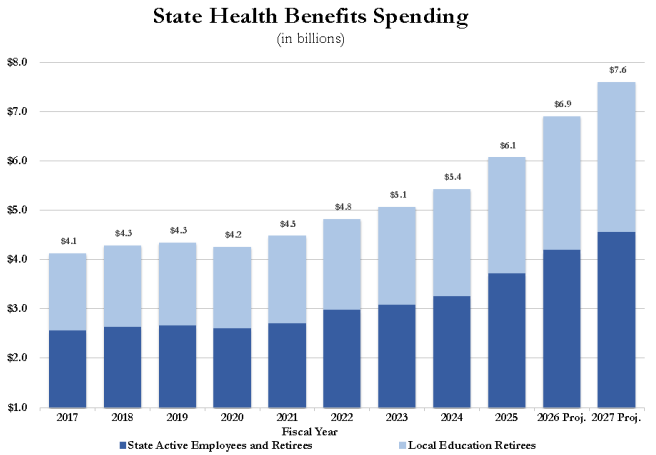
New Jersey expects to spend nearly $7.6 billion on health benefit payments for active and retired employees in fiscal year 2027. This is a 10 percent increase from 2026 and an 84 percent increase since 2017.
“The growth in the cost of health care for our public employees is unsustainable,” treasury officials reported. “The rising costs far outpace the rate of inflation and wage growth and are crowding out critical investments in other areas of the budget.”
The rising cost of the state health plan has trickled down to the local level, where town councils and school boards have been forced to shoulder the skyrocketing cost of insuring their workers. These costs are often passed on to local homeowners via property tax increases.
The rising rates have caused some towns, such as Montclair, to ditch the state’s health plan in favor of private carriers.
Interim chief financial officer Joseph Monzo said the township made the “fiscally responsible decision” to extricate itself from the state health benefits plan in 2025. “You’ve all seen the articles about the death spiral they’re in,” he told the Montclair Town Council during a budget presentation in March.
Last year, the South Orange and Maplewood Board of Education voted to switch to a self-insured plan. School officials said the move came in response to a 31 percent premium increase announced by the state, which would have raised the district’s annual costs from roughly $20 million to $27 million in the next fiscal year.
The departure of former plan participants has caused premiums to rise even more for those that remain.
There are nearly 650 local government employers and more than 150,000 New Jersey residents – including active employees and retirees – who are currently enrolled in the program, state officials recently reported.
The rising cost of state health care insurance rates has sparked several protests in New Jersey over the past few years, including a rally and march in Newark.
Earlier this month, the Bernards Township Board of Education urged state leaders to make a change after feeling the impact of higher health care costs, which are causing a devastating one-two punch along with less state education funding. READ MORE: Lawmakers Urged To Act As Rising Health Costs, Declining State Aid Impact NJ School District
“I want to be direct about this,” a school board member said. “If we had received our fair share of extraordinary aid from the state and health care costs had been anywhere close to normal, we would’ve been able to keep this tax increase to 2 percent and avoided the painful cuts we are discussing.”
Looking for more New Jersey budget coverage? Check out some of our recent posts below (click headline to read article):
- 5 Takeaways From New Jersey Budget Address
- ‘Tax The Rich’: NJ Advocates Pressure Lawmakers As Budget Season Heats Up
- Sherrill Addresses How NJ Will Respond To Federal Medicaid Challenges
- Business Fees In Sherrill’s First Budget Raise Concerns
- Sherrill's New Affordability Plan For NJ: Who Wins, Loses
- NJ Funnels Billions Into These 10 Agencies
- Sherrill Cuts Property Tax Relief Eligibility In Budget Proposal
Send local news tips and correction requests to eric.kiefer@patch.com. Learn more about advertising on Patch here. Find out how to post announcements or events to your local Patch site.
Get more local news delivered straight to your inbox. Sign up for free Patch newsletters and alerts.