Arts & Entertainment
Welcoming the Lenape New Year at New Bridge Landing
On Sunday, the BCHS presented a number of lectures and opened the Steuben House for Chwame Gischuch - Algonquin New Year.
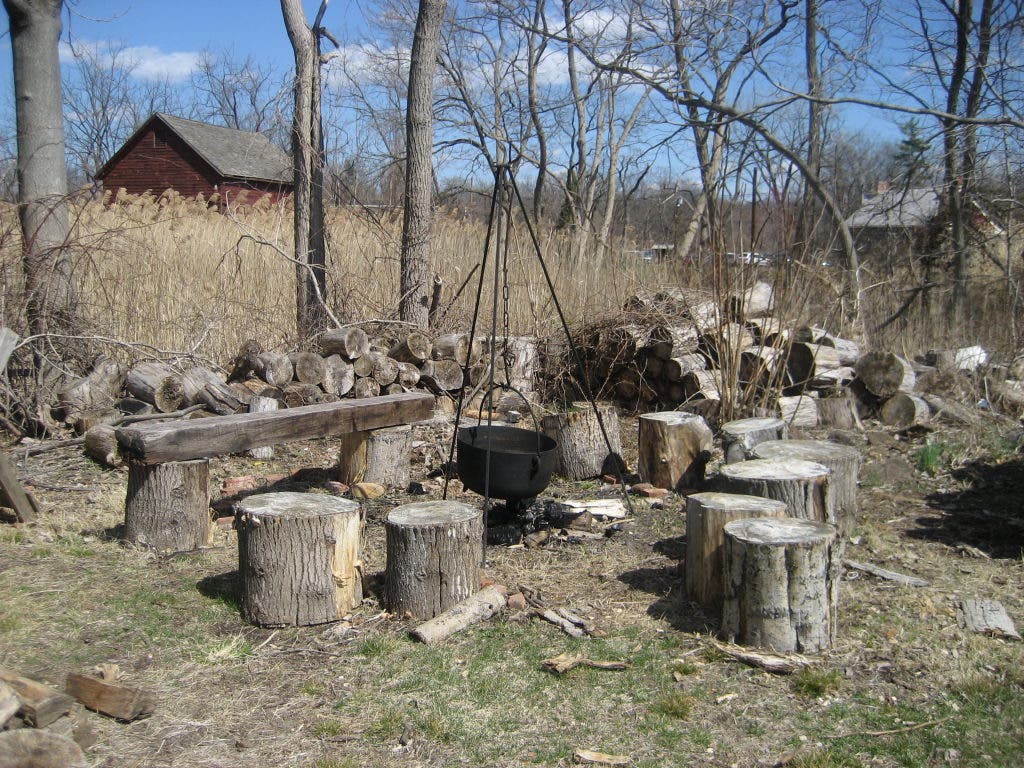


In celebration of Chwame Gischuch – the Lenape New Year – the Bergen County Historical Society held a number of events at historic New Bridge Landing.
The Lenni Lenape occupied most of what is now New Jersey, Delaware and into southern New York when the Dutch began to arrive in the area, and establish outposts. The Lenape became quite involved in the fur trade with the Dutch into the 17th Century.
Featured at the Steuben House at New Bridge Landing, Bob Wills, of the Sunrise Trading Post, was on hand to speak of history, foods, herbs, and customs of the Lenape people. Further, he had on hand numerous items representative of the Lenape, such as stone tools, deerskin rawhide, wampum, and furs.
Find out what's happening in River Dellfor free with the latest updates from Patch.
Mr. Wills shared a great deal of his knowledge about the Lenape people. For example, three of the clans of the Lenape in New Jersey were the Wolf, Turtle and Turkey. There was great meaning in the numbers 4 and 12, 4 for the grandfathers and 12 for the path to heaven.
He explained the process of skinning a deer, and how the skin was both laid out into rawhide and softened using a paste consisting of the brain matter of the animal and water (the Native American peoples would use nearly every part of any animal they killed).
Find out what's happening in River Dellfor free with the latest updates from Patch.
Mr. Wills spoke of primitive healing knowledge, such as using a spider web as a natural bandage, or the bark of the willow tree boiled in water as a painkiller. He explained the use of the quahog shell as both wampum and as a razor. Afterwards, people were invited to take a look at all the items he had brought, and many were for sale as well.
There are a number of Native American artifacts found in and around New Bridge landing on display in the Steuben House.
Later in the afternoon, historian and author Kevin Wright spoke on "Hearts of Stone: Ethnic Cleansing at Pavonia, 1643,” – an unfortunate massacre of the Lenape people by the Dutch.
During this period in history, Manhattan was New Amsterdam. No permanent settlements were established on the New Jersey side of the Hudson River, however in 1640 trading posts were established in the areas today known as Edgewater, off the Hudson, and Bogota off the Hackensack River.
It was not so much the Dutch government creating these ‘settlements’, so much as officers of the Dutch West India Trading Company. They made quite a bit of profit on the fur trade, all the way up the Hudson at their post at Fort Orange, which is now Albany, and in Pavonia, which is the Weehawken/Edgewater section.
Mr. Wright explained in detail the events that would lead up to the terrible massacre of 80 Native Americans, which in turn lead to the revenge burnings of the farmsteads and trading posts in the area, preventing any permanent settlements from coming into being. A dark part of history Mr. Wright felt cannot go ignored.
It was a good day to explore the various pre-Revolutionary War structures of Historic New Bridge Landing. For more information about the Bergen County Historical Society, visit their website.