Crime & Safety
Rumson Commodities Trader Gets 3 Years in Prison for 'Spoofing' Trade Scam
In a precedent-setting case, Michael Coscia became the first person ever to be federally convicted for "spoofing."


Rumson, NJ - A commodities trader who lives in Rumson was sentenced in Chicago last month to three years in federal prison, the FBI announced Friday. In a precedent-setting case, Michael Coscia became the first person ever to be federally convicted for "spoofing," a practice where traders illegally use computer algorithms to manipulate the markets.
Coscia was the manager and owner of Panther Energy Trading, LLC, a high-frequency futures trading company based in New Jersey.
In fact, it was a computer programmer he hired at Panther Energy Trading who testified against him at trial, testifying that Coscia had designed two algorithm programs to be used for high-frequency trading and gave the programmer specific instructions on how he wanted the programs to operate. The algorithms moved the markets in a direction that was favorable to him. As a result, he was able to generate $1.4 million in illegal profits between August and October 2011, the FBI said.
Find out what's happening in Rumson-Fair Havenfor free with the latest updates from Patch.
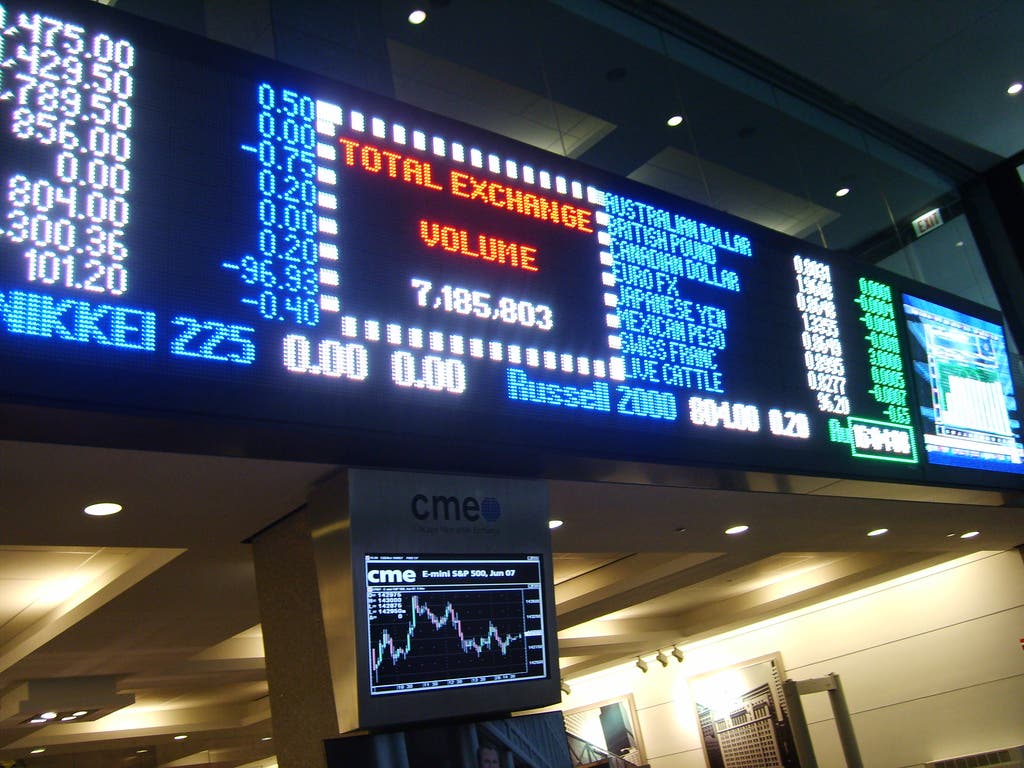
To place his trading orders, Coscia used servers physically located in Chicago that were part of a global electronic trading platform called Globex, operated by CME Group. His scheme — a variation of the “pump and dump” schemes that have been around since trading began — involved placing large-volume orders that he intended to cancel before they could be filled by other traders, thus creating a false impression about the demand and number of contracts available in the market. Other traders would react to the fake market information he had created and try to interact with the orders, pushing prices up or down, but the orders would disappear (yanked by Coscia’s trading program). At the same time, Coscia was able to purchase contracts at prices lower than, or sell contracts at higher prices, than the prices available in the market before he entered his large-volume orders.
The type of trading that Coscia did— high-frequency trading —is a form of automated trading that uses computer algorithms to make decisions and place orders and is designed to enable traders to communicate with markets in milliseconds. He traded in futures commodities such as gold, soybean meal, soybean oil, and high-grade copper, as well as contracts that reflected changes in the value of the Euro and British pound against the U.S. dollar on the Chicago Mercantile Exchange, the Chicago Board of Trade, and the New York Mercantile Exchange.
Find out what's happening in Rumson-Fair Havenfor free with the latest updates from Patch.
Coscia’s scheme was eventually uncovered by the various exchange groups and regulators, and in July 2013, the CFTC ordered Coscia to return $1.4 million he had made off the markets, and to pay an additional $1.4 million civil penalty on top of that. He was indicted by a federal grand jury in October 2014 on six counts of spoofing and six counts of commodities fraud, and in November 2015, he was was convicted on all 12 charges. After a one-week trial, the jury came to a decision in under an hour.
He calls Rumson, New Jersey home, the Chicago Tribune reported.
Get more local news delivered straight to your inbox. Sign up for free Patch newsletters and alerts.