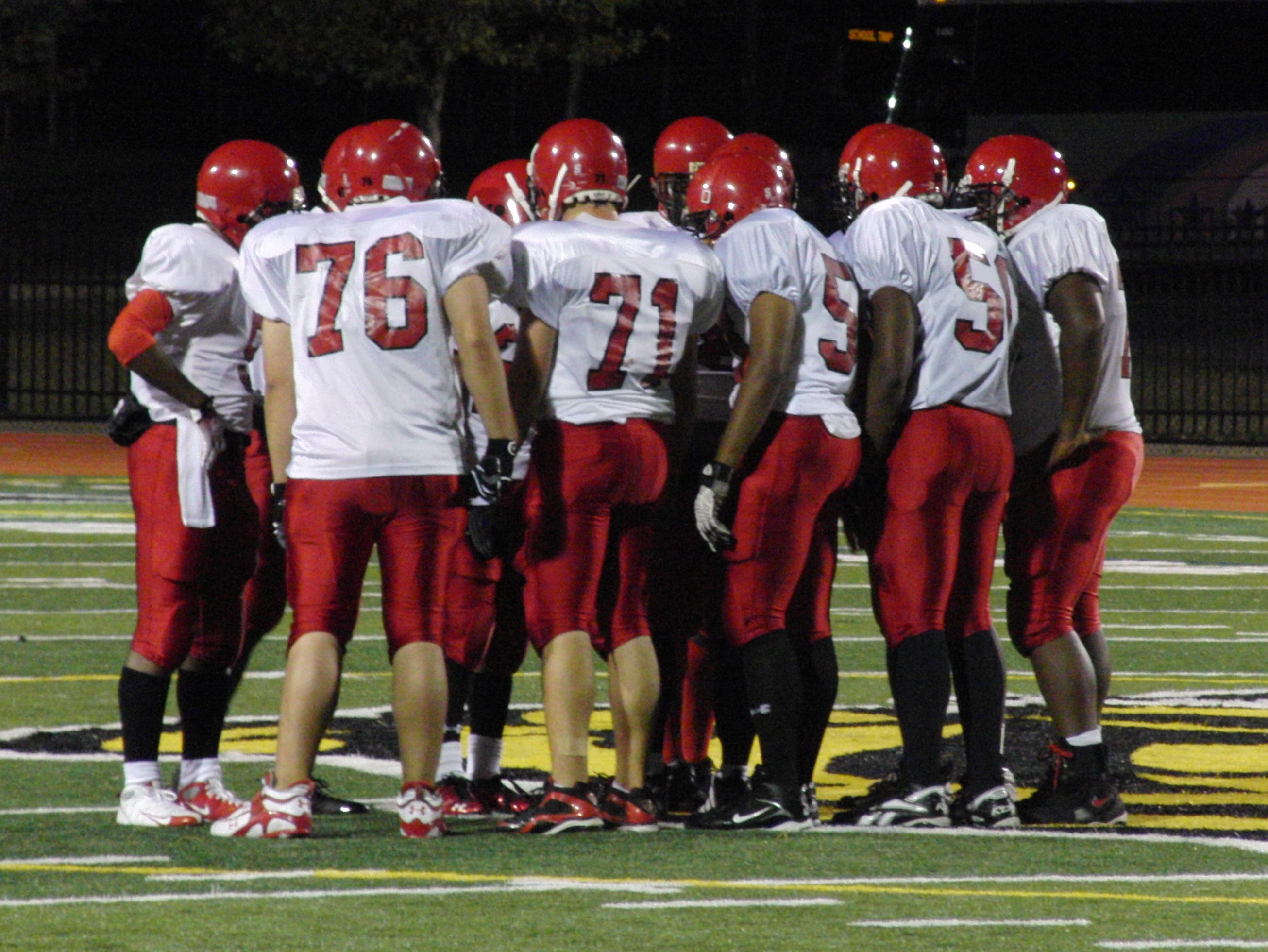
There have been a bunch of mixed reactions following the conclusion of the first official season of the newly formed Super Essex Conference. For some teams the change was obviously a benefit and for others it was seen as unnecessary.
If you were a member of either the Millburn or Columbia High School football team, a parent or a fan, there's no denying that the state's realignment was a large factor in the programs' improvement. Millburn did not win a game last year and Columbia won just once, combining for a 1-19 '08 record in the Northern Hills and Iron Hills conferences, respectively.
"It's more advantageous for us, there's no doubt. If you look at the record of the teams that we played in the other division, we might not have even had the success that we had at this point right now," Millburn head football coach Carmen Guarino said. "So that's definitely advantageous. That's definitely where we want to be at."
Find out what's happening in South Orangefor free with the latest updates from Patch.
This season, as members of the SEC Liberty Division, with all new competition, the Cougars turned it all around and went 8-2, posting their best record since 1951, and the Millers' four wins this season was more than the program had earned in the past two seasons combined.
It's fairly obvious that the new schedule helped both struggling football programs this season. It's also fair to note, that the level of competition, based on wins and losses, was dramatically lower this season than it had been in years past. But with both teams a long way removed from their last winning seasons, is it really fair to judge the validity of their schedule? A win is a win, when you haven't done much winning.
Find out what's happening in South Orangefor free with the latest updates from Patch.
Two years ago, complaints from many Bergen County schools about playing against the private schools in football sparked a debate about leveling the playing field in the state. Many of the schools were on the wrong end of lopsided scores, or perpetually losing as a result of what was considered nearly impossible competition. A statewide vote to completely separate private and public schools was narrowly defeated by just six votes, letting the New Jersey State Interscholastic Athletic Association know there was a problem.
What followed was an investigation into the matter by a committee formed by the NJSIAA, which studied the matter in North Jersey schools, where the problem was considered to be the worst.
In December 2008, the NJSIAA realigned the state's schools into five super conferences based on geography. It was up to the athletics directors of each conference to determine how to divide the leagues, and the NJSIAA encouraged them to address competitive inequality.
The result in the SEC was the unveiling of a new plan, adopted from European soccer, placing teams in different divisions based on perceived talent over the previous two seasons. It basically allowed teams of similar skill levels to face each other, theoretically leveling the playing field.
As far as addressing competitive balance goes, it seems that the move has paid off for at least the football teams.
"It really gave those kids a chance to have success," said Columbia athletics director and head football coach Dave Curtin. "That's the good part, when you put them in a position to succeed."
Another benefit of the state's realignment was to make it so teams did not have to travel as far. In seasons past, Essex County teams would regularly travel to Union or Morris County for games, which would inevitably have the student athletes getting home pretty late on school nights. When students stay late, coaches have to stay late and miss time with their families.
"That's a great advantage of the new super league. It gives you a chance to go home," said Columbia head boys soccer coach Gene Chyzowych. "Even in away games, it's not that far away."
There is certainly no question that the realignment has helped with travel time and cost. Millburn Athletics Director Dr. Ted D'Alessio said that he did not have an exact number, but the savings on gas this semester compared to last fall was tremendous.
But on the other side of that argument, some coaches are saying that the long trips weren't such a bad thing and allowed the team to spend more time together.
"I liked traveling to Morris County schools. I liked riding on the bus to the school," said Columbia field hockey head coach Maggie Singler. "I think it's a great bonding experience. We missed that team unity a little."
What also has to be looked at is how it affected non-football sports. Many teams ended up with more losses than they would have had in the season prior. So the question to many coaches and athletics directors is: would you rather lose in a tough division, or win in a mediocre one?
"I thought the conference was great. Being able to compete against quality teams every week was helpful," said Millburn boys soccer head coach Rob Grosso. "It was nice to step up and play a high level of competition."
"I wasn't happy because we lost, but the competition for this young team was outstanding," Chyzowych said.
Both Millburn and Columbia's tennis teams were placed in the top division of the SEC. Millburn won the league and Columbia came in last place and did not win a game against very difficult competition. But it's Millburn head coach Elliot Lovi who's complaining about the change and Columbia head coach Tom Fraioli who's applauding it.
"I just don't like what was done," Lovi said. "I don't like that the state tore apart all of these conferences. The Northern Hills and Iron Hills were great conferences. It didn't fix the problem."
"From a win/loss perspective, certainly it was disappointing, but we enjoyed playing the competition we have. I think the program is stronger for it," Fraioli said. "Our girls prefer to play stiffer competition."
Another hang-up of some opponents of the change is that it has lessened the value of the county tournament. It would seem that the team that wins the county tournament would most likely win the conference, especially if they are in the A league. Even further, a player who wins an all-county honor would also likely be getting an all-conference honor as well.
"We were joking about that at the coaches' meeting," Singler said. "I don't like it. I don't think the state thought about it that well."
This is especially obvious in field hockey this season, where West Essex won the county tournament and the division. With only eight Essex County field hockey teams, the realignment has actually hurt Columbia, which won more games a season ago. In other sports, teams move up and down every two years from division to division, based on performance. Field hockey teams won't have that chance.
As far as the other county tournaments, the thought of cheapening it proved to be a bit of a fallacy in the SEC for soccer, with both Miller soccer teams claiming the county crown and neither winning its division. However in tennis this season, Millburn won both.
On top of it all, because of being in a conference with all of the same teams in the county, it's possible to play the same opponent up to four times in the same season in non-football sports. Once again, some coaches say that it builds rivalries, and others say that it's too much. Of the Cougar boys' soccer team's eight losses this season, five came against Millburn and Seton Hall Prep, the county co-champs and state sectional winners this season. SHP won its group and Millburn reached the finals. For Millburn field hockey, it was facing West Essex that hurt them.
"It was a big adjustment playing in our conference. The most frustrating part was playing against West Essex three times," said Miller head coach Rose Twombly.
In the American Division for boys soccer, there were only six teams in the division, which is pretty small. Generally leagues have at least eight teams.
"It needs some flowering up. We didn't get to play enough games," Chyzowych said. "We need more teams, everybody must play 18 games …That's not a league, that's an exhibition."
In some ways, the change has been very good with allowing students and coaches to get home earlier and allowing Millburn and Columbia football players some hope. But at this point, it's not perfect and when it comes up for vote in two years, there will likely be some tweaks made.