Politics & Government
Task Force Discussed Possible Solutions to Local Flooding
The PV Waterway Management Task Force held a meeting in Westwood to discuss solutions in light of the three floods this year
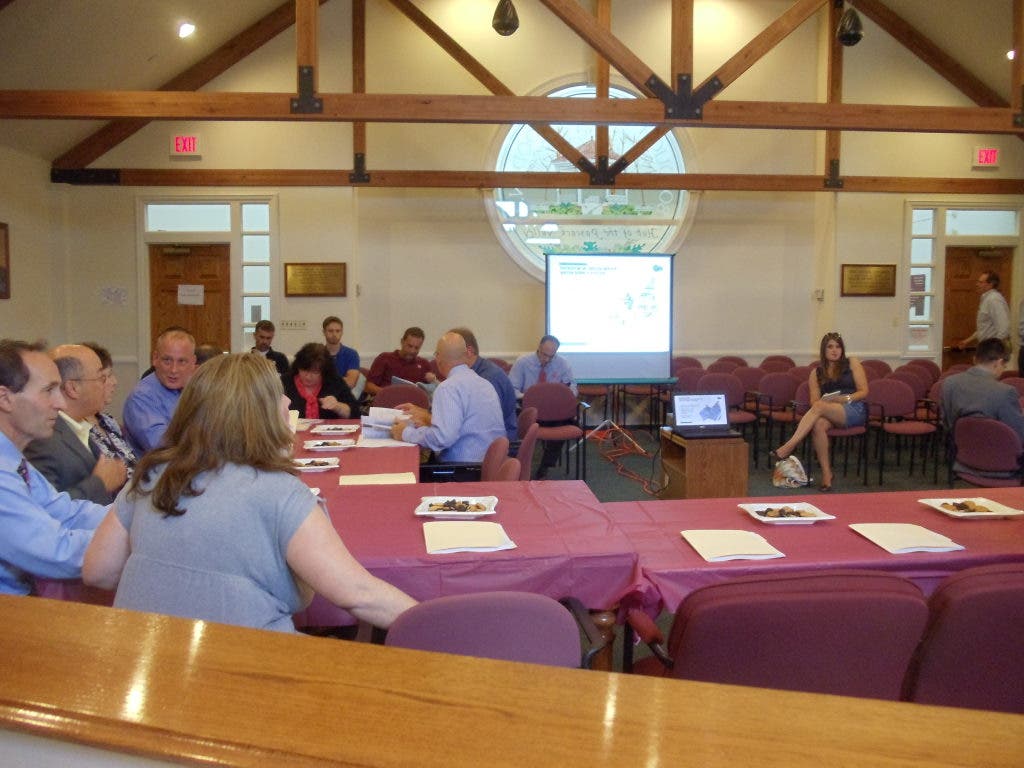


The Pascack Valley Waterway Management Task Force met at the Westwood Municipal Complex at 3 p.m. Thursday to discuss the next steps in addressing the area’s flooding issue. This 3 hour meeting was closed to the public.
Westwood Mayor John Birkner opened the meeting with a brief introduction of the issue. Birkner said the purpose of this meeting was to better understand the problem and come up with answers to present to the public.
Rich Henning, spokesman for United Water, began the informational presentation with solutions a previous task force had created for flooding in 1996. He said a component of their solution had been de-snagging and de-silting. While these actions do not diminish flooding on a large-scale, they benefit those borderline flood plain homes.
Find out what's happening in Westwood-Hillsdalefor free with the latest updates from Patch.
“In a major storm, the flood plain is going to flood, but the guy who would get 6 inches of flooding, well we can avoid that,” Birkner said.
Two mayors on the previous task force pledged to de-snag and de-silt every five years, according to Henning, but the area has not been touched in 15 years since.
Find out what's happening in Westwood-Hillsdalefor free with the latest updates from Patch.
Birkner said with officials in office frequently changing, it had been hard for his predecessors to find a solution and actively implement it. He wanted to have a deeper understanding of flooding before presenting his own solution to the people of Westwood and surrounding towns, and have the ability to execute it long-term.
Ron VonAutenried of United Water brought to light issues regarding maintaining water supply versus flood control. He said these competing interests also make it difficult to attack the issue of flooding.
The June 23, 2011 storm was used as a prime example of the type of local flooding Birkner is hoping to diminish. This storm accumulated about 3 inches in 24 hours, which, according to VonAutenried, is the breaking point for flooding.
“Even if we empty the reservoirs, we can’t avoid those floods,” he said.
The Woodcliff Lake Reservoir holds 871 million gallons, according to the United Water presentation. Of these 871 million gallons, 300 million are within the range of the spill-away gates. That means that the reservoir can only hold 300 million gallons of water. In a 4 inch rain storm, over 800 million gallons of water fall in the basin, VonAutenried said.
This is an issue United Water is hoping to address with the Woodcliff Lake Dam Improvement Project. The project will address the poor conditions of the dam in a two year process beginning March 2012. It aims to improve this spill-away capacity, among other problems. The project’s expected completion date is December 2013.
Some other solutions United Water proposed for local flooding included a better use of land and zoning regulations regarding flood zones, restoring the natural brook and stream channels, control management at the state level, keep flood plains undeveloped and using Blue Acre for funding. Blue Acre funding would allow the purchase of “vulnerable” homes in the flood zone. This would benefit families living in those homes and get them off of flood plains.
A study done by the Army Corps of Engineers in 1977 regarding flooding in the region was also addressed. In order to employ any of the solutions presented in this report, another recon study must be administered.
Birkner, along with United Water and the Army Corps of Engineers, will present this information in a public forum-style meeting in about one month.