Community Corner
Naturalist Teaches People About Mt. Kisco's History With Its Environment
Harry McCartney describes significant local milestones and talks about the influence of nature on the area.
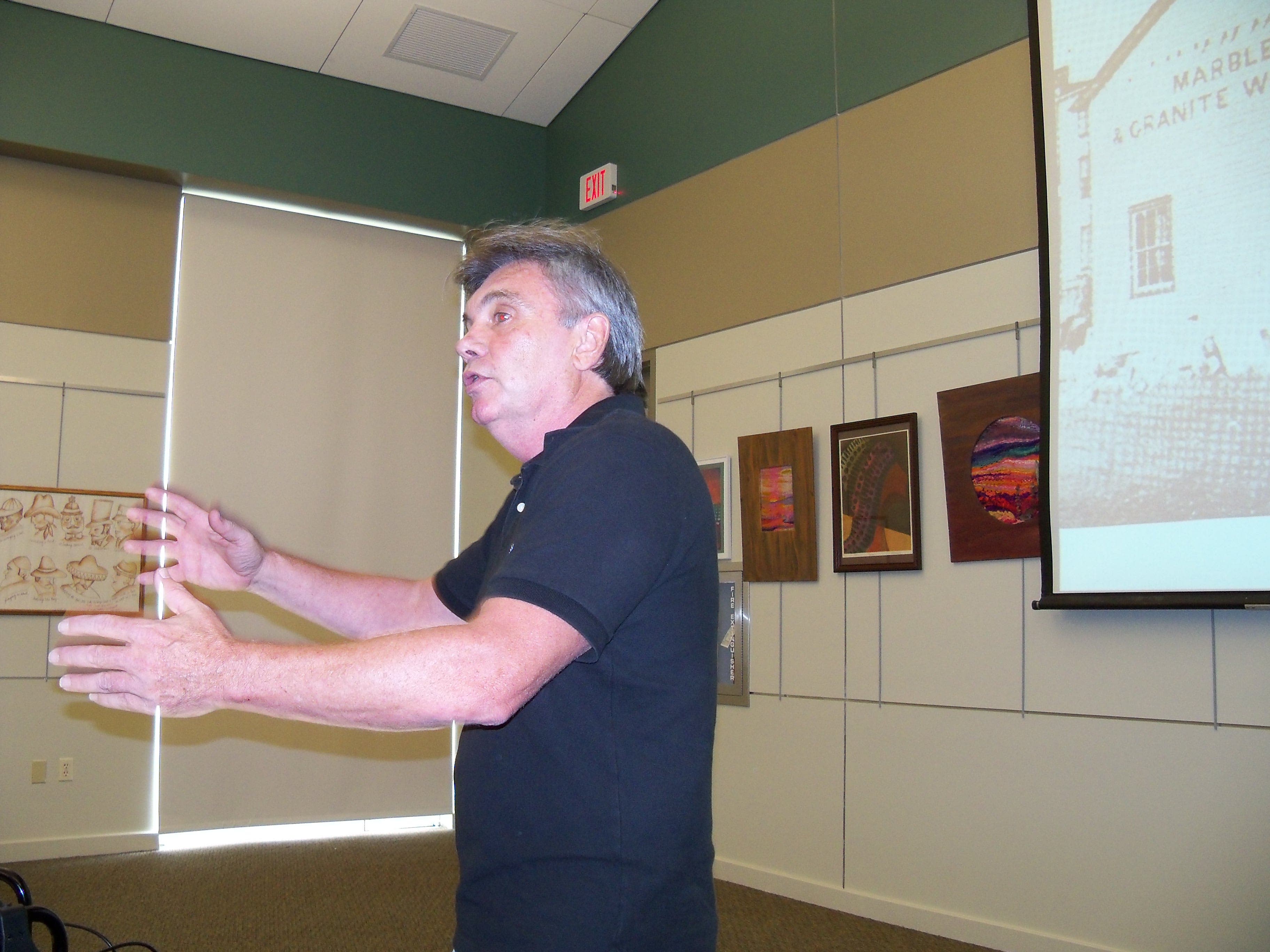
On Saturday, about 40 people joined Harry McCartney at the library for a journey to demonstrate how Mount Kisco's geological and natural record laid the foundation for its historical development.
"It's the water," he said, "that's the foundation."
Within the hilly ranges of the Hudson Valley, Mount Kisco and the surrounding areas formed a valley rich with water basins.
Find out what's happening in Chappaqua-Mount Kiscofor free with the latest updates from Patch.
Out of that emerged highly adaptable forms of wildlife.
"The woolly mammoth had a three inch layer of fat and secreted a waxy substance to create even more insulation," he said of the animals that once roamed during the ice ages.
Find out what's happening in Chappaqua-Mount Kiscofor free with the latest updates from Patch.
Moving from the huge and extinct, McCartney went into detail about the woodchuck and its ability to endure cold weather through hibernation. If we hibernated like the woodchuck, he said, we'd be reducing our body temperature from 98 degrees to 40, take one breath every six minutes and beat our hearts only four times per minute.
Then there's the beaver, one local critter that really put the waterways to work.
"This was a beaver wonderland," he said.
Beavers have valves to cover their ears and nose, a filament to protect eyes under water and a throat cover that allows them to eat as they are submerged, he said. The beaver also seemed to understand that erecting permeable dams was the best defense against the types of flooding prevalent in the area.
Because they took their cues from nature, McCartney said the Native Americans seemed to have a better handle than those who came later on how to integrate their lives with nature. "They understood the connection between wind, water, land and the animals," he said.
The relationship between people and nature seemed to change with the arrival of Europeans. For example, a rise in demand for fur affected the beaver.
The relationship with water also changed. The Kisco River was dammed up and made into a millpond, according to McCartney, and farming settlements developed around what is now Leonard Park.
Later the body of water, known as Kirby Pond, played a role in the end of the Revoluntionary War. French troops marching from Narragansett, under the command of General Rochambeau, converged on Kirby with Washington's West Point troops before heading to Yorktown, VA. Today a plaque is situated near Northern Westchester Hospital as a reminder of the event.
The town that we know today owes its form to topography. When the railroad was being planned for the area, Bedford proved troublesome to link to New York City. "It was too hilly," McCartney said, and Mount Kisco's valley made for a less expensive alternative. The result was that the town's focus was shifted away from the area around the pond.
However, water continued to play an important role. For instance, in the late 19th century, Spencer Optical made use of the waterways as its factory produced 500,000 eyeglasses every year.
McCartney said developing intelligently for the future always requires a careful look into the past. As we look forward, the more the community understands how these connections worked in the past, the more it means for a better chance that we make the right decisions in the future.