Community Corner
'Sadly, Gabby Petito's Story Is A Common One': Experts Speak
October is Domestic Violence Awareness Month, and experts explain how to recognize signs of abuse.


LONG ISLAND, NY — The story of Gabby Petito's last days and death has become a rallying cry for advocates fighting against the nationwide problem of domestic violence.
Authorities have not said whether boyfriend Brian Laundrie was responsible her homicide; he officially has been called "a person of interest" in her death. However, advocates — and victims — view the case as a symbol of an all-too-common situation in desperate need of greater awareness and change.
For Noemi Sanchez of East Hampton, Gabby Petito's story haunts. Sanchez was beaten, stabbed and then shot in the head with an air rifle by her estranged boyfriend in 2011. But she survived and now spends her life advocating for other women in similar horrifying circumstances.
Find out what's happening in East Hamptonfor free with the latest updates from Patch.
Watching the videos of Petito, she said, "is so hard. Sometimes when the victim is in that situation, she feels like nobody is with her. But when you get out, you understand that you have a lot of people around you."
Many times, women are afraid to seek help or counseling — and the pandemic, she said, made the issue of domestic violence even more dire. "The depression, the loneliness, you don't feel you have support. You feel as though you've lost everything," Sanchez said.
Find out what's happening in East Hamptonfor free with the latest updates from Patch.
October is Domestic Violence Awareness month, and advocates from The Retreat in East Hampton spoke with Patch about what people can do if they suspect a woman is a victim.
"October is Domestic Violence Awareness, and it could not be more timely," said Loretta K. Davis, executive director of The Retreat. "With the recent tragic case of Suffolk County's Gabby Petito, knowing what you can do to help friends and family who are in unhealthy, dangerous relationships is critical. It's time to spread awareness about healthy relationships, what is acceptable and what is not acceptable in a relationship, speaking up against violence, supporting and not judging survivors."
Helen Atkinson-Barnes, The Retreat's prevention education director, also spoke with Patch.
"The Retreat joins the community in our profound sadness at the death of Suffolk County's Gabby Petito. Sadly, Gabby’s story is a common one," she said.
The Centers for Disease Control and Prevention considers partner violence to be a public health epidemic, Atkinson-Barnes said. Approximately 1 in 4 women and nearly 1 in 7 men in the U.S. have experienced severe physical violence by an intimate partner at some point in their lifetime, according to the CDC's "National Intimate Partner and Sexual Violence Survey," published in 2010.
Laura Ahearn, of the Crime Victims Center/Parents For Megan's Law, put forth the 2021 "Take A Stand" initiative against domestic violence, including outreach to raise awareness, information sessions, and a social media campaign.
According to a release from the organization, on average, nearly 20 people per minute are physically abused by an intimate partner in the United States, totaling more than 10 million per year. In 2018, partner violence accounted for 20 percent of all violent crime — and intimate partner violence is most common in women 18 to 24, the release said. In addition, nearly 21 percent of female high school students and 13.4 percent of males report being physically or sexually abused by a dating partner.
However, very often people don’t make the connection between cases in the national spotlight "which end in extreme violence and death, and the more commonplace forms of abuse that happen every day to so many," Atkinson-Barnes said.
She added: "Abuse often goes unrecognized. Abusive relationships are usually unbalanced."
For example, she said, one person often uses various tactics to control the other or treats them like a possession or object. They often involve a great deal of manipulation including "gaslighting" and isolation from family and friends, she said.
And, while many ask why a person who has been abused doesn't just leave: "Even when it is clear, an abusive partner can make it very challenging or even impossible for the person experiencing abuse to leave the relationship safely," Atkinson-Barnes said.
Part of the challenge is to help people recognize the less obvious signs of abuse, including jealousy, control, violations of privacy including digitally — with passwords and location tracking — and isolation, which can be confused with “passion” or the romanticization of constant togetherness and a complete lack of boundaries, she added.
"Understand that people won’t necessarily tell you that they are experiencing abuse and will often try to hide it, so it is important to recognize signs," Atkinson-Barnes said. "Often an abuser will make excuses or blame their partner."
If there is a suspicion that someone might be a victim of domestic violence, Atkinson-Barnes offers advice on what to do: "Be supportive and open up a conversation. Don’t grill the person about the details of exactly what happened, which can be retraumatizing or feel judgmental. Avoid responding with shock or a tone of disbelief. Avoid asking 'why' questions, including 'Why don’t you just leave?', which can imply that the person is at fault and can communicate a lack of understanding about the depth of the challenge they are experiencing."
Instead, Atkinson-Barnes described questions that might be asked, including:
- “Do you feel safe in your relationship?”
- “Is there something I can do to help you?”
- “I’m here if you want to talk about it.”
- “Thank you for telling me.”
- “No one deserves to be treated like this.”
- “There is support available for you.”
- “Is it safe for you to go home?”
The Retreat works with first responders, health care professionals and law enforcement to support those in abusive relationship situations, she said.
"We recommend helping empower those who are experiencing abuse — starting by opening the door to a conversation, providing confidentiality so that they can safely share, and avoiding inadvertently blaming victims for the abuse they are experiencing," Atkinson-Barnes said.
The Retreat offers free counseling, legal services and shelter to those experiencing abuse.
The Retreat's 24-hour hotline is at 631-329-2200.
The Retreat also offers age-appropriate prevention education programming in schools as well as with community groups including health care professionals and law enforcement. The Retreat's Teen Leadership Council helped develop new outreach materials for Domestic Violence Awareness Month, Atkinson-Barnes said.
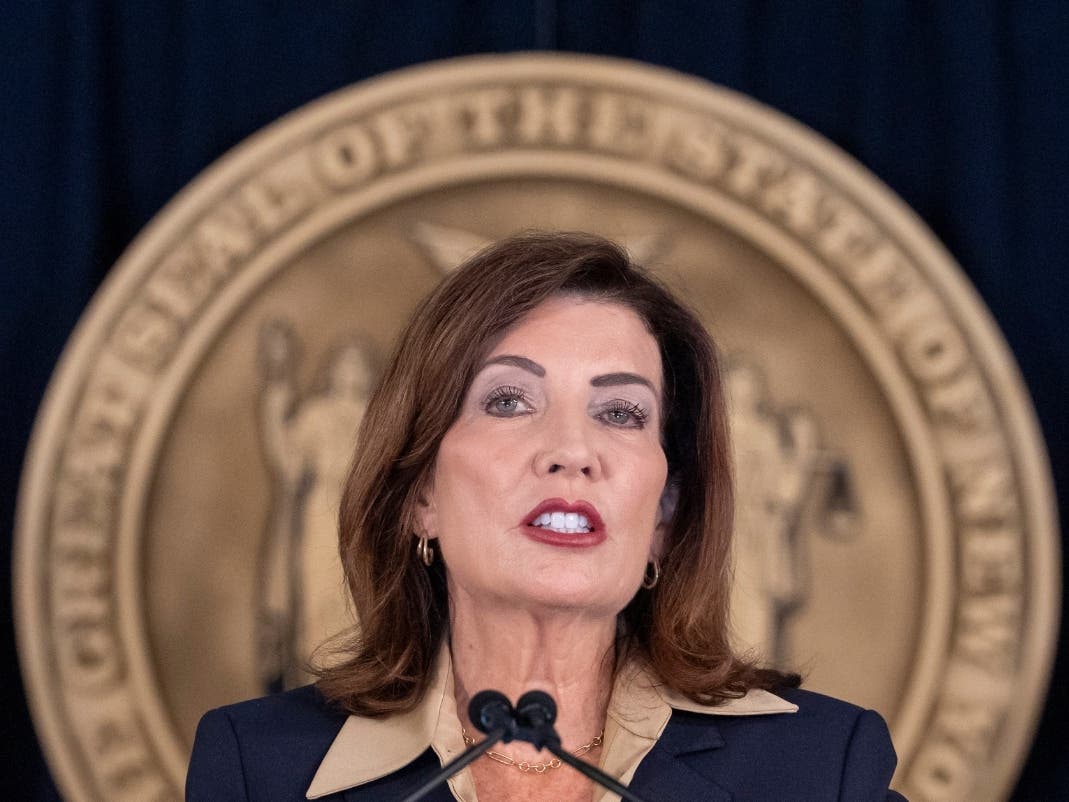
On a statewide level, Gov. Kathy Hochul also announced Domestic Violence Awareness Month, with $6.5 million in grants administered by the State Office of Children and Family Services to help survivors of domestic violence and support prevention initiatives
She also unveiled a new "Technology Safety and Innovation for Survivors" public awareness campaign, which will shine a light on technology's role in abuse, she said.
"We have come so far since the time that my mother advocated for domestic violence survivors, but our mission to put an end to the abuse and suffering that too many have had to endure is far from over," Hochul said. "Our systems must evolve and we must continue to offer innovative solutions to meet the needs of survivors and families, wherever they are."
Administered by the state Office of Children and Family Services, the $6.5 million will support two initiatives:
- $4.8 million to 79 providers statewide to provide housing for domestic violence survivors.
- $1.7 million to five nonprofit organizations that offer domestic violence prevention programs. Each of these programs will receive $342,380, including The Retreat Inc. in East Hampton.
The problem, experts say, while it is one of the last remaining stigmas, is one that cannot be ignored.
According to L.I. Against Domestic Violence, 31.7 percent of New York women and 29 percent of men experience intimate partner physical or sexual violence or intimate partner stalking in their lifetimes.
"These statistics only represent the reported cases," the organization said. "We know the numbers are much higher. You are not alone. It's not your fault. Reach out for help."
Sanchez, the years of abuse behind her, says Gabby Petito's story makes her mother's heart ache.
"I have daughters the same age as she was, and I tell them, 'Love yourself first, and then you will find the right person,'" she said. "'You may be pretty, but the true beauty is in your heart.'"
Having come through the darkness of abuse, Sanchez said, "When you survive, the best example is yourself."
And now, she said, Gabby Petito's story will echo for years. "She will teach others."
Get more local news delivered straight to your inbox. Sign up for free Patch newsletters and alerts.