Neighbor News
Slinky Bender, Former Drug Dealer to the Stars, Back in the NY Groove
Dave "Slinky" Bender, Ivy League Grad turned Convicted Drug Dealer, Reemerges as Luxury Real Estate Agent a Decade after his Arrest
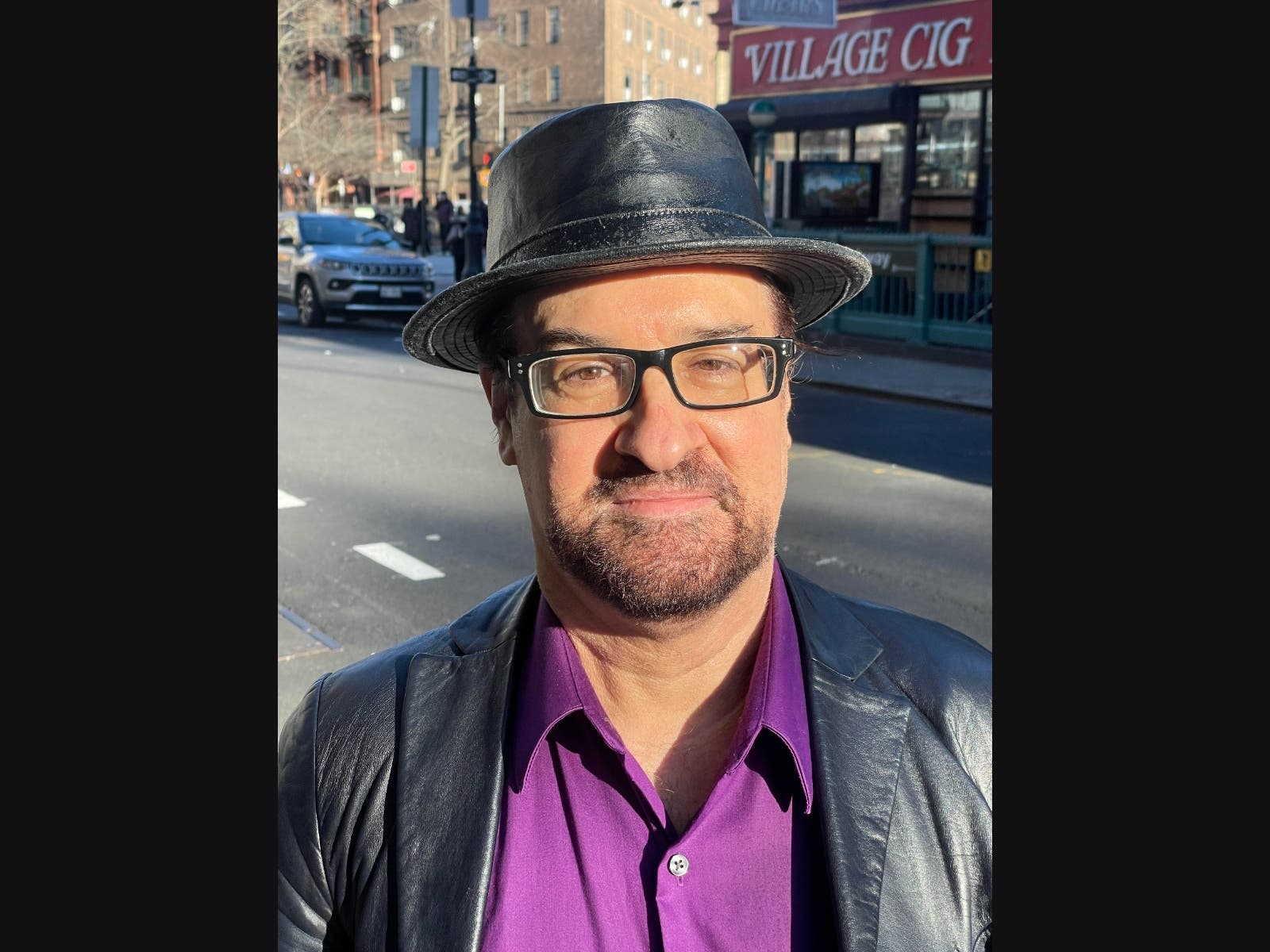
New York — A few weeks ago, In the early morning hours, a long-lost lynchpin of NYC’s underground club scene emerged from hiding in a most public way.
Ivy league grad turned convicted drug dealer to the stars, Dave “Slinky” Bender made an appearance on WABC’s nationally syndicated The Other Side of Midnight, hosted by Frank Morano.
It was the first public sighting of Slinky in nearly a decade, since his arrest on multiple felony drug charges in 2014. The appearance caught most everyone by surprise and surely made some A-listers who regularly bought cocaine from Slinky back in the day a little nervous.
Find out what's happening in New York Cityfor free with the latest updates from Patch.
Was this the launch of a tell-all tour that would out countless coke fiends from the entertainment and sports worlds? Were no secrets safe?
According to Slinky, kinda.
Find out what's happening in New York Cityfor free with the latest updates from Patch.
“My No. 1 rule,” he said on WABC, “is that everyone's safe — unless they stiff me — “then all bets are off.”
So who is this Slinky Bender, some of you may be asking? Well, that’s a good question. Because the stories of this underground nightlife know-it-all, seen-it-all are many, and varied, and there’s no shortage of debate on the matter.
Some say he was mobbed up from his early 20s, a knuckle-breaking bag man for the Colombos, the crime family that controlled Brooklyn in the 90s. Others say he worked alone, a concierge of sorts who could get you whatever you wanted — drugs, sex, and whatever else tickled your fancy.
One former Slinky regular, who used to buy some $4,000 a month in cocaine from him at the storied East Village haunt, Cabin Down Below, described him this way:
“If Huggy Bear from ‘Starsky and Hutch’ and Rip from Less Than Zero had a baby, Slinky is what you would get,” said Orlando Hernandez.
“He’s bigger than life. You couldn’t make up a character like Slinky. No one would believe you,” he added.
Early Life
Slinky is not, I can confirm, the lovechild of Huggy and Rip.
He is, in fact, the child of a well-established Queens family that has worked in public service for generations. He was born at Long Island Jewish Hospital in 1960, His father worked as the city’s assessor for 40 years, and his mother was a teacher. Real estate, or property, was the family business. As a child, he attended PS 213, and played baseball any chance he could.
He started his first business when he was 8 years old, buying generic sodas at Walbaum’s for 8 cents and selling them for 25 cents at the baseball fields up the block from his house.
“In 1968 I was making close to $100 a week, that was a lot of money back then,” he said.
Around that time, he started seeing an endocrinologist because he was much shorter than his peers but his doctor at the Rockefeller Institute abused him, Slinky alleges, and as it turns out, countless others.
The now infamous doctor, Reginald Archibald, has been accused by more than 100 former patients of sexual abuse in countless lawsuits. Slinky had pushed that memory into the deep recesses of his mind until he saw a report on the 11 O’clock news.
“I had managed to erase it from my brain,” Slinky said.
When I asked Slinky what drove a man intelligent enough to earn two Ivy League degrees to a life of crime, he pointed to his abuse at the hands of Archibald, and something far more innocuous — him learning to do sound at Benjamin N Cardozo High School in Bayside.
“Once I learned to do sound, I started hanging out with the bands and started smoking weed,” he said.
Before long, he started doing sound at some of the city’s most iconic nightclubs — like Speaks, Hammerheads, My Father's Place and Beggar’s Opera.
Beggar’s Opera was a rock and roll joint in Queens not far from where Slinky grew up. It was known for Monday night mud wrestling, kamikazes, and blistering guitar riffs from the hard rock bands both local and national, that drew fans from across greater NYC.
At Beggar’s, Slinky did sound for the hottest local bands like Rat Race Choir, Vixen and Equinox, and big-name acts like the Plasmatics, Zebra, and Twisted Sister, who used to play there regularly before they blew up with “We’re Not Gonna Take It” in 1984.
Despite the partying and the late nights, Slinky continued to shine academically, and was accepted to Cornell University, where he studied engineering, becoming the first person in his family to attend an Ivy League school.
College years
At Cornell, Slinky spent a lot of time at Johnny’s Big Red, a local institution known for its Poor Man’s Pizza and its literary lore: Vladimir Nabokov wrote Lolita there in 1955.
His senior year, two Cornell alumni bought Johnny's. But the new owners unwittingly signed a ridiculously expensive lease and when they realized they couldn't make a go of it they hatched a plan to get out of it: open a strip club, await the inevitable public outcry, and walk away after the landlord bows to the pressure.
In the meantime, one of the strippers remembered that Slinky headed up the university union’s AV squad.
“She knew I had access to the frats, which is basically an endless supply of business for a strip club. So I started booking strippers for Johnny’s and pretty soon I was booking strippers all over town. I was making bank,” Slinky said.
Then, an unexpected visitor almost derailed everything.
“One day, I’m in my room and there’s a knock on the door and it’s the head of campus security and the county sheriff, and I think, OK, this is it. I’m being expelled, I’m going to jail. My career is over before it even started,” he said.
But, in true Slinky fashion, there was room for negotiation.
“Apparently (the sheriff) and his family basically ran the town a few miles over and they had a brothel they were having issues with. So, he gave me the choice — run his brothel or go to jail. Next thing I know, I’m managing this brothel for them.”
Back in New York
A year later, after earning a Bachelor of science of engineering and a professional master’s of engineering from Cornell, Slinky returned to New York to take a job with Arthur Andersen.
He hated it.
“I took a hiatus halfway through my four years there and got a job as an assistant manager at a strip club in Brooklyn,” he said.
During that time, he also returned to his family's roots and got his real estate license in 1986. In a few years, he was buying and selling real estate by day, and managing $400 an hour call girls at night.
So, after four years, the Slinky-as-corporate-pencil-pusher experiment was over and the wonderful world of Slinky was underway.
In 1992, Slinky met Sam Schneider, the son of a rabbi, at a real estate auction. Slinky wanted to bid on a property but couldn’t. Sam bought it for him and a partnership was formed. The two became fast friends.
“We just clicked. We were both sort of the black sheeps of our family. Sam committed the ultimate sin because he didn’t have kids and I angered my family by marrying a Japanese woman,” Slinky said.
Sam’s friendship with Slinky strained his relationship with his father, who was the head rabbi of a Yeshivish sect in the Lower East Side, as socializing outside of that sect was not acceptable.
“He was there for me, even though it was against his teachings,” Slinky said.
Over the next 20 years, while Slinky and Sam’s real estate business grew leaps and bounds, Slinky got more and more ensconced in the underground club scene, selling coke, managing call girls, and more. He became famous for throwing the biggest, wildest, no-holds-barred sex parties in the city.
It was only a matter of time before he met Julie Moya, aka the friendliest madam. The pair met in 2000 through John’s Action Guide, a website with escort reviews.
“He was just a wild guy, he threw the biggest parties with tons of girls and wherever he goes he’s the life of the party, everybody loved him,” said Moya.
In 2010, Sam, a few years Slinky’s senior, was diagnosed with late-stage lung cancer. He sought treatment, undergoing chemotherapy, but it was too late. In a matter of months, he was gone.
And Slinky spiraled.
“His death is what really set me into real Slinky mode. I was dealing drugs, selling tons of cocaine, out seven nights a week in clubs,” he recalls. “I was so upset and I just didn’t know how to cope so I tried to escape.”
Slinky was disappearing for three- and four-day benders, up for days at a time. But the drinking and the drugs only fed his depression. Eventually, the endless late nights and drug abuse began to take a toll on his marriage, his real estate business, and every facet of his life.
“I was closer to Sam than anyone in my family. We talked every day. Losing him just ruined me. I was losing control and I couldn't stop it,” he said.
While being out every night may not have been good for Slinky, it sure was good for business.
Over the next four years, his drug business exploded. On good days he was selling $20,000 worth of cocaine to A-listers in entertainment and sports, among them — Axl Rose, Lindsey Lohan, Billie Joe Armstrong, and a lot of very rich basketball players who call Madison Square Garden home.
In the Slammer
But in 2014 the hammer came down. Slinky was arrested and charged with 12 B felonies, including possession with intent to distribute. He spent a couple of weeks in the tombs, the city’s rough and tumble downtown jail that was recently shuttered. But even after his release, no one heard from him for weeks. Then months. Even years.
“After his arrest, he went dark,” said Moya. “He just disappeared. I had no idea why, no one did.”
Moya, like many of Slinky’s nightlife friends, didn’t know his last name. So, even if she came across the arrest report, she never would have connected the dots.
Learning years later of his arrest, Moya said she wishes she could have been there for him like he was for her when she was first arrested in 2007.
“As soon as I got out of prison, he was there for me, he was accepting no matter what. He helped me get my things back in order. He’s been a great friend,” Moya said.
The arrest turned his life upside down. He lost his real estate license. He lost his livelihood. Sometimes he lost hope. He fell into a rut, sleeping all day, drinking alone, not leaving his apartment for days at a time.
“It threw me into a depression. I lost myself for a while. I lost three years. It was just overwhelming and I didn’t know how to cope so I just retreated and isolated myself,” he said.
Michael T, a friend since the early 2000s, said it was hard to watch.
“He was in a dark place. You could see that he was beginning to lose control,” said T, a longtime DJ and club promoter.
“There comes a point, when you’re overwhelmed, that you just retreat and I think that’s essentially what happened to him for a variety of reasons. He fell into a reclusive sort of state. As a friend I tried to be there for him, many of us did, but I guess he had to work it out his way.”
With no prior criminal record, Slinky was able to get his case sent to pretrial diversion, which allowed for the judge to withhold adjudication pending him completing probation and keeping his nose clean.
In 2018, his legal issues behind him, Slinky got his real estate license reinstated and began easing back into normalcy. Little by little he was able to get his own listings, do some deals, and get back on his feet. The exodus, albeit temporary, of many New Yorkers to wide open spaces slowed his return to life as he knew it, but he was making progress.
“It was a tough time for him. But anytime he gets down, he bounces back up. It was great to see him feeling like himself again, having fun,” Moya said.
As his real estate business began to recover, so too did Slinky. He wasn’t out every night but he was reaching out to friends he hadn’t seen in forever and working his way back.
Michael T said the two stayed in touch through it all but it was a few years before he started to see him out again. But it was clear Slinky was mindful of what he had been through and was not falling into the same routine, he said.
“I could tell that he did not want to end up where he did before,” he said.
Today, nearly a decade removed from his arrest, Slinky’s real estate business is thriving, his discussion board on urbandigs.com has become a top source for straight talk on NYC real estate, and he’s rebuilding what fell to the ground in 2014.
“It’s been a struggle, and the struggle is not over but there’s a light at the end of the tunnel. The real estate market is making a comeback, and I'm feeling optimistic,” he said.
After the last of several sit-down interviews with Slinky, I asked if he had any last words.
“Yeah,” he said. “Tell Billie Joe Armstrong he still owes me $100 for coke from that night at
Cabin Down Below.”