Community Corner
Coronavirus Pandemic Turns 2: Hudson Valley 2021 In Review
Residents started the year with anxiety and impatience over vaccine distribution and ended it the same way over mask and vaccine mandates.


HUDSON VALLEY, NY — 2021 in the Hudson Valley, the second year of the COVID-19 pandemic, was a re-boot of 2020 with additions — some disturbing and others heartening — from the spike in angry outbursts to a growing number of proven medical approaches.
As the year started, people took stock of the 2020 death toll and watched it rise after the holidays.
The Hudson Valley filled with anxiety and impatience as vaccine developers, including Rockland County-based Pfizer, ramped up production of vaccines against COVID-19. County officials made plans for distribution of the vaccine as doses began making their way in small quantities to the Hudson Valley.
Find out what's happening in New Cityfor free with the latest updates from Patch.
With 11 million eligible New Yorkers, it would take months to vaccinate everyone, state and local officials warned. Still, anxious residents began spending hours on behalf of themselves or elderly relatives trying to make appointments. Local health officials held clinics for short bursts of time then spent more time explaining why the supply was so limited. SEE: Vaccine Rollout Slowness Was Expected: Putnam Health Commissioner
Eight weeks into the vaccination program, New York had administered 2.5 million doses of vaccine, so about 10 percent of New Yorkers had received a first dose. Hudson Valley residents began looking for the state health department’s "pop-up" vaccine sites.
Find out what's happening in New Cityfor free with the latest updates from Patch.
Meanwhile, pressure was building to re-open classrooms and end remote schooling.
SEE:
- Districts Deliberate As Pressure To Reopen Schools Rises
- Politicians Join Parents Demanding Hudson Valley Schools Reopen
By March, 12 weeks in, as more coronavirus vaccine doses made their way into New York State, there were more ways to navigate the system and score a coveted appointment. Students returned to classrooms after the spring break.
Also in March, a Westchester-based company announced an effective treatment for people already sick with COVID-19, an "antibody cocktail" that in tests reduced the risk of hospitalization or death by 70 percent compared to a placebo. SEE: Regeneron Treatment Reduces Death Risk, Study Says.
The Hudson Valley continued to have pockets of COVID-19 cases, and officials began talking about something called "vaccine hesitancy" and later added "vaccine refusers." SEE: New York Finding Ways To Deal With Vaccine Hesitancy [POLL]
Once vaccine doses were plentiful and open to everyone 18 and older, we were surprised by the summer spike. SEE: Local Emergency Declared, Village Reinstates COVID Restrictions. After new cases of the coronavirus jumped more than 700 percent in New York, 13 communities in the Hudson Valley were among those targeted for "aggressive" action.
Meanwhile, local fault lines from the national political conflict over wearing masks appeared as people prepped for opening day of the 2021-22 school year.
SEE:
The rollout of legitimate medical treatments was punctuated by waves of disinformation. Though doctors warned that people should be more scared of horse worm drug ivermectin's side effects than the vaccines' side effects, lawsuits across the country including in western New York in some cases forced hospitals to use it.
A shadow industry also sprang up to cater to vaccine refusers. SEE:
- Hudson Valley Woman Charged With Possessing Fake Covid Vaxx Cards
- 15 People Charged In Fake COVID-19 Card Conspiracy: Manhattan DA
In July, Yonkers and New Rochelle — the first epicenter of the pandemic in the United States — had announced a mandate for all employees to be vaccinated or tested weekly. New York State, which had already set a mandate for its employees, announced in August that all healthcare workers in the state would have to be vaccinated.
In response, the anti-vaxx movement sought support from the courts. SEE: Judge Blocked New York's Medical Worker Vaccine Mandate. Meanwhile hospitals set deadlines for their employees.
On Aug. 10, Gov. Andrew Cuomo, who in 2020 had been a national face in the fight against COVID-19, resigned amid accusations of sexual harassment. Ascending to the job, former lieutenant governor Kathy Hochul issued mask and vaccine mandates for public schools and made it clear she supported the vaccine mandate for health care workers. Hochul said sick people need to feel safe when seeking treatment and not worry about contracting COVID-19 from a health care professional.
In September, a judge temporarily blocked the state’s mandate. SEE: Judge Blocks New York's Medical Worker Vaccine Mandate. However, the Supreme Court ruled against the anti-vaxxers in December. SEE: Justices Won't Block Vaccine Mandate For NY Health Workers. About 3 percent of the health care workforce was fired, put on leave, or resigned. As of Dec. 22, New York state reported a 98 percent vaccination rate among the Hudson region’s hospital workers.
In October, Pfizer submitted a COVID vaccine for children ages 5-12 to the FDA for approval. It was authorized at the end of the month and local health departments began running clinics.
After Halloween, Hochul began sounding a warning about a winter surge similar to the last one. SEE: COVID Cases Tick Up, New Protocols Possible In Hardest-Hit Areas
Then the omicron variant, described as far more contagious, arrived. SEE: 1st Case Of Omicron Variant Detected In Hudson Valley.
In early December, when Hochul set a holiday vaxx-or-mask mandate amid surging cases, four of six county executives in the Hudson Valley refused to enforce it. One of them begged residents not to become aggressive if asked to wear a mask.
In late December, residents eager to gather with friends and family stood in long, long lines to be tested and local governments rushed to provide tests and masks for free. As cases spiked, Nyack Montefiore Hospital announced Dec. 30 that no visitors would be allowed due to local COVID-19 levels.
At the end of December, the year 2021 is ending on the highest spike yet for the Hudson Valley, dwarfing both the start of the pandemic and the winter surge of 2020-21.
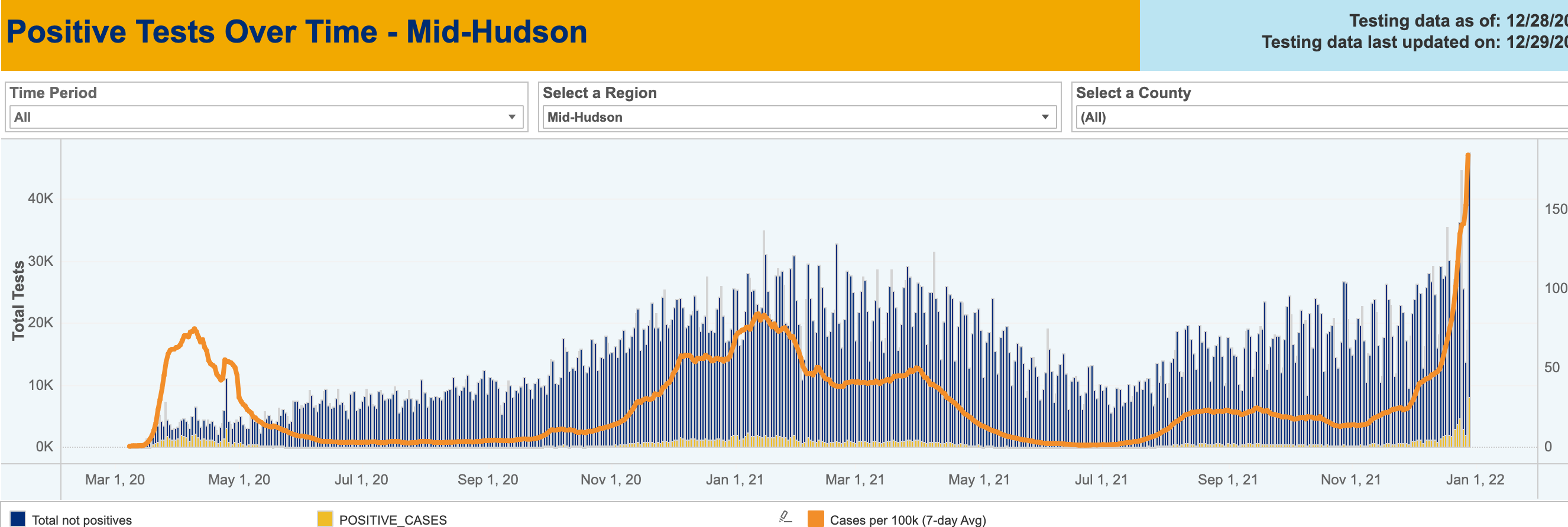
At the end of two years, it has become a pandemic of the unvaccinated, and officials said they were pleased at how effective the vaccine has proven to be against serious illness.
As of Dec. 28, New York Health Department officials said cumulative data showed 16,583 hospitalizations with COVID-19 among fully-vaccinated people in New York State, which corresponds to 0.12 percent of the population of fully-vaccinated people 12 or older. Their chart compares hospitalizations among the unvaccinated to hospitalizations among vaccinated New Yorkers.
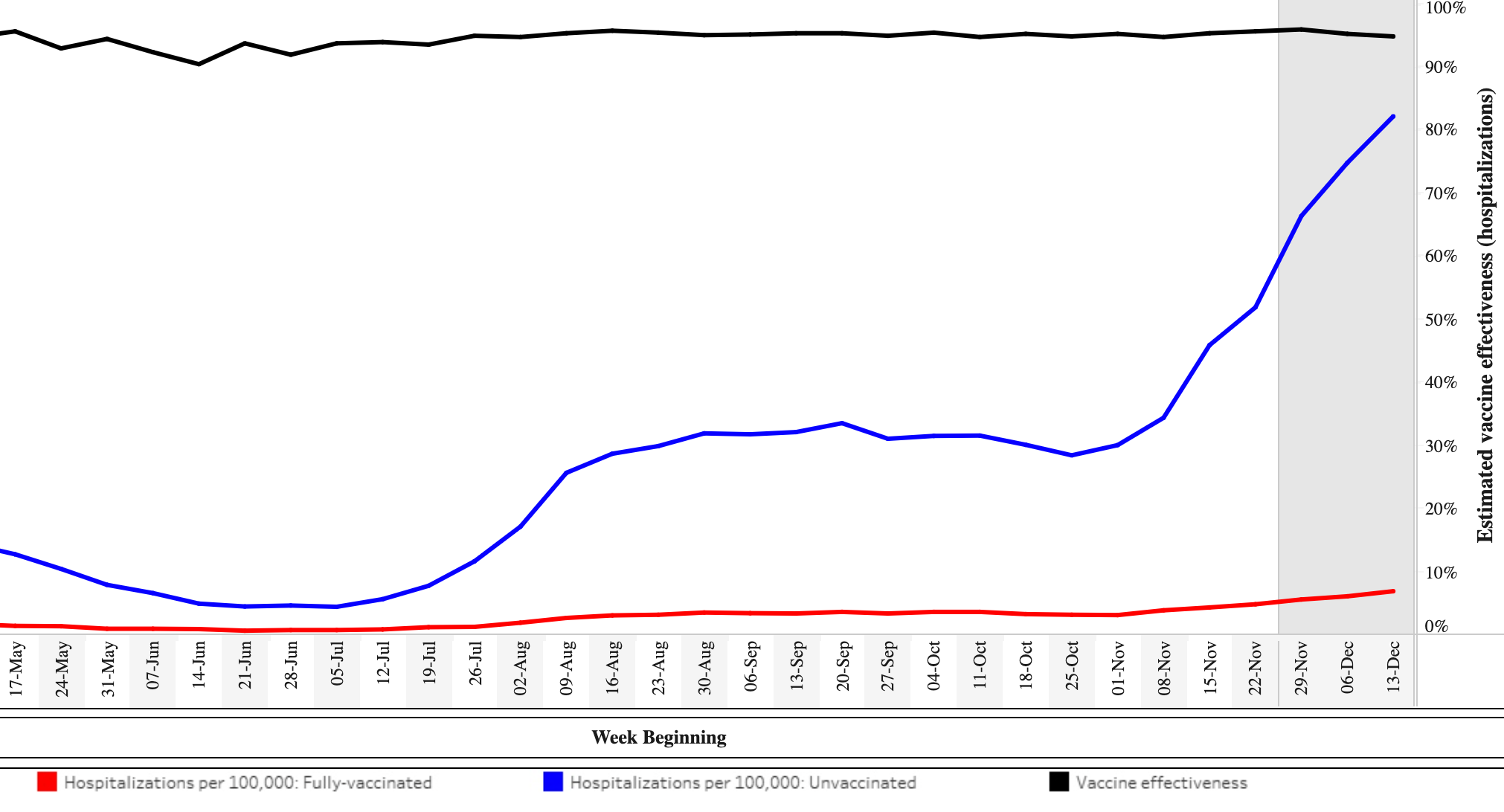
After the emergence of the omicron variant, state officials said fully vaccinated New Yorkers had about a 75 percent lower chance of becoming a COVID-19 case and an 89 percent lower chance of being hospitalized with the disease, compared to unvaccinated New Yorkers.
Gov. Kathy Hochul said she was urging the FDA to grant approval in 2022 for a COVID-19 vaccine for children under 5. SEE: NY Starts Test Kit Airlift As Cases, Child Hospitalizations Rise.
Get more local news delivered straight to your inbox. Sign up for free Patch newsletters and alerts.