Crime & Safety
Town Supervisor Stadium Fraud Verdict: Officials, Prosecutors Respond
Rockland political leaders call for reform as the acting AG sums up the prosecution's case.


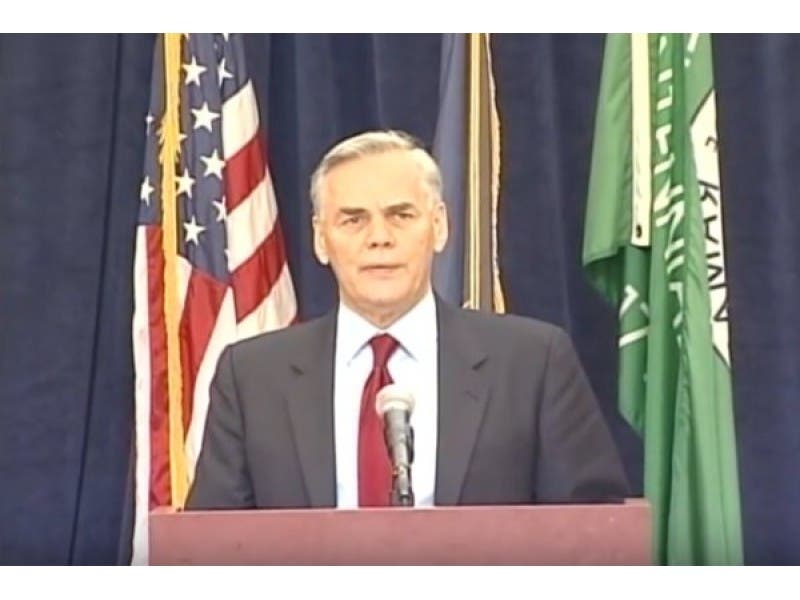
After news came that Town Supervisor Christopher St. Lawrence had been convicted on most of the securities fraud and conspiracy counts against him in Ramapo's development agency scandal, the prosecutors issued an announcement summing up their case. Throughout Rockland County, officials also reacted, most of them Democrats like St. Lawrence, calling for Ramapo officials to restore the public's confidence in them.
"It is my sincere hope that the town of Ramapo can now begin the difficult task of restoring confidence in its ability to govern," said Rockland County Legislator Alden Wolfe, who represents Ramapo in the 6th District. "The taxpayers deserve leadership that is honest and that listens to the people, and even more, works to protect the best interests of those they were elected to serve."
Senator David Carlucci (D-Rockland/Westchester) hoped the town, known for its corruption scandals, would get a new leader.
Find out what's happening in New Cityfor free with the latest updates from Patch.
"It is extremely important that public trust is restored in Ramapo, the County's largest town," Carlucci said. "The taxpayers deserve and demand to have elected officials that put taxpayer interests above their own. It is my hope the new Supervisor will do everything they can to change the direction of the town to one the residents can be proud of."
The head of the county Democratic Committee called for transparent government.
Find out what's happening in New Cityfor free with the latest updates from Patch.
Justice has been served. Now the hard work of earning the trust of Ramapo taxpayers must begin for the town’s new leadership," said Kristen Stavisky. "In the Trump era of national divisiveness, it is vital that all communities in Rockland’s most diverse town come together to move forward. Public corruption rips apart the very fabric of a democratic society. This conviction represents a stunning betrayal of the public’s trust. For the last several years, a pall has been cast over this County. We have seen it in Albany and we have seen it at home; corruption is not a partisan issue, rather it is an abuse we must join together as Democrats and Republicans to root out. My hope is that this is the beginning of a new chapter of honesty and transparency for Ramapo.
Rockland County Executive Ed Day, a Republican, said "Holding public office is a privilege. Any public official found guilty of breaking the law has violated that sacred public trust.The conclusion of this jury that the Ramapo Supervisor broke the law is a stain on the town and all of Rockland County. We support every effort to restore integrity to Ramapo."
SEE ALSO:
- NY Town Supervisor Verdict in Stadium Fraud Case
- Ramapo Demands Outsize Payments from School Districts
- FBI Raids New City Test Lab
- FBI in Spring Valley Again
- Desmaret Sentenced in Spring Valley Bribery Scheme
- “Corridor of Corruption” Scandal Nets Another Guilty Plea
- Spring Valley Building Inspector, Businessman Indicted
- SEC Charges 4 in Ramapo; Seeks Financial Penalties, Court
- Ramapo Planning Director Indicted
- State Slaps Ramapo on Private-school Fire Inspections
- Firefighters, Officials Call for State to Intervene in Ramapo, Spring Valley Code Enforcement
- Tress Resigns from Ramapo Town Board as Part of Plea Bargain
- East Ramapo Trustee Accused of Using Fake In-District Address
- County, Suffern Officials Dislike Ramapo's Legoland Plan
- Director Takes Plea in Ramapo Development Agency Fraud Case
The jury found St. Lawrence guilty of 20 counts of conspiracy, securities fraud, and wire fraud in connection with municipal bonds issued by the Town of Ramapo and the Ramapo Local Development Corporation. St. Lawrence was acquitted of one count of securities fraud and one count of wire fraud.
The verdict came after a four-week trial in federal court. It marks the first conviction for securities fraud in connection with municipal bonds.
"Christopher St. Lawrence lied repeatedly to the investing public about the state of Ramapo’s finances," Joon H. Kim, the Acting United States Attorney for the Southern District of New York, said in an announcement after the verdict. "The integrity of the $3.7 trillion municipal bond market is of critical importance to both investors and municipalities that rely on this market. The verdict today in a case of public corruption meets securities fraud, stands as a victory for both honest government and fair financial markets.”
The prosecutors laid out the case in their announcement:
According to the allegations contained in the Indictment and the evidence presented in court during the trial:
As of August 2015, the Town had more than $128 million in outstanding bonds that had been issued for various municipal purposes, while the RLDC, a corporation created and owned by the Town under state law, had issued $25 million in bonds to pay for the construction of Provident Bank Park, a minor league baseball stadium in Ramapo.
While the fraud predated the construction of the stadium, the Town's financial problems were caused largely by the $58 million total cost of the stadium. The Town paid more than half of that cost, despite the rejection of the Town's guarantee of bonds to pay for construction of the stadium in a Town-wide referendum in 2010 and St. Lawrence’s public statements that no public money would be used to pay for the stadium.
The Indictment charged that St. Lawrence lied to investors in the Town’s and RLDC’s bonds in order to conceal the deteriorating state of the Town’s finances and the inability of the RLDC to make scheduled payments of principal and interest to holders of its bonds from its own money. St. Lawrence lied to investors primarily by making up false assets in the Town’s General Fund.
The General Fund is the Town’s primary operating fund. The accumulated difference over time between how much money the Town receives in taxes and fees and how much it spends in a year is the fund’s balance. The fund balance is a cushion that can be spent during difficult financial times. The size of the fund balance relative to the amount of the fund’s revenue and trends in a town’s General Fund balance over time are the primary indicators of the town’s financial health.
According to the Indictment and the evidence, St. Lawrence lied to the RLDC’s bond rating service in January 2013 when he told them in a telephone call that the 2012 fund balance would remain unchanged from the 2011 balance. Immediately after that call ended, St. Lawrence told Town employees “to do [an upcoming] refinancing of the short term debt as fast as possible because . . . we’re going to have to all be magicians to get to some of those numbers.”
When the RLDC issued $25 million in bonds to build the stadium building itself in 2011, St. Lawrence inflated the size of the Town’s General Fund by including a false $3.6 million receivable in the General Fund. The Town’s financial condition was important to investors in the RLDC’s bonds because the Town guaranteed the payments of principal and interest on the bonds. Without that fake asset, the General Fund’s balance would have negative in that year.
In addition, St. Lawrence inflated the General Fund with another fake receivable for $3.08 million from 2010 through 2015. It first went on the Town’s books when the RLDC agreed to buy property known as The Hamlets from the Town for $3.08 million. That sale never closed because the land turned out to be a habitat for rattlesnakes. Rather than take the receivable off the Town’s books - and reduce the size of the General Fund balance by $3.08 million, thereby pushing it into negative territory - St. Lawrence claimed the receivable had to do with the RLDC’s purchase of another property from the Town, which had already taken place. To keep it on the books, St. Lawrence then caused the Town Attorney to tell the Town’s auditors over a period of years that the receivable would be paid back within a year, which was required if the receivable was going to stay in the General Fund. Without this fake receivable alone, the Town’s General Fund balance would have been negative for years.
In May 2013, the FBI searched Town Hall in connection with this investigation. Less than 10 days later, St. Lawrence inflated another receivable in the General Fund - this one for money from the Federal Emergency Management Agency (“FEMA”) to reimburse the Town for expenses from Hurricanes Irene and Sandy. St. Lawrence claimed that the Town was going to receive $3.145 million from FEMA when the Town hadn’t even submitted those claims to FEMA yet. Without St. Lawrence’s inflation of this receivable alone, the projected General Fund balance for 2012 would have been negative when the Town sold bonds in May 2013.
Finally, the Indictment alleged and the evidence showed that St. Lawrence told investors in the Town’s and RLDC’s bonds that the RLDC was making the payments on its bonds from its operating revenue meaning money it was making from its ordinary business of running the baseball stadium and selling condominiums at a development it had built. That was important to investors because it led them to believe that the Town would not have to pay off the RLDC’s $25 million bonds. It also made the RLDC’s bonds look less risky. The RLDC actually made those payments from money it borrowed from the bank or money it got from the Town.
* * *
ST. LAWRENCE, 65, of Wesley Hills, New York, was found guilty of 11 counts of wire fraud, each of which carries a maximum sentence of 20 years in prison; eight counts of securities fraud, each of which carries a maximum sentence of 20 years in prison; and one count of conspiracy, which carries a maximum sentence of five years in prison.
The maximum potential sentences in this case are prescribed by Congress and are provided here for informational purposes only, as any sentencing of a defendant will be determined by the judge.
Mr. Kim praised the investigative work of the FBI and the Rockland County District Attorney's Office. Mr. Kim also thanked the Securities & Exchange Commission for its substantial assistance in the investigation and trial.
The criminal case is being prosecuted by the Office’s White Plains Division. Assistant U.S. Attorneys James McMahon, Stephen Ritchin and Daniel Loss are in charge of the prosecution.
Get more local news delivered straight to your inbox. Sign up for free Patch newsletters and alerts.