Health & Fitness
How do I read an LED lamp label?
When shopping LED lights, pay NO attention to the front of the package! Check the "K" facts on the side of the package.

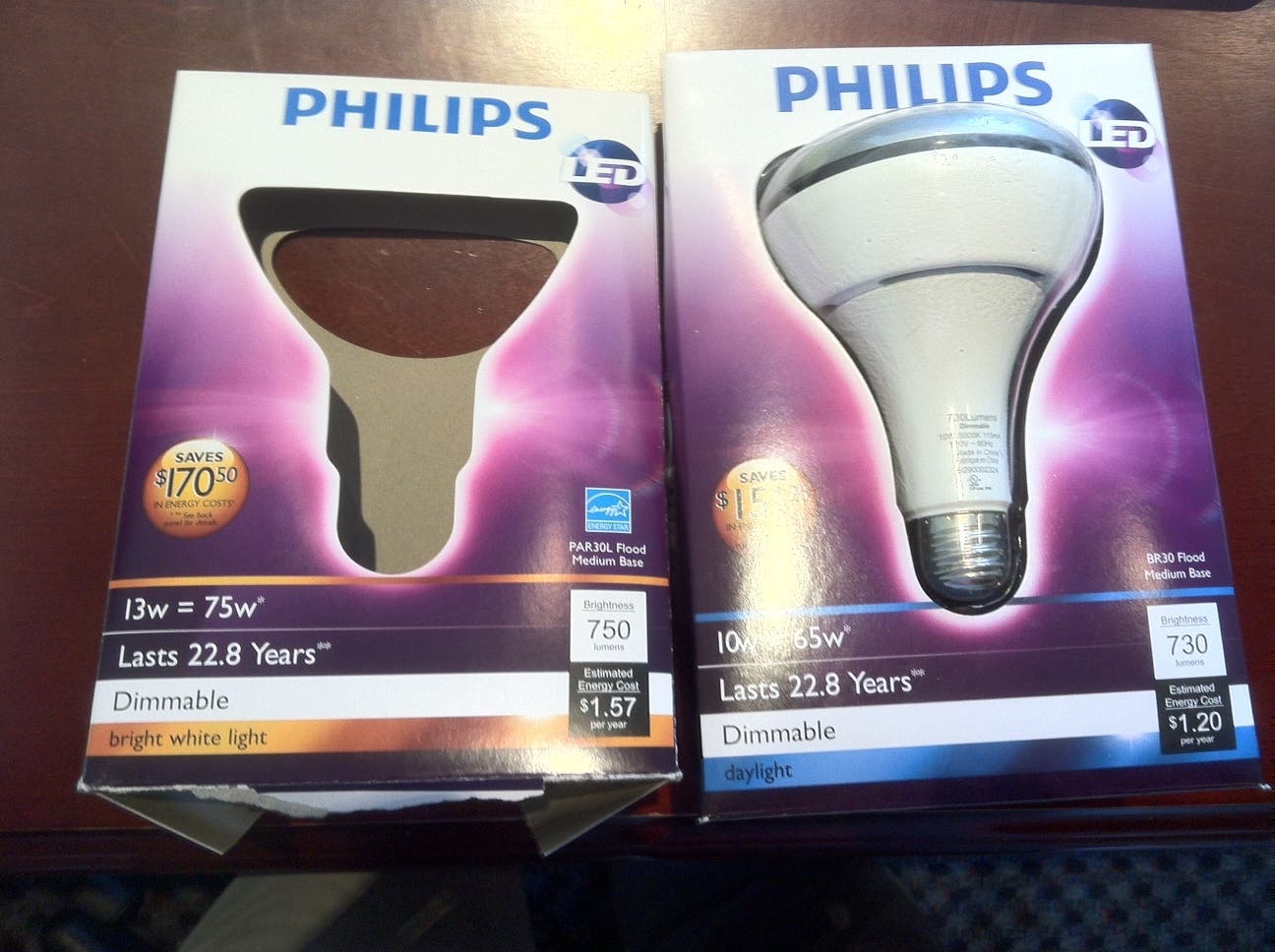
When you are in the “Lighting” aisle at your favorite hardware store these days, you will notice a growing shelf of LED lights. Pay NO attention to the front of the package!
For example, when we went to buy new bulbs for our office’s high ceiling cans, we knew that we wanted bulbs that would (a) not need replacement for a long time, (b) be highly efficient, (c) avoid heating up our tiny office, (c) shed a natural attractive light on our desktops.
The knock on LEDS has been price (ouch, too expensive!) and color (wow, way too blue!). But that is changing rapidly as prices are coming down and colors of the light emitted are diversifying.
Find out what's happening in Ossining-Croton-On-Hudsonfor free with the latest updates from Patch.
We went to our local hardware store and bought a variety of LEDs that were “Flood Medium Base” bulbs, meaning we could take out the existing flood lamp and screw in the new LED as is.
One LED package for a 10 watt bulb promised “Daylight” at 730 lumens and the other for a 13 watt bulb promised “Bright white light” at 750 lumens.
Find out what's happening in Ossining-Croton-On-Hudsonfor free with the latest updates from Patch.
The difference in lumens between these two is meaningless for our consideration. But we did not know what the difference between “Daylight” and “Bright white light” meant.
The difference between 10 watts and 13 watts adds up over time. But let’s remember we are replacing a 75 watt incandescent or 19 watt CFL flood with the lower wattage LED. (Our office ceiling had a mix of both incandescents and CFLs.) Even if we had all CFLs and went with the 13 watt LED, we’d see a drop in energy use of 33%. And the CFLs are not dimmable. We are adding a dimmer control to the light switch to use with the LEDs.
You would think that “daylight” sounds warmer (yellower) than “bright white.” Wrong!!
The “daylight” ended up being really very “cool” and “blue.” And the “bright white” ended up feeling just right on our desktops and computer screens. Why?
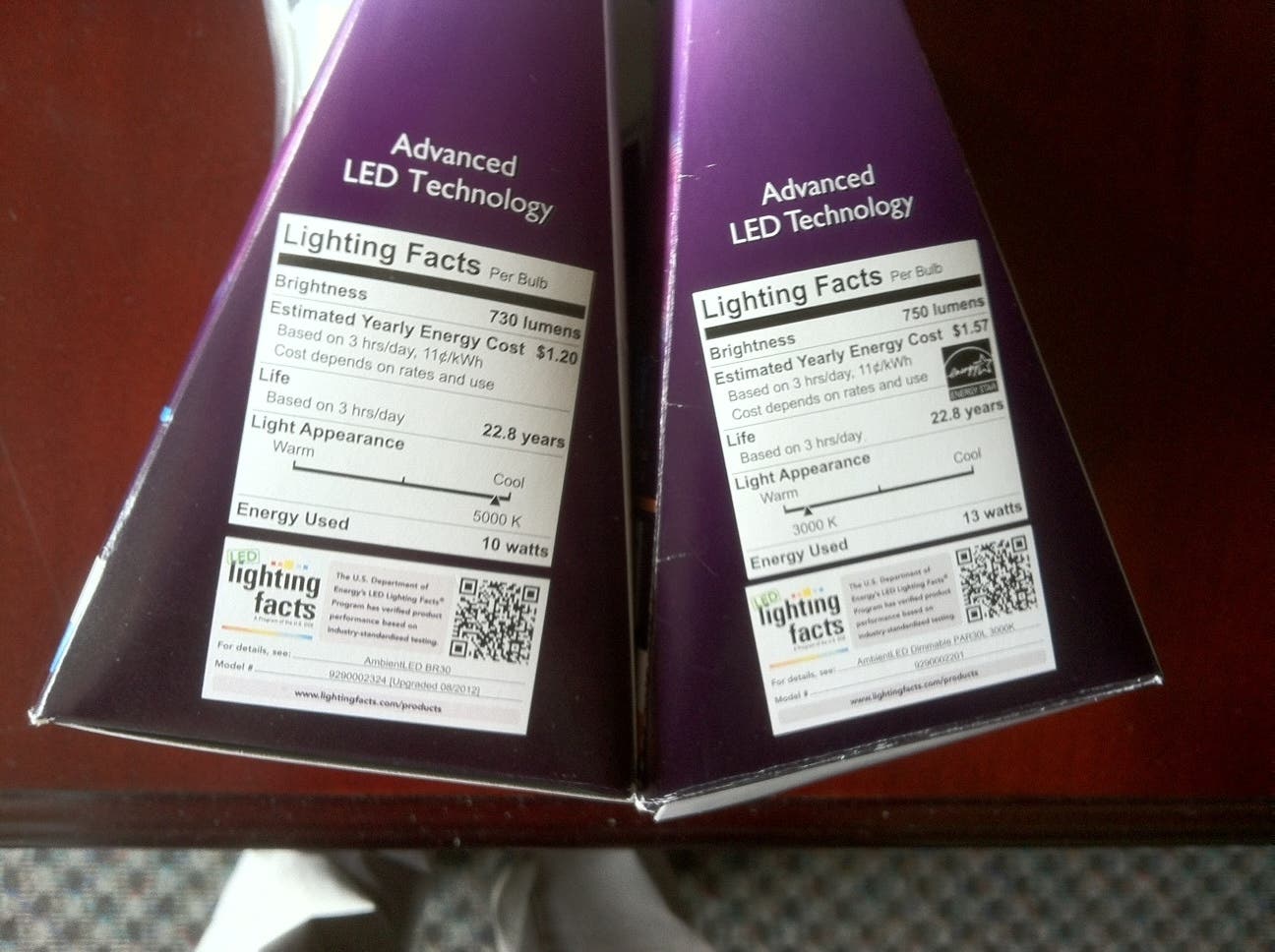
Turn the package over and read the little “Lighting Facts” box instead of the front. The “daylight” bulb has what this manufacturer (Phillips) calls the “Light Appearance” spectrum toward the “cool” end of 5000 K.
The “K” stands for “degrees Kelvin” after Lord Kelvin, a British scientist who developed a scale for measuring the color of light. He was into measuring things.
“If you cannot measure it, you cannot improve it." — Lord Kelvin
The other bulb has a “Light Appearance” at the other end of the spectrum, closer to “warm” at 3000 K. In this spectrum of light, warm means “more yellow” and cool means “more blue.”
Take note of two other tidbits on this Lighting Facts box: It is printed for a nation-wide audience. For our area (in the NY ConEdison service territory) double “estimated yearly energy cost” because our rate is double the 11 cents shown here.
Relamping our 6 ceiling “fish eye” fixture with a screw-in LED flood will drop our office lighting bill about 60% while giving us the ability to dim the lights as needed during the day–something the CFL floods did not allow.
Other LED advantages over compact flourescents lamp (CFLs) are: LEDs are "instant on" and quiet with no hum or other ballast noise. They won't fade your fabrics and contain no mercury traces.
And best of all, these LEDs will not need replacing for a very long time–at least twice as long as CFLs and about 10 times longer than incandescents.