Health & Fitness
NY Among 16 State AGs Urging Congress Not to Roll Back Air Quality Standards
Growing evidence links ozone pollution to lung damage in children and senior citizens and health issues for pregnant women and babies.


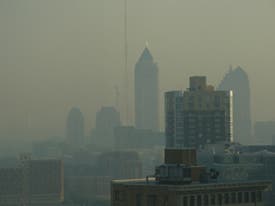
As Congress considers rolling back air quality standards on smog, attorneys general in 16 states are arguing that the proposal marks a major step backwards in efforts to combat the negative impact of pollution on public health. New York Attorney General Eric T. Schneiderman is part of the coalition.
Ozone is the primary component of smog. While it is good in the stratosphere because it shields the earth from the sun’s ultraviolet rays, ozone at ground level — where we breathe — is harmful to human health (and to animals and plants as well).
People exposed to elevated levels of ozone suffer from lung tissue damage, as well as aggravation of asthma, bronchitis, heart disease, and emphysema; children and seniors are particularly susceptible to ozone’s harmful health effects.
Find out what's happening in Ossining-Croton-On-Hudsonfor free with the latest updates from Patch.
In addition, growing evidence finds ozone pollution tied to health risks for pregnant women and babies, according to reports including the one described in this Wall Street Journal article.
And it is worse for people who are active outdoors. A National Institutes of Environmental Health Sciences-funded study showed that children who played three or more outdoor sports in areas with high ozone concentrations were more than three times as likely to develop asthma as children who did not engage in sports activities.
Find out what's happening in Ossining-Croton-On-Hudsonfor free with the latest updates from Patch.
In letters to the chairmen and ranking members of the Senate Committee on Environment and Public Works and the House Committee on Energy and Commerce, the Attorneys General detailed their opposition to the Ozone Standards Implementation Act of 2017, which would substantially delay the ozone standards promulgated by the Environmental Protection Agency in 2015.
“The EPA’s ozone standards aren’t just vital to protecting our environment – they will literally save lives,” said Schneiderman. “Too often, states like New York see our efforts to combat ozone pollution undercut by upwind states. I’m proud to partner with my fellow Attorneys General in urging Congress to reject the rollback of these critical standards. The health of our children, seniors, and people across the country depends on it.”
Ozone forms when two types of pollutants (VOCs and NOx) react in sunlight. These pollutants come from sources such as vehicles, industries, power plants, and products such as solvents and paints.
Can you help reduce ozone? Here are a few tips.
- Turn off lights you are not using
- Drive less: carpool, use public transportation, bike or walk
- Keep your engine tuned, and don’t let your engine idle
- When refueling: stop when the pump shuts off, avoid spilling fuel, and tighten your gas cap
- Inflate tires to the recommended pressure
- Use low-VOC paint and cleaning products, and seal and store them so they can’t evaporate
- Switch to manual lawn and garden maintenance equipment
- Tell friends, family and co-workers what you are doing and why.
Check on local ozone levels by monitoring the Air Quality Index forecast (or by keeping an eye on Patch’s daily newsletter, news alerts and updates).
According to Scheiderman's office, the federal 2015 ozone rule was expected to result in clear, in fact vital public health benefits. The EPA conservatively estimated that meeting the new standards would result in net annual public health benefits of up to $4.5 billion starting in 2025 (not including California), while also preventing approximately:
- 316 to 660 premature deaths;
- 230,000 asthma attacks in children;
- 160,000 missed school days;
- 28,000 missed work days;
- 630 asthma-related emergency room visits; and
- 340 cases of acute bronchitis in children.
Delay would be a huge step backward.
“This bill would not only delay implementation of more protective ozone air quality standards, but, more broadly, would undermine the mandate in the Clean Air Act that the national ambient air quality standards for ozone and other criteria pollutants be based on up-to-date scientific evidence and focus solely on protecting public health and welfare,” the Attorneys General wrote.
The letters were signed by the Attorneys General of New York, California, Connecticut, Delaware, Illinois, Iowa, Maryland, Massachusetts, New Mexico, Oregon, Pennsylvania, Rhode Island, Vermont, Virginia, Washington, and the District of Columbia, as well as the Acting Secretary of the Pennsylvania Department of Environmental Protection.
Today’s letters follow a number of actions Schneiderman and his fellow Attorneys General have taken to protect our environment and public health. The NY AG leads the coalition of state and localities defending the Clean Power Plan; he is also fighting back against the Trump administration’s efforts to weaken vehicle emission standards, suing the administration for its delay of energy efficiency standards, and opposing President Trump’s Executive Order that seeks to eliminate the Clean Water Rule.
PHOTO/NIH
Get more local news delivered straight to your inbox. Sign up for free Patch newsletters and alerts.