Community Corner
Teatown Wins Grant To Fight Invasive Species
Invasive species are one of the greatest threats to New York State's biodiversity.


OSSINING, NY — More than $2.8 million in grants have been awarded to 42 projects that will reduce the negative impacts of invasive species through control or removal activities, research, and prevention. One of several grants to groups in the Hudson Valley went to Teatown Lake Reservation.
These grants are part of the State Department of Environmental Conservation's Invasive Species Grant Program and are funded by the State's Environmental Protection Fund.
Across the state, DEC is using science to determine what actions will have the greatest impact in controlling invasive species.
Find out what's happening in Ossining-Croton-On-Hudsonfor free with the latest updates from Patch.
Mid-Hudson:
- Groundwork Hudson Valley: $100,000 for Yonkers Greenway Rapid Response Initiative.
- Historic Hudson Valley: $100,000 for management of porcelain-berry, Japanese stiltgrass, and common reed at Philipsburg Manor.
- Town of Rye: $100,000 for invasive species rapid response and control.
- Westchester Parks Foundation: $58,109 for Tibbetts Brook Park lake management plan.
- Teatown Lake Reservation, Inc.: $53,050 for monitoring and control of aquatic invasive species in Teatown's lakes.
- Village of Sleepy Hollow: $36,818 for DeVries Park invasive rapid response program.
- Town of Fallsburg: $15,000 for Pleasure Lake Management Plan.
Mid-Hudson/New York City:
Find out what's happening in Ossining-Croton-On-Hudsonfor free with the latest updates from Patch.
- New York New Jersey Trail Conference: $100,000 for lower Hudson early detection and rapid response detection dog team.
- Research Foundation of CUNY Advanced Science Research Center: $100,000 for mapping spatiotemporal patterns in invasive tree, insect, and pathogen occurrences in lower Hudson Valley and New York City.
- Orange County Parks and Recreation: $20,000 for Lake Management Plan at Algonquin Park.
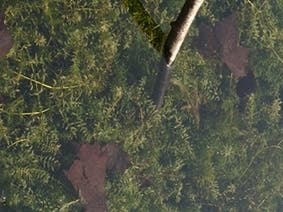
Plus, Cornell University is being given $100,000 for the development of environmental DNA tools for the early detection of the highly invasive aquatic plant hydrilla verticillate. A fight against hydrilla in the Croton River and the New Croton Reservoir has been going on for several years. Hydrilla grows and spreads rapidly and is one of the most difficult aquatic invasive plants to control and eradicate in the United States.
"Under Governor Cuomo's leadership, the State's Environmental Protection Fund has been sustained at a record high $300 million, with $13.3 million in the 2019-20 state budget specifically designated to invest in projects and programs designed to limit the spread of invasive species across the state," DEC Commissioner Basil Seggos said in a press release. "Invasive species are one of the greatest threats to New York State's biodiversity and this funding is just the latest significant step that New York is taking to reduce and prevent their spread."
In addition to funding, New York State has formed a comprehensive plan of attack to prevent the spread of invasive species.
For example, DEC's Adirondack Aquatic Invasive Species Prevention Program conducted nearly 100,000 boat inspections to intercept more than 4,600 invasive species incidents in 2018.
State DEC regulations prohibit boats and equipment from entering or leaving DEC launch sites without first being drained and cleaned. If you're a boater, you are on the front lines. Take precautions - "Clean, Drain and Dry" - prior to launching a watercraft or floating dock into public waters.
New York is working on the massive problem in collaboration with not-for-profit, academic, and municipal partners.
" I'm proud of the comprehensive and strategic approach the State has taken to combat invasive species," State Agriculture Commissioner Richard A. Ball said. "These grants will allow our partners across the State to implement projects that effectively research, control and remove invasive species, helping to safeguard our waterways, crops and trees from these harmful pests."
The Invasive Species Grant Program is administered by the Bureau of Invasive Species and Ecosystem Health in DEC's Division of Lands and Forests. For more information, visit DEC's website at https://www.dec.ny.gov/animals/265.html.
Get more local news delivered straight to your inbox. Sign up for free Patch newsletters and alerts.