Schools
Phillips Avenue Elementary School Students Participate in Archaeological Dig
The fourth grade students met to watch a presentation and participate in a dig to learn about archaeology.




Photos courtesy of Riverhead Central School District
Using ideas they gleaned in July from a new teachers institute led by the Columbia Teachers College Reading and Writing Project at the Colonial Williamsburg living-history museum in Virginia, Phillips Avenue Principal Debra Rodgers and Riverhead Central School District Literacy Coaches Jeanne-Marie Mazzaferro and Amy Brennan have begun infusing 18th-century American artifacts, videos and even an archaeological dig site into the curriculum at the Phillips Avenue Elementary School.
Several fourth grade classes at the Phillips Avenue Elementary School used those what they had learned at Colonial Williamsburg on the Monday following the Thanksgiving break to enliven both social studies and literacy by staging an elaborate archaeological dig that as one Columbia Teachers College Reading and Writing Project consultant noted in a Tweet, “utilized inquiry, note-taking, and inference -- all content area literacy skills”.
Find out what's happening in Riverheadfor free with the latest updates from Patch.
The entire fourth grade class met together to watch a presentation on archeology as part of a a fourth grade Teachers College Reading and Writing Project Area Unit of Study entitled “Colonial America: Three Worlds Meet”.
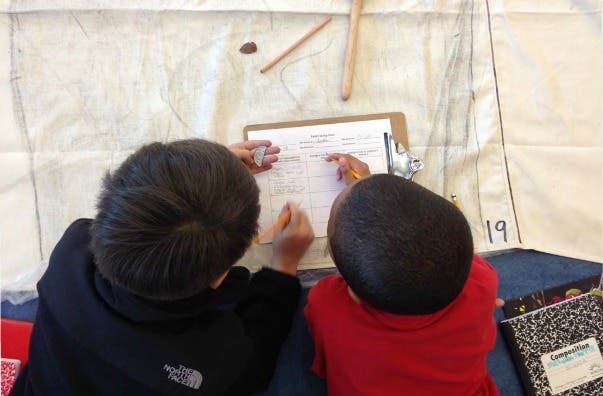
Initially, the dig started with the students noticing the architectural features of the site. They observed a round brick area, which they determined was a well, and identified the remains of a house, a fort, a church, and a school. They examined the artifacts in the area of the structure to gather more information and to determine what the structure was. They identified a walkway, a garbage pit and post holes.
Find out what's happening in Riverheadfor free with the latest updates from Patch.
Next, the student-partners examined the artifacts discovered during the dig: keys, pieces of plates, buttons, bones, leather, wax, a pendent, metal cups, shells, quills, coins, flint, arrowheads, etc. The students used a form to desribe and chart what they found, took notes, read documents and used primary sources to discover what the arifacts were and how they were used in Colonial America.
Amy Brennan, a literacy coach at Pulaski Street School who works with fifth- and sixth-grade students and their teachers on reading and writing skills, got in on the action on Monday and helped with the dig. While at the institute, she was inspired by the narrative stories the participants wrote at the week-long institute.
“It was powerful,” Brennan noted upon her return, “now we’ve begun to bring that inspirational experience back into our schools in the form of narrative stories and realistic historical fiction reading as well as other social studies and literacy curriculum areas.”
Check THE DIG out on Twitter.
More on Patch:
- Officials: 8 Postal Workers Stole Packages Containing 129 Pounds of Marijuana
- DA: Great Neck Doctor Stole Patient Information
- Police: Man With Knife Robs West Babylon Convenience Store
- Nesconset Firefighters Extinguish Car Fire
- 3 Minutes with Playwright Claude Solnik
- Silver Alert Issued for Missing Central Islip Teen Who Needs Medication
- ‘SantaCon’ is Coming to Riverhead on Saturday
- Former North Patchogue Fire District Manager Charged With Grand Larceny
- Cops: Massapequa Man Tried to Buy Yogurt with Fake Cash
Get more local news delivered straight to your inbox. Sign up for free Patch newsletters and alerts.