Politics & Government
Candidate Profile: Ann Welker For Southampton Town Trustee
"Racing my paddle board has taught me determination, grit, and perseverance. It has taught me to set a goal and work towards that goal."


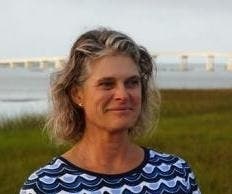
SOUTHAMPTON, NY — Suffolk County residents will be hitting the polls soon to elect local representatives.
The race is on in local town and village races leading up to Election Day, which, this year, falls on Tuesday, November 5. Patch asked those running for office to answer questions about their campaigns and will be publishing candidate profiles in the days leading up to the election.
Ann Welker, 56, of Southampton is a Democrat incumbent also running on the Independence Party line, seeking re-election as a Southampton Town Trustee. Her opponents include Bill Pell, Capt. Andy Brosnan, David Mayer, Eric Shultz, Thea Fry, Megan Heckman, Scott Horowitz, Donald Law, Edward Warner, Jr., and Frederick Havemeyer.
Find out what's happening in Southamptonfor free with the latest updates from Patch.
She is married and has a BBA from Adelphi University in finance and an MA from Adelphi University in exercise physiology; she works as an exercise physiologist in the cardiac rehab department.
Check out Patch's full Q&A with Ann Welker below.
Patch: The single most pressing issue facing our community is _______, and this is what I intend to do about it.
Find out what's happening in Southamptonfor free with the latest updates from Patch.
Welker: The single most pressing issue facing the Southampton Town Trustees is the degraded water quality in many of our bays, ponds and lakes. Although there has not been a rust tide this season in our marine waterways, there have been outbreaks of cyanobacteria, also known as harmful algal blooms (HABs) in many fresh waterbodies in the Town of Southampton. I intend to continue my work on educating residents and users of the affected water bodies, through signage and outreach to community members about the presence of, and dangers associated with HABs. This past spring , water quality monitoring buoys were installed in several of these waterways. Using the data generated, management plans will need to be put in place to begin to address the HAB outbreaks on a site by site basis. Pilot programs can also be investigated in an attempt to reduce the amount of nutrients already present in, or running off in to the waterways. None of this water quality degradation happened over night, and none of it is going to be fixed overnight, but every step is a step in the right direction.
P: What are the critical differences between you and the other candidates seeking this post?:
W: I possess two years experience in the position of Southampton Town Trustee. I have spent these past two years listening and learning and building a network of relationships. With a background in science, I feel that I am uniquely positioned to collaborate with others on the Board of Trustees, as well as with those in local, county and state government, and also with members of environmental organizations to continue the education and action that I have begun to combat our degraded water quality.
P: Describe the other issues that define your campaign platform:
W: I am extremely concerned about the degradation of our coastal ecosystems, particularly our salt marshes. Salt marshes are the nurseries of the sea. They provide feeding grounds for migratory birds and are the front line of defense against flooding and storm surge. Salt marshes sequester large amounts of carbon, both below ground in their roots and soil, and above ground in plants. Living shorelines provide an alternative to shore hardening structures, such as bulkheads. A Living Shoreline is a green solution that provides protection for nearby land while mitigating wave energy in storms. Living Shorelines incorporate nature based materials, such as rocks, plants — both under the water and in the inter tidal area, as well as in some areas, oysters. The incorporation of plantings in Living Shorelines encourages the growth of salt marsh, rather than continued degradation. I have worked with homeowners, and many different levels of government, to encourage the installation of Living Shorelines, rather than grey structures which armor our shorelines. I will continue to strongly advocate for the presence of Living Shorelines in our bays and estuaries. They are the way of the future.
P: What accomplishments in your past would you cite as evidence you can handle this job?
W: Lake Agawam in Southampton Village is one of the most degraded water bodies in New York State. Working with The Board of Trustees of Southampton Village, Dr. Christopher Gobler and his lab at Southampton-Stony Brook University, and the Southampton Town Board of Trustees, funding was secured and a water quality monitoring buoy was stationed in the lake in June of 2019 to begin gathering data to establish a baseline for future projects. It is my hope that my efforts on this project at working to bring many differing parties together to successfully install a buoy will help to provide others with information to make decisions based in sound science going forward.
I have competed in many paddle board competitions over the years, races of all different lengths, Halloween Costumed Spooky Paddles, Santa Paddles, but none as challenging as the Paddle for Ted /The Great Peconic Race. This 19 mile race circumnavigates Shelter Island. The year that I entered it, the conditions were some of the most horrendous that I had ever encountered on the water. The wind, the waves, I lost count of how many times I fell in. It was only when I was hauling myself up onto my board for what felt like the hundredth time, only to climb to my feet and fall right back in again, that I wondered for a split second...was I going to be able to complete this event. I am not a quitter. I finished that race. I didn't place in my age group or my class, but I finished and on this occasion, that was enough for me. Racing my paddle board has taught me determination, grit, and perseverance. It has taught me to set a goal and work towards that goal every single day. It has taught me how to run for elected office and how to achieve success as an elected official. If I could make my way around Shelter Island against wind, tide and current, I can also succeed in the boardrooms of Town Hall, and in the seats of debates on the campaign trail, all the while holding my head high knowing that I have what it takes to climb back on my board one more time.
P: The best advice ever shared with me was ...
W: In the words of the Senegalese forester Baba Dioum, "In the end, we will conserve only what we love, we will love only what we understand, and we will understand only what we are taught."
P: What else would you like voters to know about yourself and your positions?
W: I am a member of the SPAT program. Cornell Cooperative Extension Marine Division's community oyster garden program. I am also a member of the East Hampton Town Trustees oyster farming program. I participated in Cornell Marine Program Horseshoe Crab count and in Peconic Estuary Program's Alewife Count. I lead by example, and I don't mind getting wet when I do.
Get more local news delivered straight to your inbox. Sign up for free Patch newsletters and alerts.