Community Corner
Former Shinnecock Tribal Chief on Land Battle: 'You Can't Steal Our Land Outright and Not Compensate Us'
Lance Gumbs said the Shinnecock Indian Nation may have lost their most recent legal battle, but they haven't lost the war.


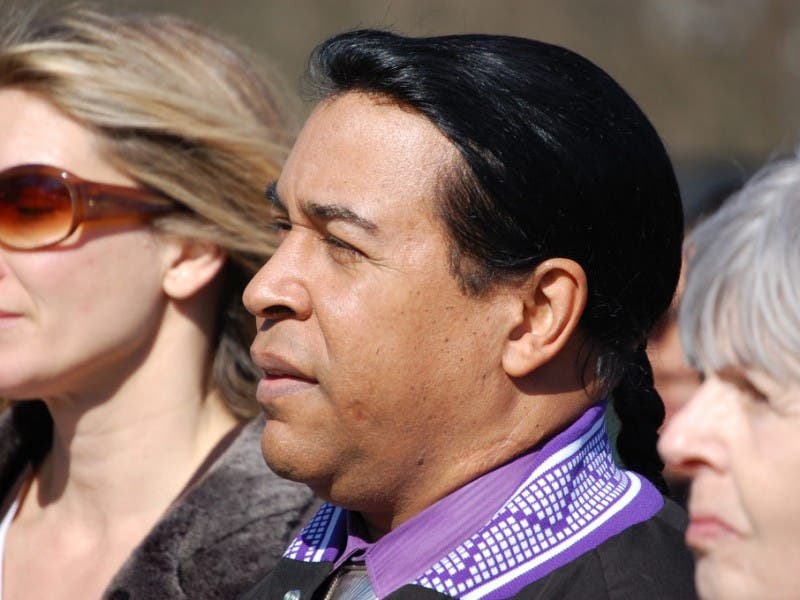
SOUTHAMPTON, NY: Despite a setback in an ongoing fight over ancestral land, the Shinnecock Indian Nation said this week that the battle is far from over.
The tribe, according to Lance Gumbs, former Shinnecock Tribal Chairman and Tribal Ambassador for the Native American Financial Services Association, has been engaged in a generations-long fight to claim ownership of more than 3,000 acres of land in Southampton Town, suing New York State over lands they believe were stolen outright.
A federal judge initially dismissed that claim in 2006, based on a belief that the tribe waited to long to bring the case forward, but the Shinnecock Nation next brought the case to the 2nd Circuit Court of Appeals.
Find out what's happening in Southamptonfor free with the latest updates from Patch.
“From time immemorial, the Shinnecock Indian Nation owned and occupied the land in and around what is now the Town of Southampton,” the Shinnecock Nation’s opening brief read. “Agreements between the Nation and the English settlers in the seventeenth and eighteenth centuries memorialized the Nation’s rights to this land.”
In October, the 2nd Circuit said the Shinnecock Nation’s claims were “without merit,” stating that it would be nearly impossible for the tribe to reclain their ancestral land due to the “disruptive nature” of the claim —and affirmed and upheld the initial judgment of the District Court.
Find out what's happening in Southamptonfor free with the latest updates from Patch.
But according to Gumbs, the fight is not over.
“We’re not just going to walk way from this,” he said.
Gmbs said the ”land was clearly stolen in 1859;” of the 20 signatures used on the Non-Intercourse Act, 10 were not signatures of Shinnecock individuals and “the other 10 were dead,” Gumbs said. ”They were all forged. We are not going to let this go. We may have lost this battle but we haven’t lost the war. That’s the reality.”
As for the argument that the tribe waited too long, Gumbs said the truth was that the tribe was denied the ability to have their case heard, despite the fact that they have been fighting since 1859. “It’s not as cut and dried as everyone likes to think,” he said.
The Shinnecock Nation, Gumbs said, is weighing its options.
Other groups, such as the Japanese who were held in interment camps, have received compensation, he said. The Shinnecock Nation, he said, deserves compensation — and an apology.
“Are you saying the United States and New York State can steal land outright and not compensate anyone for it? Even in the case of eminent domain, people are compensated for their land. This is not based in truth, not based in fact, and not based on the resolve of our people, it’s simply based on a couple of court decisions. The reality has to kick in at some point and time and people have to realize that you’re not just going to steal our land and not even compensate us for it. We are evaluating our options. There are options.”
Medical cannabis cultivation
In other news, in a historic vote among its members recently, the Shinnecock Indian Nation voted in support of plans to construct a medical cannabis cultivation facility and dispensary on tribal land near Southampton.
Tribal members voted 71 percent to 29 percent to approve the project and pursue designation from the State of New York as a provider for patients in the state’s Medical Cannabis Program.
“As a people, we have always had a cultural appreciation for natural, holistic medicine and the difference it can make in the lives of those suffering most,” said Bryan Polite, Chairman of the Shinnecock Indian Nation. “The New York State Compassionate Care Act was a big step in the right direction for administering quality holistic medicine to people suffering from very serious illnesses.”
He added that cultivating and dispensing medical marijuana would be an opportunity to create jobs and promote ”true economic development to support tribal programs. We are encouraged by the enthusiastic support of our members and look forward to continuing our discussions with the State of New York to make this a reality.”
On January 1, New York became the 23rd state to allow the medical use of cannabis. The state approved five companies to produce it and 20 dispensaries to distribute it to roughly 125,000 New Yorkers diagnosed with a specific group of illnesses. Advocates have called for an expansion of the list of approved illnesses, while also saying there are not enough dispensaries to adequately serve patients, a release stated.
Shinnecock interest in the industry came after a December 2014 memo issued by the U.S. Department of Justice outlined their position on federal jurisdiction in states where cannabis —still a federally-illegal substance — has been approved for medical use.
Since then, at least 15 tribes across the U.S. have explored entering or have already entered the medical cannabis industry. Shinnecock leaders consulted with legal experts, industry officials and others before conducting several tribal meetings on the issue and then presenting the idea to its members for a vote.
Under the Shinnecock plan, all facilities will be tribally-owned. Industry consultants would be hired to provide the necessary training to tribal members to take leadership roles in the management and operation of the facilities. Revenues generated by the project would go toward tribal operations, including education, substance abuse programs, law enforcement and senior housing.
The Council of Trustees has outlined their plans with state assemblymen and officials with the New York Department of Health, as well as state and local law enforcement.
Of the news, Gumbs said, “No tribe yet has had success with it in Indian Country so it’s uncharted territory unlike gaming. Besides the hurdle of getting it passed within the tribe there are a number of hurdles out there from the state as well as the federal government that still need to be dealt with to make this a successful tribal operation. It has the potential to be a very successful business for the tribe and to go along way as one of the components to long term economic self-sufficiency for the tribe. But it has to be done right with all the necessary controls and the eight established requirements.”
Get more local news delivered straight to your inbox. Sign up for free Patch newsletters and alerts.