Community Corner
Black Dahlia Murder Finally Solved? Book Names New Suspect
In 1947, actress Elizabeth Short — called the Black Dahlia — was brutally murdered. A British author claims she has solved the grisly crime.


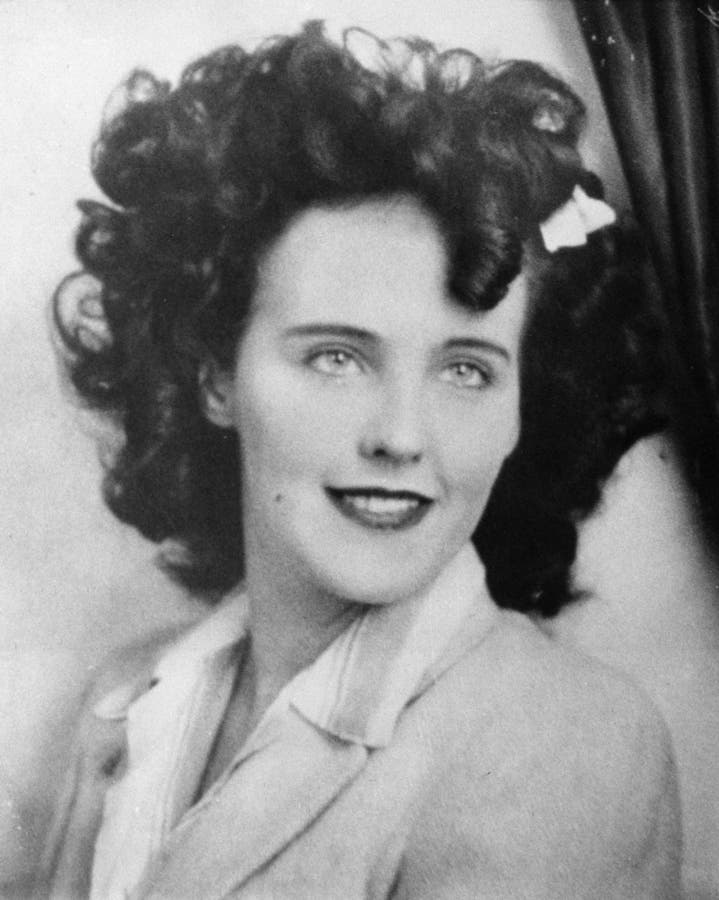
The grisly 1947 murder of raven-haired aspiring actress Elizabeth Short, posthumously named the Black Dahlia, was committed by a pimp hired by a nightclub owner with links to organized crime. That's according to a new book, "Black Dahlia Red Rose: America's Most Notorious Crime Solved For The First Time," by British author Piu Eatwell.
Dozens of people have claimed responsibility for the still-unsolved brutal murder of 22-year-old Short, whose nude body was discovered in a vacant field in Los Angeles on Jan. 15, 1947. Her body had been sawed in half at the waist and drained of blood. Among dozens of mutilations was a clown-like smile that had been carved into her face.
In 2014, retired Los Angeles police detective Steve Hodel said his research indicated that his father, respected doctor George Hodel, had killed Short and as many as 10 other young women — and that he may have been the notorious "Zodiac killer."
Find out what's happening in Across Americafor free with the latest updates from Patch.
Eatwell told The Sun in London that she spent more than three years poring over investigative records and grand jury files. Police, she said, colluded with the nightclub owner she believes ordered a hit on the Black Dahlia — a nickname that refers to a 1946 film called "The Blue Dahlia," about a former bomber pilot who is suspected of murdering his unfaithful wife.
"I lived and breathed the case for more than three years, and based on the huge amount of evidence I've uncovered, I feel confident I've finally solved it," Eatwell told The Sun. "I felt very strongly that Elizabeth Short deserved some sort of justice."
Find out what's happening in Across Americafor free with the latest updates from Patch.
According to Eatwell's theory, a pimp named Leslie Dillon killed the actress at the behest of Danish businessman and nightclub owner Mark Hanson, who had had a falling out with the actress and used his mob connections to coerce Dillon to murder Short. Hanson was one of several suspects interviewed, but later eliminated, by Los Angeles police. Eatwell believes that is because he had threatened to expose other unsolved Los Angeles murders if he was arrested. Dillon was also questioned, then cleared, according to investigative records at the time.
What Hanson might not have known, Eatwell theorizes in the book, is that Dillon's dark side was extremely dark. Beyond his willingness to commit murder, he was a sadistic psychopath who used the skills he learned as a mortician's assistant to torture and kill the actress.
The author believes Short was killed in the Aster Motel in downtown Los Angeles. According to the theory Eatwell advances in "Black Dahlia Red Rose," motel owner Henry Hoffman discovered the gruesome crime scene — a cabin that resembled a slaughterhouse, with blood and feces spattered on the floor of the bedroom and bathroom. In a neighboring cabin, he found a bundle of blood-stained women's clothing that had been wrapped in brown paper.
Because he was an ex-con, Hoffman hid the evidence he had discovered for fear he would be fingered as the killer, Eatwell suggests in her book.
Or Was It Real-Life Dr. Jekyll/Mr. Hyde?
If true, the theory discounts Steve Hodel’s belief that his father killed the Black Dahlia. He said that after his father died in 1999, he was going through his belongings and found two photos that resembled Short. George Hodel was also one of the suspects interviewed by investigators, according to documents.

The younger Hodel published a 2003 book — Black Dahlia Avenger: The True Story — based on his findings. The retired detective believes George Hodel, one of the few Los Angeles area physicians performing abortions at the time, also killed up-and-coming actress Jean Spangler, who may have contacted him to terminate a pregnancy. She disappeared in 1949.
Among the evidence Steve Hodel cited was the discovery by a cadaver dog of human remains in several areas near his childhood home, including in the alley behind the house. He told NBC Los Angeles in 2014 that a chemical analysis of the remains supports his theory.
"I see him as Dr. Jekyll and Mr. Hyde," Hodel said of his father, referencing the gothic novella by the Scottish author Robert Louis Stevenson first published in 1886 and the basis of one of Hollywood's first horror films. "Unfortunately, the monster, Mr. Hyde, was stronger and overruled the good."
In a 2004 interview with CBS News, Hodel said his childhood home had a secret room that he and his siblings were forbidden to enter.
He also cites as evidence against his father a recording of a conversation the doctor had with an unknown person in which George Hodel allegedly said, "supposin' I did kill the Black Dahlia. They couldn’t prove it now. They can't talk to my secretary because she's dead."
Steve Hodel also published "Most Evil: Avenger, Zodiac, and the Further Serial Murders of Dr. George Hill Hodel," which he says links his father to the Zodiac killings.
Feature photo via Associated Press
Get more local news delivered straight to your inbox. Sign up for free Patch newsletters and alerts.