Community Corner
Patch's Military Veterans Keep Serving, This Time As Journalists
This Veterans Day, Patch has four vets reporting news. Who are they? And what are their stories?


It's Veterans Day, a time to think about those who have served the United States in the military. We can enjoy our long weekends and big box store sales, but the real joy of the holiday is taking a moment to consider who vets are as people rather than just saying "thank you for your service."
Joining the military is about as far as one can get, professionally, from becoming a journalist. Patch's goal is to deliver real-time hyperlocal news to our readers. The military's goal is to provide security for, and to fight for, the United States. So, what drew us to journalism, and to Patch?
We decided to keep serving. When we enlisted, we all took an oath to uphold and defend the U.S. Constitution "against all enemies, foreign and domestic." And, in the eyes of a journalist, there is no greater enemy to democracy than an uninformed public. The First Amendment guarantees our ability, and our right, to inform our communities.
Find out what's happening in Across Americafor free with the latest updates from Patch.
For us, it's about service. We all signed our lives away for our country, but we continue to serve our communities through doing our best to keep the public informed.
We at Patch decided to honor our vets by asking them about their service, what brought them into the military and what they've been doing since. Patchers have served in the Army, Navy and Marine Corps for a combined 21 years of service.
Find out what's happening in Across Americafor free with the latest updates from Patch.
As servicemen, we've been to more than 20 countries, including Afghanistan, Honduras, Ukraine and the UK, as well as all around the Mediterranean and Caribbean, and the Arctic Ocean. One of us even served in two separate branches. So, who are our Patchy vets?
Scott McDonald - Gunner's Mate Third Class, U.S. Navy
“I joined the Navy so I could see the world. Most of it’s water, but I saw it.”
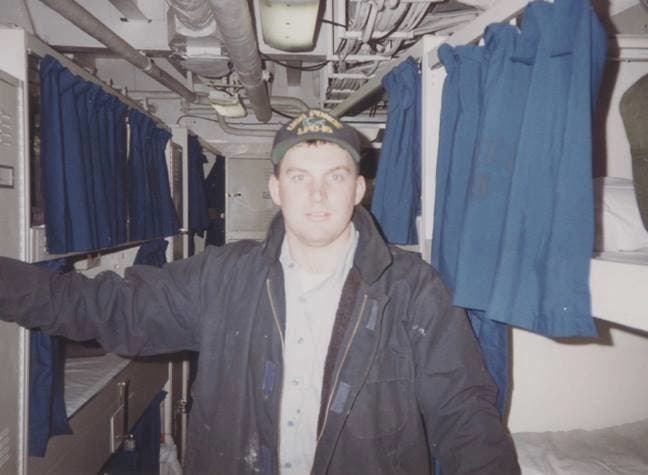
Scott was born in West Monroe, La., to a teacher mom and a private detective father. “In kindergarten, I wanted to be a police officer when I grew up, and by first grade that dream shifted to becoming a professional football player. I’ve been a big sports fan since that day,” he said.
After finishing high school, Scott worked in a Dallas restaurant for a while waiting tables, but then was overcome with the desire to embark on “a life-changing path.” So one day, he made the trip to Garland, Texas, and eventually decided to join the Navy.
Serving a four-year term beginning in 1993, Scott was sent to Naval Station Norfolk in Virginia and assigned to the USS Ponce, a landing port dock ship that carried Marines and a Navy SEAL detachment.
“I began as a desk seaman before striking Gunner,” he said. In 1995, Scott became a noncommissioned officer. He was now Third Class Gunner's Mate McDonald.
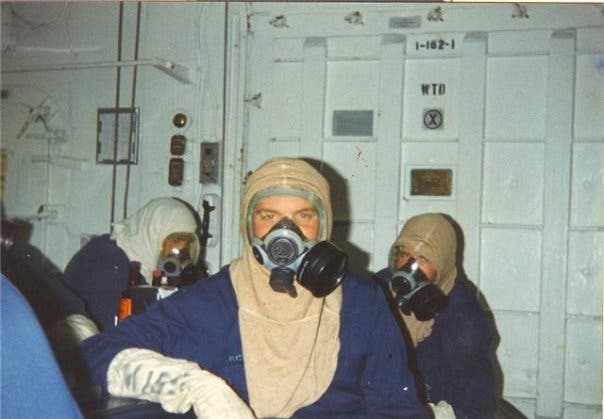
He still knows the USS Ponce’s main purpose to the T. “Our mission was to embark United States Marine Corps and Navy support elements and to conduct amphibious landings to obtain beachheads, execute further operations ashore or deny areas or facilities to the enemy. These were accomplished by both water and airborne means.”
The USS Ponce was officially decommissioned last month, on Oct. 14. It was the fifth oldest ship in the naval fleet.
His naval service took him all over the world, visiting 14 countries in all. Scott’s been to Spain, Portugal, France, Albania, Italy, Sardinia, Ukraine, Greece and Israel. Not to mention Cuba, where the USS Ponce conducted emergency drills and training in Guantanamo Bay.
In 1997, Scott’s enlistment, which had lasted through the United States’ most peaceful years in the past 25, ended. With the help of the GI Bill, he went to Richland College in Dallas before transferring to the University of Texas in Austin.
In 2002, with a journalism degree in hand, Scott started a sports writing internship at The Dallas Morning News. He’s also been the managing editor of the Hill Country News outside Austin and the publisher at the Navasota Examiner.
"Initially I wanted to be a sports broadcaster on TV, but my junior college didn't have any of those kinds of classes or programs at the time, so a friend suggested I try to write for the student newspaper. He said I'd learn how to interview people and do things on a deadline. I fell in love with writing, and now I can't think of any other profession I'd rather be doing."
He has been with Patch since July 2017.
Bryan Kirk - Corporal, U.S. Marine Corps | Specialist, U.S. Army
Bryan had already served, but when Iraq invaded Kuwait in 1990, "I knew I wanted back in."
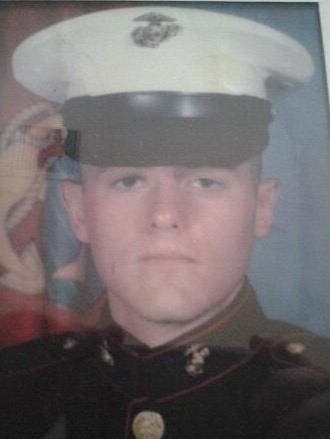
From Houston, Bryan Kirk comes from a family of veterans. “All of my uncles served in Vietnam or Korea,” he said. His dad also served in Vietnam as a U.S. Army Airborne paratrooper, where he lost part of his leg to a landmine. His little brother also served, having recently retired from the Army after 22 years of service.
As such, he always knew he would serve. “It was just what I knew I would do at some point,” he said. Bryan went college for a year after high school, but dropped out to work. He decided to join the Marine Corps in late 1985.
In April 1986, Bryan shipped off to boot camp at the Marine Corps Recruit Depot in San Diego. He trained in administration and was assigned to the Second Marine Air Wing. They sent him to work at Headquarters Marine Corps in Quantico for half a year, as part of a program that plucks Marines from their units to work a special job temporarily.
In January 1988, Bryan deployed with a heavy helicopter squadron aboard the USS Iwo Jima. Around the Mediterranean, Bryan and his unit trained alongside the French, Spanish, Italian and Israeli militaries. An incident in the Persian Gulf brought his battle group to the Suez Canal that year. His unit was told there would be “possible military operations against Iran.” Luckily, they stood down and went back to the Mediterranean.
Bryan got out of the Marines in April of 1990 but later that year, in August, Iraq invaded Kuwait. “I knew I wanted back in.” But the Marines weren’t accepting any prior service members at that time. So, in September 1990, Bryan joined the military again. This time, the Army.
His military police company was supposed to deploy to Kuwait for Operation Desert Storm, but his commander was forced out suddenly, which grounded the unit. Instead, they were sent to Honduras for four months to defend an air base from Salvadoran guerillas. U.S. forces lost 15 troops on that deployment.
Bryan’s last deployment was to Egypt in 1993, for training with the Egyptian and Jordanian militaries. Bryan recalled the Egyptians taking a strong liking to the female troops with whom he had deployed. “Those guys would try and grope, and those women were having none of that. I had one who I saw fight off two of those guys. They were not used to that.”
He was honorably discharged from the Army in 1994.
Bryan decided to go back to school in 1996 attending Texas State University, graduating in 2000. During most of his college career he interned in radio journalism and switched over to print in 2000.
His resume includes newspapers in Seguin and Temple, Texas, Houston and Las Cruces, NM. Years later in 2007, while he was working at the paper in Temple, he met his wife. Between them, they’ve got six daughters and a granddaughter.
Bryan started with Patch in September of 2016 as the only Houston editor at the time. Of his time with Patch, he said “I cannot think of a day where I have not been challenged and learned something.”
J.R. Lind - Sonar Technician Third Class, U.S. Navy
"I was a little bit lost and 20 years old when I joined the Navy in February 2002."
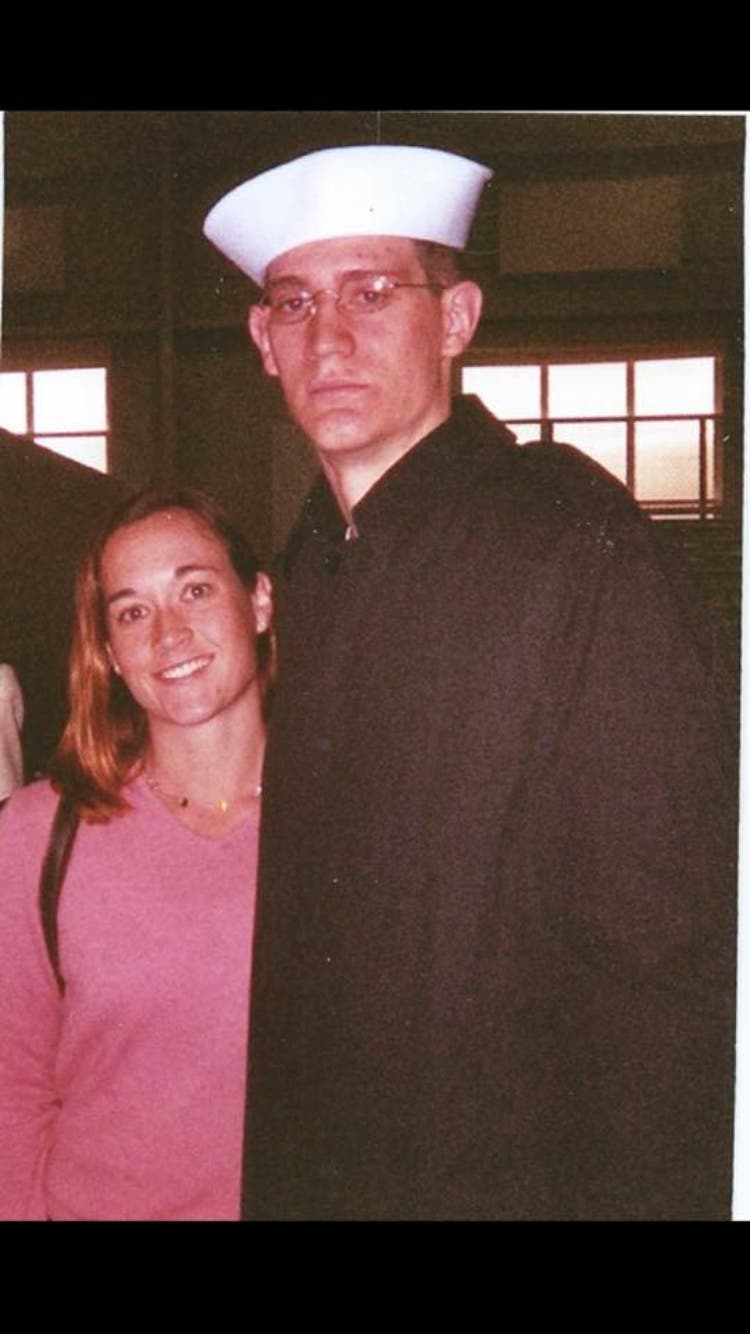
J.R. Lind grew up in the Nashville area. Neither of his parents had served, but both of his grandfathers had been in the Navy. One of them was on the USS Taylor during World War II, which was one of the first ships to enter the Tokyo Bay for the surrender of the Japanese.
“I’d always been a Navy hobbyist,” he said, but never strongly considered joining. He noted Jonesy, the sonarman from the American sub from “The Hunt for Red October,” was one of his favorite characters.
J.R. went to school in Alabama then Tennessee, but wasn’t the best of students. “I was a little bit lost and 20 years old when I joined the Navy in February 2002."
He shipped off to Great Lakes, Mich., for basic training. Then he was off to San Diego to the Fleet Anti-Submarine Warfare School “to learn all the ins and outs of what submarines sounds like and, more importantly, look like on a monitor.” That’s when he learned Jonesy had it pretty easy, and that Tom Clancy had exaggerated the sonar technology in his book.
When he was done with sonar school, all of the slots for his job on warships were filled. Instead, J.R. was sent to Dam Neck, Va. (the home of the infamous SEAL Team Six), to work the Integrated Undersea Surveillance System. He deployed to the Arctic Ocean.
“The joys of the Arctic in the spring and summer were numerous,” J.R. said. “Watching the sun never set, trying to sleep with 30-foot seas outside, navigating a deck that was covered in frozen sea spray. I became a member of the Order of the Bluenose and also missed my beloved Kansas City Royals winning 16 of their first 20 games.”
Then he was transferred to a British and American joint maritime base in the UK, spending the last years of his service there, “keeping the world safe for democracy under 40 feet of concrete in the middle of nowhere.”
J.R. fell in love with British culture, namely the Welsh language, cricket and the Fulham Football Club.
He was discharged in 2006 and returned to Middle Tennessee State University. He didn’t get a journalism degree, but had been offered a full-time job reporting for his small town’s daily paper, the Lebanon Democrat. He also worked for the Nashville Scene, the Nashville City Paper and the Nashville Post.
“Journalism was what I wanted to do since I was 16 years old and I see my time in the Navy and my life as a reporter the same: both are ways I am able to serve my community and my fellow citizens.”
J.R. is a two-time Jeopardy champion, a husband and a dad. He has been with Patch since August 2016.
Geoff Dempsey - Sergeant, U.S. Marine Corps
"Since the Corps is the toughest branch, it was an easy choice for me."
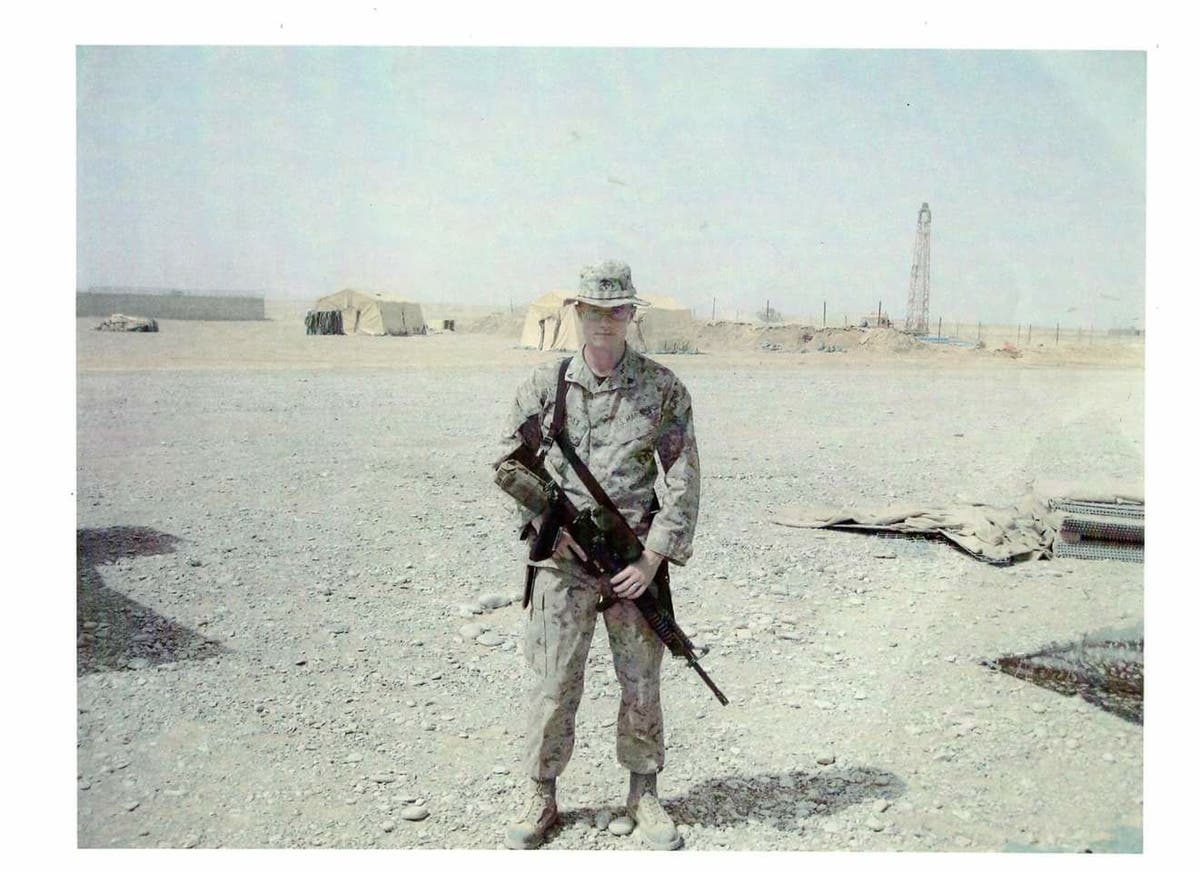
I grew up in Hopkinton, Mass., a suburb of Boston. I always just thought the military was so... cool. Neither of my parents served, but my dad's dad, who was born in 1892 (I know), fought in World War I, which was a fact that still impresses me to this day.
My parents were very against the idea of me joining and I decided to give college a shot. I attended Framingham State for one semester in 2006 before joining the Marine Corps, sort of on a whim. I wanted to shock myself and to be a part of something bigger. Since the Corps is the toughest branch, it was an easy choice for me.
I shipped off to boot camp at Parris Island, S.C., in December of 2006, then to combat training in N.C., then off to 29 Palms in California's Mojave Desert for communications school.
My first unit was a communications unit at Cherry Point, N.C. It was there that I met the woman who would later become my ex-wife. I deployed with them to Afghanistan in 2009, from April to November, in the Helmand and Kandahar Provinces. Most of my time there was mundane.
While in Afghanistan, I was assigned to a guard post for two months. From 4 a.m. to 4 p.m., seven days a week, I was on that post watching the sand, more often than not alone.
Once, on post, I almost blew up a truck which I thought to be Taliban fighters. I was on my MK19 grenade launcher, and the three of them were in a Toyota pickup truck, not in any uniform. There was a machine gun mounted on the back, pointed at the base, and as they got closer, directly at me.
Luckily, I got a call back on the radio from the operations center, telling me they were friendlies. "Stand down, they're ANA (Afghan National Army)." I was so, so relieved I didn't have to blow up the truck.
After my deployment, I got divorced and wanted a big change in my direction. I went to counterintelligence school in Dam Neck, Va., where J.R. had been for some time. It was intense, like spy school. I dropped out during the interrogations phase of training.
I went back to North Carolina, this time as a sergeant, to Second Tank Battalion in Camp Lejeune, for my last year in the Marines. It was then that I was offered the chance to drive out to California for a six-month assignment helping the unit that runs Mojave Viper, the final month-long stage of desert warfare training Marines get before deploying to Iraq or Afghanistan. I took that assignment, which took up most of the rest of my time in the Marines.
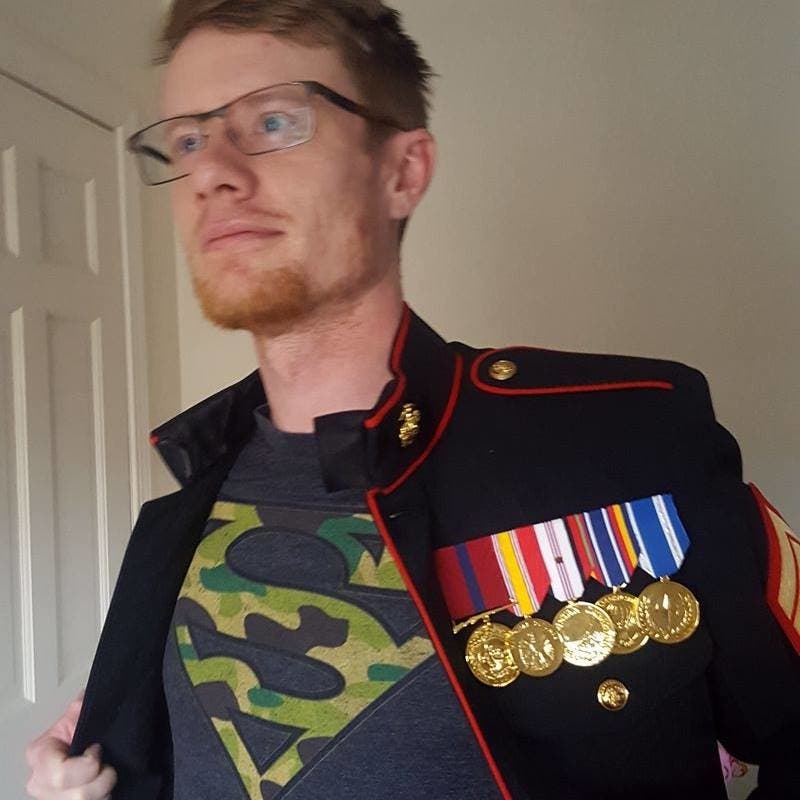
I was honorably discharged from the Marine Corps in December of 2011, and in January I began studying at UMass Amherst. At first, I had no idea I would study journalism. I started off as an engineering student, then figured out my brain wasn't set up for that type of thinking.
I took a journalism intro class and absolutely loved it. I graduated with a bachelor's degree in journalism, with a minor in anthropology, in 2015. Newly instilled in me was the need to serve from a completely different perspective.
Since then, I've worked as a bartender and bar manager at my local VFW, a freelance reporter, a warehouse worker, as a private investigator and finally with Patch starting in April 2017. This is my first full-time journalism gig and I couldn't be happier.
Article image Rob Carr/Getty Images Sport/Getty Images
Get more local news delivered straight to your inbox. Sign up for free Patch newsletters and alerts.