Politics & Government
Confederate Legacy Inspires Community Dialogue
Fairfax City is in the middle of a community conversation about racial and social equity, systemic racism, symbolism and identity.


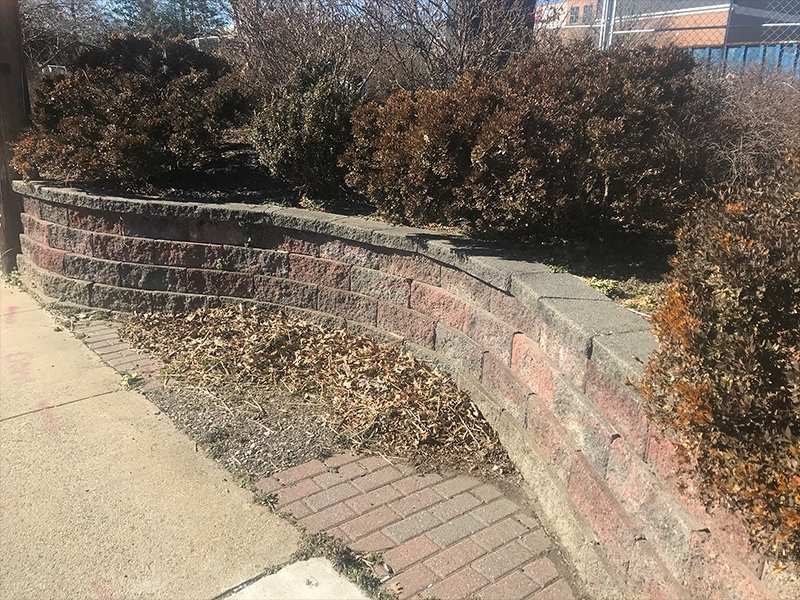


FAIRFAX CITY, VA — In recent weeks, workers have been demolishing the vacant Travelodge on Fairfax Boulevard to make way for a new Wawa gas station. A stone wall separates the property from the sidewalk that runs along the road. At one point, the wall dips toward the demolished building and forms an alcove that sits empty except for a collection of leaves and debris.
Until last summer, this vacant space was occupied by "The First Soldier of the South to Shed His Blood for the Confederacy," a monument dedicated in 1927 by the United Daughters of the Confederacy. It commemorated the death of Peyton Anderson, a Confederate soldier who was killed in Fairfax at the very beginning of the Civil War. Representatives from UDC took possession of the monument in July and removed it from the city.
The City of Fairfax is steeped in history, and reminders of the Civil War can be found everywhere. A Confederate soldier is present on the city's official seal. Travel four stoplights down Fairfax Boulevard from the empty alcove and you'll come to Plantation Parkway, the entrance to the Mosby Woods community. Developers in the 1960s named that neighborhood for John Singleton Mosby, a Confederate officer. Among the roads within Mosby Woods are Confederate Lane and Reb Street.
Find out what's happening in Fairfax Cityfor free with the latest updates from Patch.
The death of George Floyd last summer at the hands of Minneapolis police and the protests of the Black Lives Matter movement sparked calls for racial and social equity across the country. Many communities in the South began to examine the legacy of the the Civil War and segregation.
Last June, the Fairfax County Board of Supervisors began the process of renaming Confederate properties. In September, the board voted to remove a Confederate monument dedicated to Capt. John Marr on the grounds of the old Fairfax County Courthouse in the city. Just last week, the Fairfax County School Board voted to change the name of Mosby Woods Elementary to Mosaic Elementary.
Find out what's happening in Fairfax Cityfor free with the latest updates from Patch.
Fairfax City has also made several recent changes in response to the calls for more racial and social equity:
- An historical marker on Main Street dedicated to the "Birthplace of the Confederate Battle Flag" was removed.
- The Fairfax High School principal changed the name of the street the school was located on from Rebel Run to Lion Run.
- The City of Fairfax School Board recently renamed Lanier Middle School to Katherine Johnson Middle School. Sidney Lanier was a Confederate soldier who, in the decades after his death, was embraced as the "poet of the Confederacy."
In addition to these changes, the City Council initiated a community dialogue at its Oct. 6, 2020, work session to address the topics of racial and social equity and why so many Confederate memorials and images can be found within the city limits.
“This initiative, endorsed by the City Council, holds great promise for our city residents to engage with each other with respect, compassion, and an openness to learning and gaining a greater understanding of each other,” Mayor David Meyer said in a release. “This is an opportunity for all of us to discern what actions we may take to create a preferred future that is inclusive and more just and equitable.”
Entitled Connecting Fairfax City for All, the initiate invites members of the public to share comments, personal stories, ideas and questions about racial and social equity, systemic racism, symbolism and identity. The public can access the initiative through the city's Engage Fairfax community engagement platform.
"Fairfax County has a program called One Fairfax, and they worked that program through several years back," said Councilmember Janice Miller. "It's really about talking about opportunities for their residents. That's the first thing. That's something that I'd always wondered about. We had not really explored that as an area of opportunity for our citizens here in Fairfax City."
The key to Engage Fairfax is that it is a dialogue on racial and social equity with the goal of coming to a consensus on how to move the community forward.
"We can have a community conversation," said Councilmember Jon Stehle. "The six precincts are all represented on the group that we have appointed. You can talk to your neighbors about this conversation that is very neighborhood centric. I actually think our size and the fact that we have this type of direct history really sets us up for having this type of exploration or conversation."
The city has partnered with the George Mason University Jimmy and Rosalynn Carter School for Peace and Conflict Resolution. It's also come up with a process to engage the community and form a diverse working group that will make recommendations for action items and further discussions. Later this year, the council will consider the group's input before it takes further steps.
Stehle was in the inaugural class of elected officials and community leaders to take the Carter Center's conflict resolution class for elected officials. He described it as an intense course of deep, detailed conversation.
"What I really appreciate about the Carter Center is we need to learn to have conversations again," he said. "We need to learn to sit in a room where not everybody agrees and have a discourse — someone who believes that we don't need to change the name Mosby Woods and someone who believes we do need to change the name Mosby Woods. There is no right or wrong answer. There is a discussion to have about what is it say, 'Where do we want to go?' That learning process is far more important than the street names."
Miller hopes the dialogue will lead to a better understanding of the city's history so that the community will recognize the importance of creating opportunities for the all the people who live and work in Fairfax.
"I spent a lot of years on the Fairfax City School Board, and I always thought the true value of the public education was the breadth of opportunities that were offered to our boys and girls," she said. "Because if you can't, as a community, offer equal opportunities to people who live in your community, you're really shortchanging everyone."
Also see ...
Get more local news delivered straight to your inbox. Sign up for free Patch newsletters and alerts.