Politics & Government
Fairfax City Considers New Formula For Developer Cash Proffers
Fairfax City is considering a new model to calculate developer cash proffers for schools, parks and public safety.


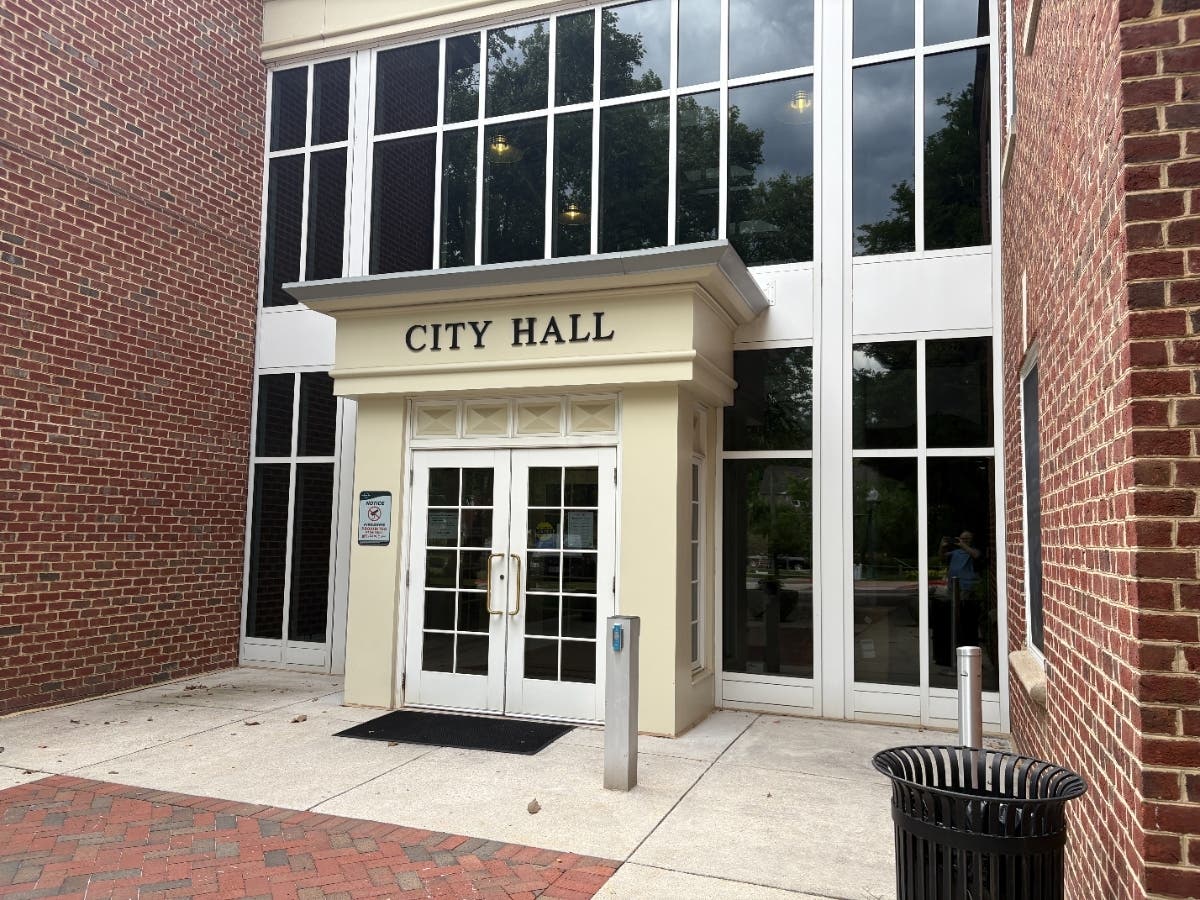
FAIRFAX CITY, VA — Fairfax City officials are considering a new system for calculating how much developers could voluntarily contribute toward schools, parks and public safety projects to offset the infrastructure demands created by new residential development.
The City Council reviewed the proposed capital impact model during its Monday work session. Developed by consulting firm TischlerBise, the model is intended to give the city a consistent, data-based method for determining reasonable cash proffers during rezoning cases.
City Planner Eric Foreman told councilmembers that Fairfax City has accepted cash proffers before but does not currently have policy guidance establishing which proffers should be sought or how their amounts should be calculated. As a result, he described the city's past approach as "somewhat scattershot."
Find out what's happening in Fairfax Cityfor free with the latest updates from Patch.
Model Would Calculate Development's Share Of Capital Costs
Cash proffers are voluntary monetary commitments developers can make during the rezoning process to help offset a project's impact on public facilities. Under Virginia law, they are limited to capital facilities where additional capacity is needed and must represent new development's fair and proportionate share of those costs. The money generally must be spent within 12 years.
The proposed model covers public schools, parks and recreation, police, and fire and rescue. Transportation was excluded because the study calculated a negligible potential cash proffer and the city typically addresses transportation impacts through improvements directly provided by developers.
Find out what's happening in Fairfax Cityfor free with the latest updates from Patch.
The study is not intended to calculate the overall fiscal impact of development. Operating expenses, enterprise fund costs and capital projects that do not expand capacity are excluded.
Julie Herlands, a vice president at TischlerBise, explained that the model produces both a "static" figure representing the full capital impact associated with different types of housing and a dynamic figure that accounts for whether additional capacity is actually needed when a rezoning occurs.
The static analysis calculated potential capital impacts of $22,357 for each single-family detached home, $21,364 for a townhouse or other single-family attached unit, and $12,380 for a multifamily unit. Age-restricted units generated substantially lower figures because they carried no school impact in the model.
Those numbers would not automatically become the cash proffer for a particular development. The dynamic model would determine which infrastructure categories are eligible based on existing capacity when a rezoning is considered.
For example, TischlerBise modeled a hypothetical development containing 400 multifamily units and 10,000 square feet of retail. Its full residential capital impact was calculated at $12,381 per housing unit, while application of the capacity tests reduced the potentially eligible amount to $7,495 per unit.
A second example involving 50 townhouses produced a full capital impact of $21,365 per unit and a capacity-triggered amount of $10,559 per unit.
Council Looks At Schools, Upcoming Development
Much of Monday's discussion centered on schools and whether Fairfax City's numbers should differ from those used by Fairfax County Public Schools.
For a single-family detached home, the city's model calculated a static school impact of $14,321. Once existing school capacity was considered, the city's dynamic amount fell to $5,578, compared with an FCPS static proffer figure of $7,792. Consultants said the county uses higher student-generation rates and a different methodology.
Councilmember Stacy Hall questioned how quickly the city could put a policy in place, particularly with hundreds of housing units coming before city officials.
"I'm just thinking of all we had 718 homes discussed tonight," Hall said. "That's a lot of bank. That's a lot of money.
Earlier during Monday's meeting, councilmembers listened to three pre-submission development proposals that would, if approved, add 718 homes to the city's housing stock.
RELATED: Fairfax Council Pushes Back On 11-Story Circle Gateway Proposal
Officials also compared the model with cash proffers from The Botanist development. City staff said that project's 260 units generated about $510,000 in proffers — approximately $390,000 for schools, $100,000 for parks and $20,000 for trees — or roughly $2,000 per unit.
After hearing that the hypothetical multifamily project's capacity-triggered amount was about $7,500 per unit, Hall said the comparison suggested the city potentially "left about 5000 and change per unit on the table" with The Botanist. Foreman cautioned that The Botanist proffers did not include public safety, making a direct comparison difficult.
Councilmember Anthony Amos expressed support for the model but asked about its potential effect on development costs and affordable housing. Herlands said communities have to balance the cost of maintaining public services with housing affordability and what the development market can bear.
Councilmember Rachel McQuillen emphasized the need to communicate consistently with developers and among city departments about which capital projects qualify. Councilmember Tom Peterson questioned consultants about the underlying data and methodology; the consultants said the model relies predominantly on Fairfax City-specific information, including household sizes, student-generation rates, city facilities and local capital costs.
AlSO SEE: Fairfax Planners Approve 14-Home Mantua Redevelopment
Councilmember Stacey Hardy-Chandler said consistency should be the central goal.
"I think the next step is policy," Hardy-Chandler said, asking what council needed to do to turn the model into clear expectations for developers.
Staff said the next step will be presenting the school-related portion of the study to the Fairfax City School Board, expected within about a month. Staff would then reconcile feedback from the School Board and City Council and return with recommendations for a potential
The council took no formal action Monday. The presentation identifies consideration of a potential cash-proffer policy as an issue for future meeting.
Get more local news delivered straight to your inbox. Sign up for free Patch newsletters and alerts.