Politics & Government
Fairfax City Seeks More Tax Flexibility, Local Control In 2027 Legislative Agenda
Fairfax City Council reviewed its 2027 legislative priorities, including new tax options, housing, collective bargaining and public safety.


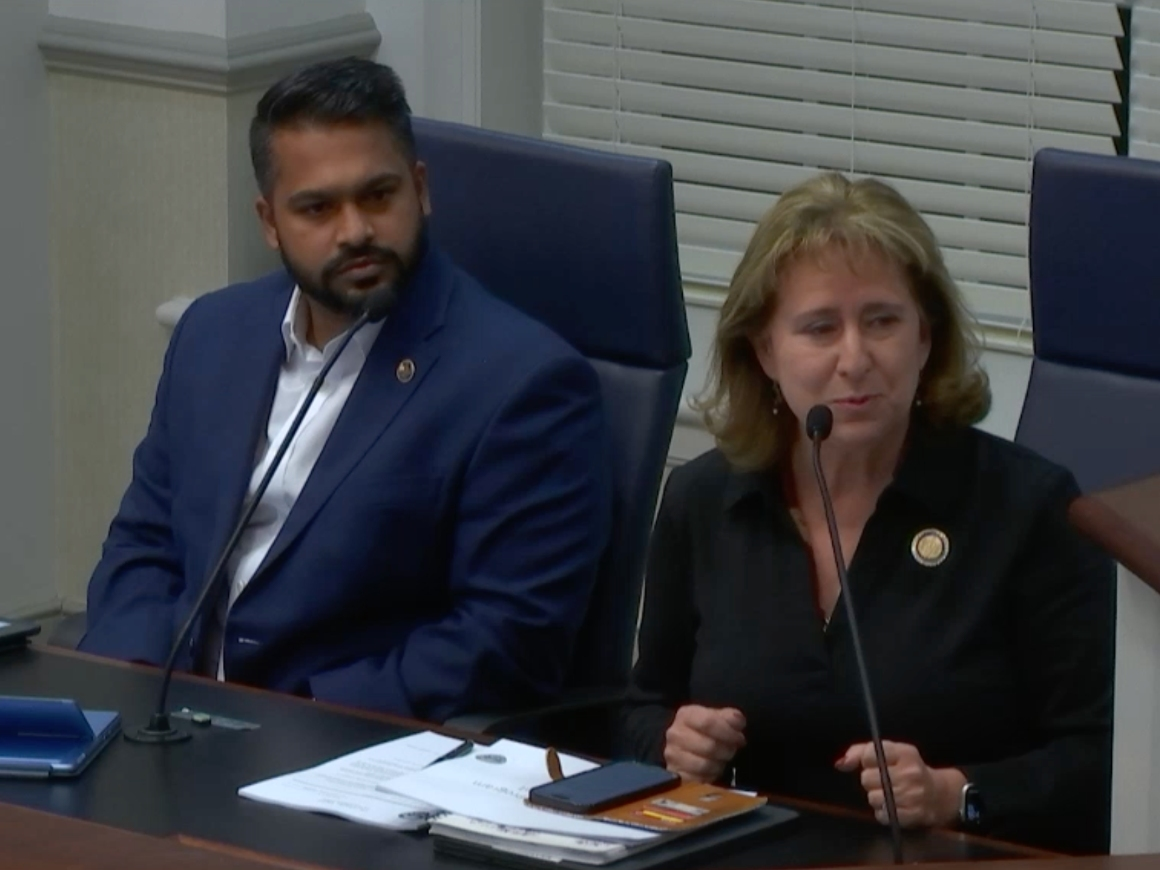
FAIRFAX CITY, VA — Giving local governments more flexibility to raise revenue, expanding housing opportunities and preserving local control over collective bargaining are among the priorities Fairfax City officials are considering for the 2027 Virginia General Assembly session.
The Fairfax City Council held a public hearing Tuesday night on its proposed legislative program, which outlines the city's positions on state legislation affecting local government operations, taxation, housing, transportation and public safety.
State Sen. Saddam Azlan Salim (D-37th District) and Del. Gretchen Bulova (D-11th District), who represent the city in Richmond, attended the the meeting and discussed legislation they expect lawmakers to consider when the General Assembly convenes Jan. 13.
Find out what's happening in Fairfax Cityfor free with the latest updates from Patch.
City Seeks More Flexibility On Taxes And Revenue
One of the more significant additions to the city's proposed legislative program would ask the General Assembly to expand local governments' authority to establish alternative revenue sources, including locally authorized income-based taxes.
The proposal also calls for exploring ways to reduce local governments' reliance on real estate taxes, including the possibility of sharing more state-generated revenue with localities.
Find out what's happening in Fairfax Cityfor free with the latest updates from Patch.
Assistant City Manager Melanie Zipp, who presented the proposed program, said the city was taking a broad approach rather than requesting authority to impose a specific tax or establish a particular rate.
Zipp noted that Virginia previously authorized a local income tax for Northern Virginia localities in 1989, although the authority was repealed in 2013.
That tax authority was limited to transportation purposes in Planning District 8, which encompasses Northern Virginia.
Zipp said she was unaware of any Northern Virginia locality that had exercised that authority before it was repealed.
The city's proposed language does not commit Fairfax to adopting a local income tax. Instead, it seeks greater flexibility to evaluate revenue alternatives that could help fund municipal services and infrastructure.
The discussion comes as Fairfax City prepares its fiscal year 2028 budget and considers how to finance major capital projects and growing service demands.
Fairfax City voters approved a referendum Nov. 3 authorizing the City Council to impose an additional retail sales tax of up to 1% to help finance school construction and renovation projects, public transportation improvements or both. The measure passed with 6,119 votes in favor, or 55.66 percent, compared with 4,874 votes against, or 44.34 percent, according to unofficial election results from the Virginia Department of Elections.
The referendum gives the City Council authority to establish the tax, but does not itself impose it. Revenue from the tax would be restricted to eligible school capital projects and public transportation purposes, including related bond and loan financing costs.
Housing, First Responders And Voting Access
The legislative proposal also includes new language supporting the development of "missing middle" housing, which generally refers to housing types between traditional single-family homes and larger apartment buildings.
The city would support state and local collaboration to expand housing opportunities for residents across different income levels, household sizes and stages of life.
The proposal emphasizes locally appropriate zoning and land-use strategies, as well as workforce housing for employees whose jobs contribute to the local economy and essential services.
The city also wants additional state funding for the Virginia Housing Trust Fund, legal assistance for renters and down payment assistance programs.
Other proposed legislative priorities include:
- First responders: Restore a statewide personal protective equipment grant program with $2.5 million in annual funding to help fire departments purchase protective equipment, including turnout gear and breathing apparatus. The city also supports expanded occupational cancer coverage for firefighters and emergency medical services personnel.
- Ambulance billing: Establish restrictions on balance billing for ground ambulance services to protect patients while ensuring appropriate reimbursement for emergency medical response and transportation.
- Voting access: Support voting by mail, extended polling hours and expanded ballot drop box availability, accompanied by state funding for staffing, equipment, training and election technology.
- Transportation: Support a sustainable funding solution for the Washington Metropolitan Area Transit Authority without diverting resources from other transportation projects.
Collective Bargaining And Local Authority
Another proposed addition addresses the possibility of statewide collective bargaining requirements for local government employees.
The city's position is that collective bargaining should remain a local option rather than a statewide mandate.
If the General Assembly establishes mandatory collective bargaining, Fairfax would support exemptions or other flexibility for smaller jurisdictions, including localities with populations of 50,000 or fewer, those experiencing fiscal distress and those with substantial amounts of tax-exempt property.
The proposal also calls for protecting local governments' financial authority, management rights and existing collective bargaining arrangements.
Councilmember Stacy Hall emphasized the importance of preserving local decision-making authority, particularly because Fairfax City's size and circumstances differ from those of surrounding counties.
"I think collective bargaining is just an example of that, where we need to retain the ability to make local decisions, to know our community, our residents, our spot best," Hall said.
Hall also raised concerns about unfunded state mandates involving housing, parking and other local government responsibilities.
Also See ...
- Fairfax City Unveils $567.8M Capital Plan, Including Fire Station, Property Yard Projects
- Fairfax City Weighs $155M Property Yard, Major Projects As FY28 Budget Planning Begins
- Fairfax City Unofficial Election Results: Mayor And Council Votes By Precinct
Salim said he understood those concerns and had been discussing the needs of smaller jurisdictions with legislative leaders and the governor's office.
Councilmember Tom Peterson similarly urged lawmakers to preserve the city's authority over land use and economic development.
Peterson said Fairfax has a fixed amount of commercial land, making local control over how that property is developed particularly important.
He also raised concerns about increasing traffic and pedestrian safety problems on the city's limited road network.
State Lawmakers Outline 2027 Priorities
Salim told council members that housing and local government authority would likely return as major legislative issues in 2027 after several proposals were referred for further study during previous sessions.
He also identified artificial intelligence, autonomous vehicles and emerging prediction markets as areas of legislative interest.
Salim said he expects to pursue legislation requiring clearer disclosures when artificial intelligence is used to generate content or make decisions affecting consumers.
He described proposals involving AI-generated advertising and insurance decisions, including efforts to ensure consumers can request human review of certain decisions.
Councilmember Stacey Hardy-Chandler asked about the potential effects of AI on human services and the importance of ensuring residents know when technology, rather than a person, is providing services.
Salim said the issue extends to schools, where AI-generated material can contribute to online bullying.
The senator also said lawmakers are examining possible regulations for electric bicycles and electric scooters.
He described e-bike and pedestrian safety as among the major issues expected to receive legislative attention in 2027, citing concerns raised by local governments and law enforcement agencies across Virginia.
Bulova said the upcoming session would likely focus on affordability, small businesses, public safety, education and workforce development.
She also identified data centers and artificial intelligence as significant issues facing lawmakers.
Both legislators cautioned that some of the city's funding priorities may require a longer-term approach because the upcoming session is a short legislative session.
Salim also thanked Fairfax City voters for approving a local sales tax referendum, saying other localities were interested in how Fairfax City secured voter approval and whether they could pursue similar measures.
Chamber Requests Right-To-Work Protection
During the public hearing, Jennifer Rose, executive director of the Central Fairfax Chamber of Commerce, asked council members to add preservation of Virginia's right-to-work law to the city's legislative priorities.
Rose said the chamber made a similar request last year and believes the city should formally express its position regardless of whether the governor has indicated opposition to repealing the law.
Virginia's right-to-work law generally prohibits requiring workers to join or financially support a labor union as a condition of employment.
Rose argued that maintaining the law helps provide stability for businesses considering investments and expansion in Virginia.
"A legislative agenda should communicate what matters to our community, regardless of whether we anticipate a particular bill becoming law," Rose said.
She said the chamber supports preserving workers' ability to decide whether to join or financially support a union.
Rose provided the city clerk with suggested language for the legislative program.
The council did not indicate Tuesday whether it would incorporate the chamber's request.
Council Raises Additional Infrastructure Concerns
Councilmember Anthony Amos identified several issues he believes deserve additional attention, including the potential effects of the proposed NextEra-Dominion transaction on energy infrastructure and costs.
Amos also raised concerns about the increasing expense of regional wastewater infrastructure, including the Noman M. Cole Jr. Pollution Control Plant.
He suggested the city consider more extensive discussions about wastewater infrastructure as part of its regional legislative priorities.
Councilmember Billy Bates highlighted the city's longstanding concern about state funding for local police departments and expressed hope that the state would eventually fulfill its funding obligations.
Final Legislative Program Expected In December
No vote was taken on the proposed legislative program Tuesday.
City staff plans to incorporate council feedback and present a revised proposal during a Dec. 1 work session.
The council is scheduled to consider adopting its final 2027 legislative program Dec. 8, ahead of the General Assembly's Jan. 13 opening.
Zipp said the deadline for submitting requests for legislation intended to be prefiled is Nov. 30, although the city had not developed any specific bills requiring submission by that date.
The final legislative program will guide the city's advocacy efforts with Salim, Bulova and other state lawmakers during the upcoming session.
Get more local news delivered straight to your inbox. Sign up for free Patch newsletters and alerts.