Politics & Government
Bowing To Public Sentiment Fairfax City Council Withholds Funding Endorsement For Trail
Fairfax City Council decides not to endorse the funding application for a trail project that would've removed 140 or more trees.


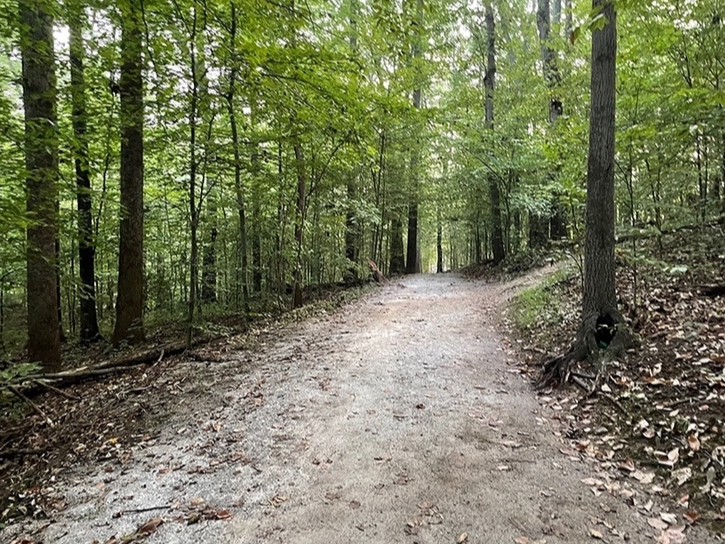
FAIRFAX CITY, VA — Fairfax City Council voted unanimously Tuesday night to not endorse the funding request to pay for the John Mason Trail. With this action, the project, which has faced a great deal of criticism in recent weeks from city residents, has been placed on hold.
The city had an Oct. 1 deadline to endorse its application to receive 70 percent funding from the Northern Virginia Transportation Authority for Fiscal Year 2027. By not endorsing the application, the city would not receive the $6.8 million needed to pay for the project.
After the meeting, Judy Fraser, who was one of the citizens who opposed the current trail proposal, said she was elated by the decision to pause the project.
Find out what's happening in Fairfax Cityfor free with the latest updates from Patch.
"Many of us who raised the concerns are bicyclists too and are looking forward to being involved in a more holistic take on building a bikeable transportation network in the city, definitely one that doesn’t treat publicly owned forests and stream valleys as mere 'right of ways,'" she said.
Developing a "Tank Farm" trail connecting Pickett Road to Daniels Run Park was a top priority in the city's 2014 Strategic Master Plan. The trail was also a priority project in the Two-Year Transportation Plan the council approved in June.
Find out what's happening in Fairfax Cityfor free with the latest updates from Patch.
But as the deadline for the NVTA funding loomed and members of the public began looking at the trail proposal, many began voicing their concerns in letters to the council and in testimony at meetings.
Critics objected to the removal of 380 trees to make way for the trail. They also opposed the use of asphalt and other non-permeable surfaces for the trail, which would contribute to runoff and erosion.
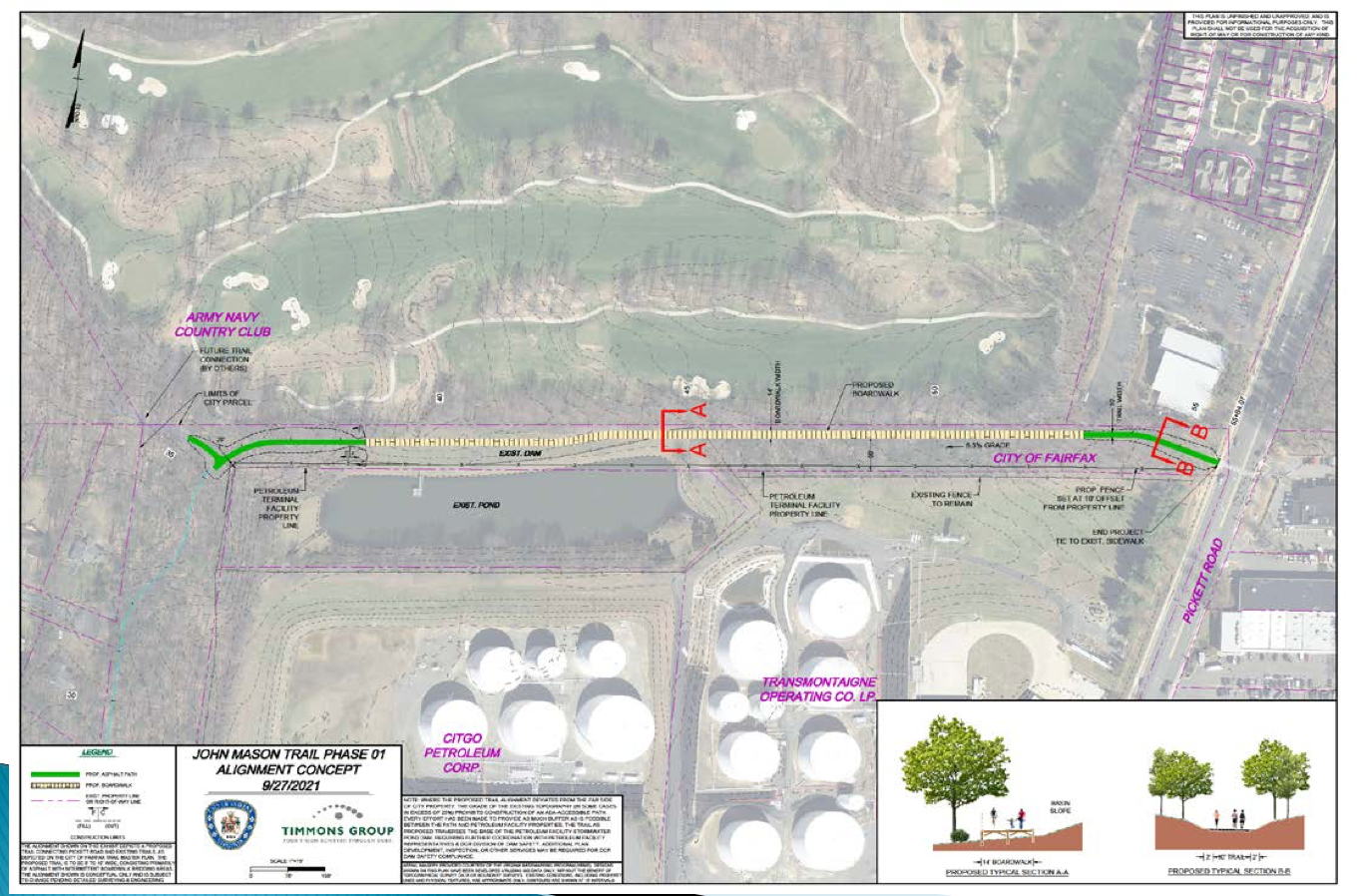
Based on feedback from the public following the council's Sept. 14 meeting, city staff modified the proposal, which it presented Tuesday night.
Related: Fewer Trees Targeted In Revised John Mason Trail Plan In Fairfax
Under the new plan, the project was split into two phases, with only the first included in the NVTA application being considered for endorsement at Tuesday's meeting.
Phase 1 consisted of a boardwalk trail system that extended from Picket Road to Daniels Run Park. The north/south section would be considered by the council at a later, unspecified date. With these changes, city staff estimated only 140 trees would have to be removed.
Once city staff finished its presentation, it became apparent the overwhelming sentiment among council members was to pause the project and reconsider it with more public engagement.
"We have a lot of information out there," said Councilmember Joseph Harmon. "We know more now than we did in June, and all of it is moving us forward to a better discussion with the community, as we take the continued steps forward."
Harmon added that he was eager to continue the conversation and did not want to be misconstrued in saying the project should go away entirely.
Councilmember D. Thomas Ross echoed Harmon's sentiments.
"The natural setting that we have in the city is oftentimes few and far between, and we need to work very, very hard to protect what we have," he said. "Having said that, I also believe there's a very tricky balancing effort we need to take."
Although Ross said he would continue to work to support the completion of a trail system through the area, he questioned what trails were needed there.
"I think there's no reason why we cannot accommodate the environment, and building a trail system that we can use, that we can take advantage of," he said. "We may not be able to make that trail system entirely ADA accessible. That certainly has been our goal and is a personal goal of mine to see more trails accessible to those who have some disabilities, having had a grandson who had a severe disability."
Fraser was pleased that several councilmembers had taken the public's concerns to heart.
"Some in particular, like Joe Harmon, one of the newest council members, took a brave step to lead the council away from the disastrous path they were on," she said. "Others like Sang Yi and So Lim seemed pleased that democracy at the community level seemed to be working, hopeful that public input will be encouraged in the future and relieved they could heed the concerns that were raised."
Once the discussion had finished, Councilmember Janice Miller made a motion to deny the resolution to approve the city's submission of Phase 1 of the John Mason Trail project to the NVTA. Councilmember John Stehle Jr. seconded it and the council voted unanimously in support of the motion, effectively stopping the trail project from moving forward for the time being.
Philip Latasa of the Friends of Accotink Creek was pleased by the council's decision. His group opposed the project because replacing a large number of trees with paved surfaces would negatively impact the stream system and contribute to climate change.
"This was not a case of one group of citizens advancing their interests vs. another group with other interests," he said. "This was a case of facing the hard reality that does not allow for easy choices, but forces us to fulfill our obligations to the environment and the future. Our forests and streams are reduced, fragmented, and impaired by human action — they cannot continue to bear additional burdens we impose."
Get more local news delivered straight to your inbox. Sign up for free Patch newsletters and alerts.