Neighbor News
Bypass the Box Office With Your Own Home Theater
I turned my basement into a wonderful movie room, and you can too!

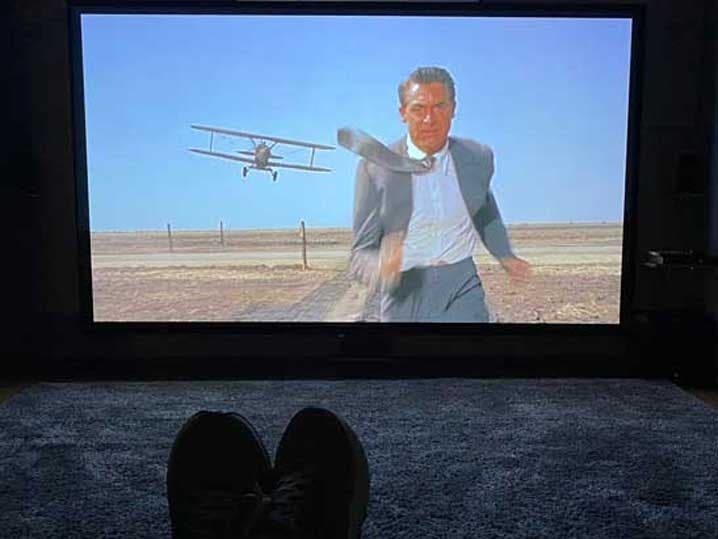
Did the shutdown leave you hankering for a trip to the movies? You remember, that bygone era where you could see each other’s entire face, grab some popcorn, and get lost in an adventure, drama, or comedy for a short period of time.
Well, my wife and I sure wanted that kind of freedom. So, while swimming in the uncertainty of the shutdown, I decided to do something about it and created a home movie theater. It turned out better than I could ever have imagined.
The result is (as we’ve already realized) countless hours of entertainment in what truly feels like a bona fide movie theater—and it’s just a few steps away in the basement.
Find out what's happening in Greater Alexandriafor free with the latest updates from Patch.
The point I’d like to get across to you is that if I can do it, you probably can too. So what follows is a somewhat chronological description of how I converted part of our basement into a movie room and an idea about costs involved. This definitely isn’t the only way to create a movie theater, but I wanted to tell you what I did to make it work.
For starters, anyone can build a move room. It’s really just a room in which you can watch movies. For me, I didn’t necessarily have delusions of grandeur, but I wanted to make something kind of cool—a place for family and friends to watch epic productions and, at least, have the feel of a real movie theater.
Find out what's happening in Greater Alexandriafor free with the latest updates from Patch.
I perused various YouTube channels for suggestions, but then I just kind of jumped into it. The process was one of checking and adjusting plans throughout the process—from screen size to projector type and sound system and a bunch of other aspects I discovered. So, despite my sometimes-disjointed approach to this, here’s my step-by-step description of how I built our movie oasis.
Please note: My goal was to do this without going behind walls for wiring or doing any construction build outs—basically a “plug and play” approach as nice as I could make it. I am not a professional contractor, and cannot advise you about local building codes, so always make sure you do your homework and are in compliance with local codes where required.
The Space
First, I needed a room. This was easy. One side of our basement had limited light pollution and stored a bunch of junk (and also served as sort of a music room for my drums). The room is 23 feet long and about 11 feet wide. I had pictured my drums in the back of the room looking toward the wall at the front where the screen would go. Seating would go right in front of the drums, and then there would be about 15 feet or so to the screen. The first step in this space was to clean out as much as I could so I could get to work.
Continue reading here.
Christopher Prawdzik and his wife Angela Logomasini are licensed Realtors® with Samson Properties in Alexandria and are members of the Northern Virginia Association of Realtors® Top Producer’s Club. Operating as D.C. Region Real Estate, they serve the Virginia, Washington, D.C., and Maryland real estate market and offer comprehensive real estate services, including 4½% full-service listings.
© 2021 DCRegionRealEstateNews.com