Health & Fitness
Food Insecurity Rising In Virginia, DC Region, New Report Finds
A new Capital Area Food Bank report finds food insecurity remains widespread across portions of Virginia and the greater Washington region.


Food insecurity remains widespread across Northern Virginia and the Washington, D.C., region, with nearly 4 in 10 households struggling to afford enough food consistently this year, according to a new report on hunger and financial pressures facing local families.
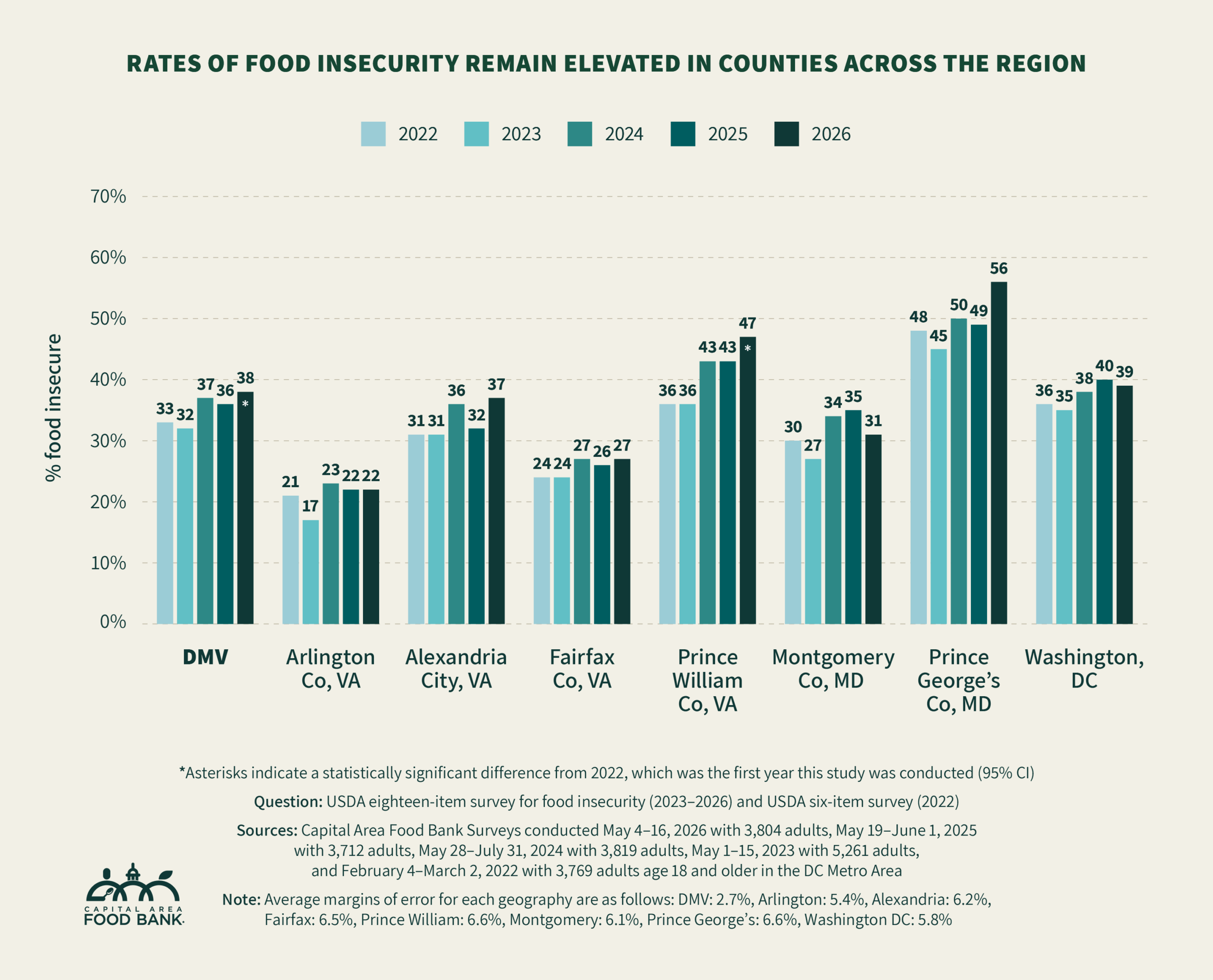
The Capital Area Food Bank's 2026 Hunger Report found 38% of households across Greater Washington experienced food insecurity during the past year, the highest rate since the organization began conducting the annual study in 2022.
The longer-term trend is more pronounced: The rate was 33% in 2022, meaning food insecurity is now more prevalent than it was near the height of the COVID-19 pandemic.
Find out what's happening in Across Virginiafor free with the latest updates from Patch.
The Capital Area Food Bank produced the report using a survey NORC conducted at the University of Chicago. Researchers surveyed 3,804 adults across seven jurisdictions in May, examining not only access to food but also employment, household finances, government benefits and other factors contributing to food insecurity.
Food Insecurity Trends
Food insecurity remains widespread across Northern Virginia, though rates vary significantly by locality. Prince William County recorded the highest rate among the Virginia jurisdictions surveyed, at 47%, followed by Alexandria at 37%.
Find out what's happening in Across Virginiafor free with the latest updates from Patch.
Fairfax County had a lower rate, with 27% of households experiencing food insecurity, while Arlington County had the lowest rate among the seven jurisdictions in the regional study, at 22%.
Across Greater Washington, 38% of households experienced food insecurity during the past year, the highest rate since the Capital Area Food Bank began its annual survey in 2022.
Lower- and middle-income households remain particularly vulnerable. Three in five low-income households and one in four middle-income households experienced food insecurity in 2026. Additionally, about 34% of children across the region experienced food insecurity during the previous year.
Major Drivers Of Food Insecurity
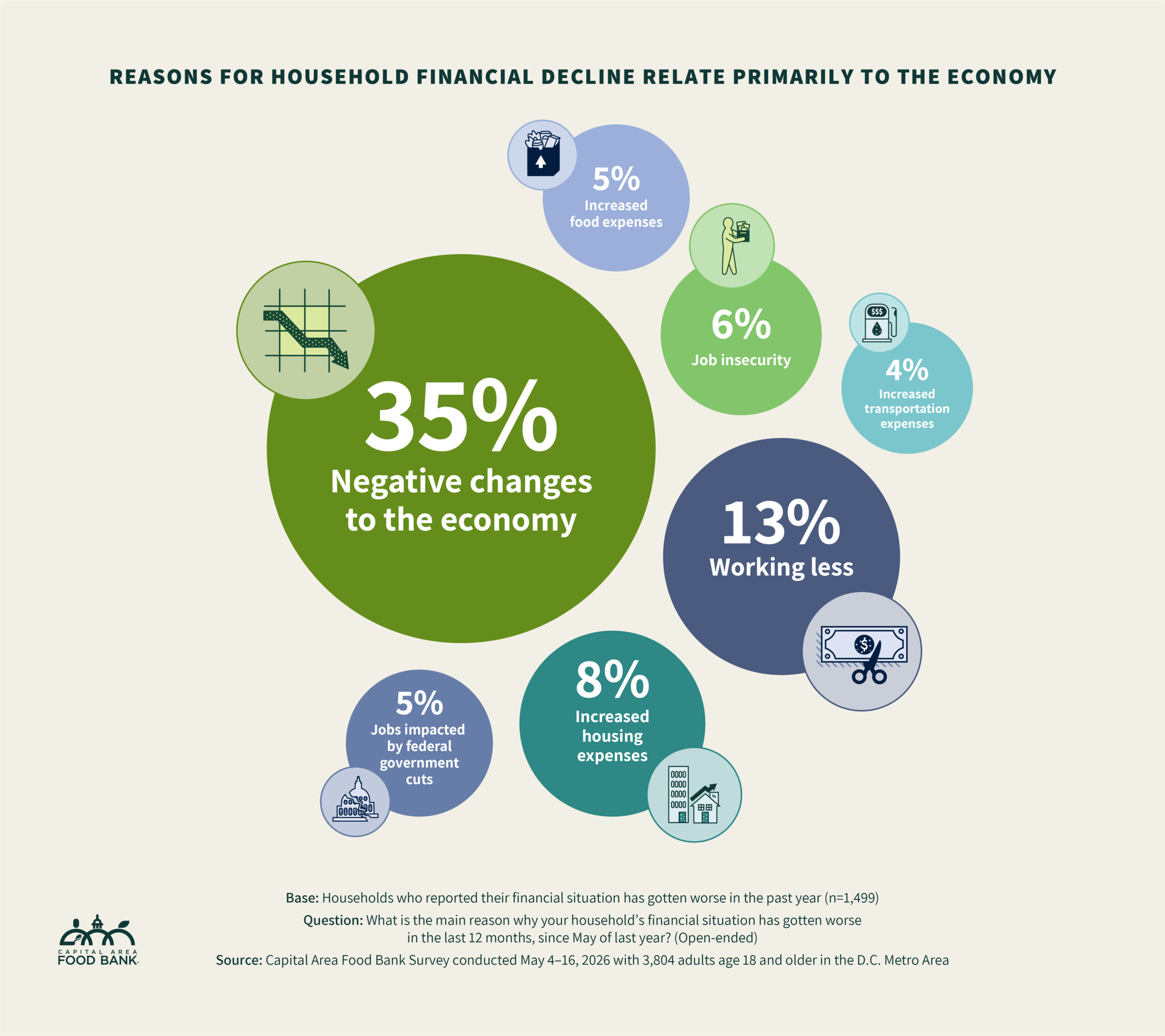
Economic pressures were among the biggest factors identified in the report. Forty-four percent of households said their financial situation had worsened during the past year, with respondents pointing to inflation, job losses and higher housing, medical and food costs.
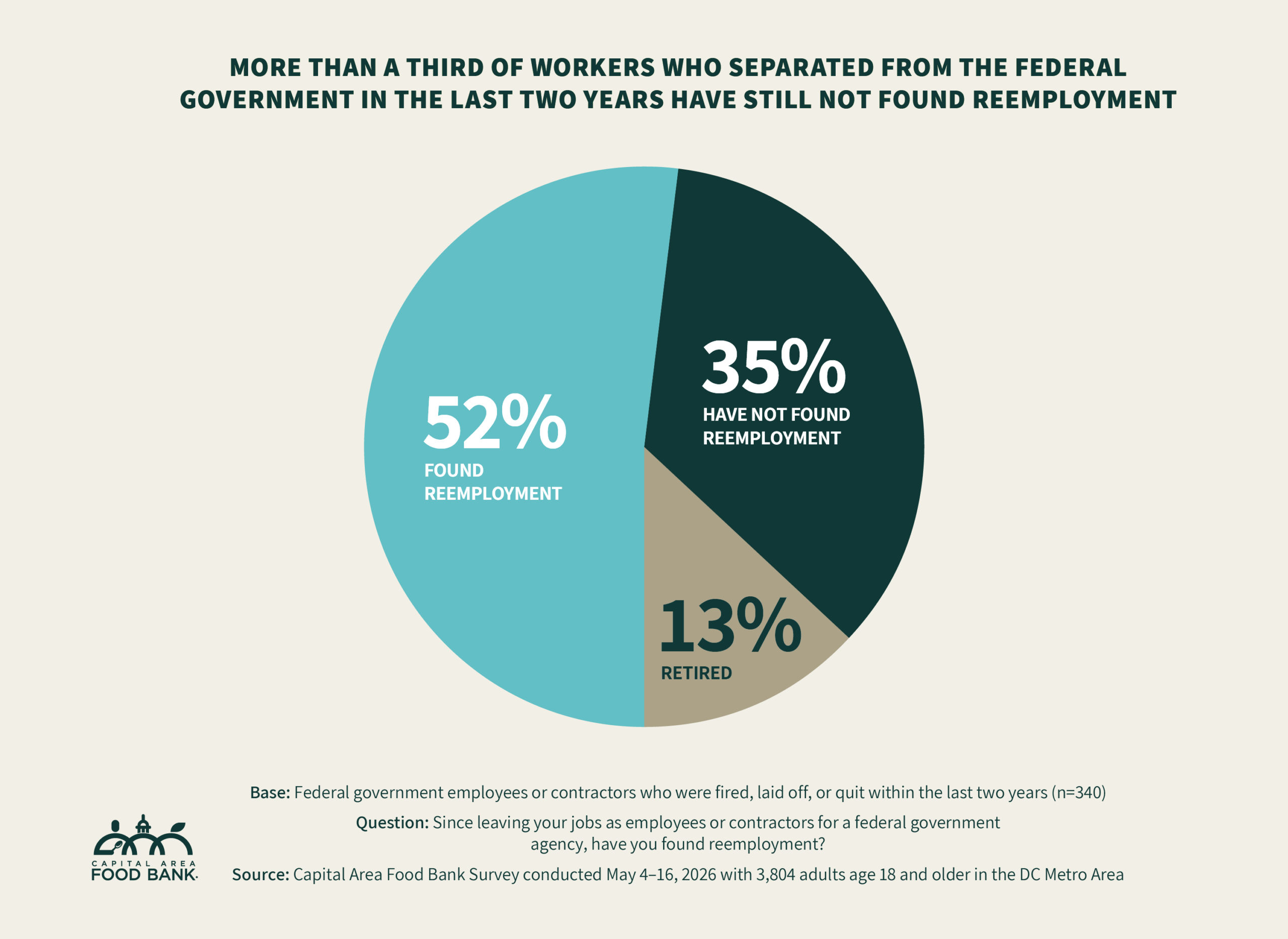
Additionally, the region also lost more than 100,000 jobs between January 2025 and January 2026. Federal workforce reductions contributed to the losses, while cuts to federal grants and contracts affected other employers.
Families are increasingly using savings and debt to cover everyday costs, according to the report. Nearly six in 10 households reported dipping into savings for monthly expenses, while about half were making only minimum payments on credit cards or other loans.
More Pressure Ahead
The food bank warned that changes to federal assistance programs could increase demand for charitable food services.
About 50,000 families across Greater Washington could eventually lose an average of $187 per month in SNAP benefits under federal changes, according to an Urban Institute analysis cited in the report.
Maryland's SNAP enrollment already fell by nearly 43,000 people, or 6.4%, between May 2025 and May 2026.
Changes to Medicaid could also increase household medical expenses, while food banks and other nonprofits face limits on how much additional demand they can absorb.
What The Report Recommends
The Capital Area Food Bank recommends that state and local governments protect food-assistance funding, make it easier for eligible residents to enroll in SNAP and Medicaid and strengthen school and summer meal programs.
The report also calls for better coordination among food, housing, health care and employment programs and greater investment in workforce training paired with assistance for expenses such as food, housing, transportation and child care.
The food bank expects demand to remain high and plans to increase its annual food distribution from about 66 million meals to as many as 75 million in coming years.
See the full report online.
Get more local news delivered straight to your inbox. Sign up for free Patch newsletters and alerts.