Community Corner
After the Rain: How to Deal with Flooding in Your Yard
Some areas of Northern Virginia saw more than 4 inches of rain Tuesday. Fairfax County offers useful tips after heavy rain this week.

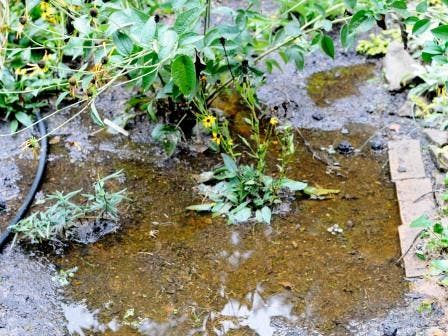
With Wednesday’s sunshine it’s hard to believe how much rain fell on Northern Virginia on Tuesday.
After the rain that fell (see rain totals here from the National Weather Service) you might be dealing with a wet yard or might want to start preparing for the next big rainfall. Here’s some information from Fairfax County on how to keep your yard from flooding (or as dry as possible):
If your yard dries out within a day or two after a rainstorm, that is considered normal. A yard with a wetness problem has puddles or soggy areas that persist for several days after storms or are always present.
Find out what's happening in Mount Vernonfor free with the latest updates from Patch.
If you have heavy flows of stormwater passing over your property during storms, but not persistent sogginess afterwards, please seeControl Heavy Runoff.
Wet areas that persist for several days after rain or snow are commonly caused by improper grading (low spots or depressions) or poor infiltration of water into the soil.
Find out what's happening in Mount Vernonfor free with the latest updates from Patch.
Grading problems on your property will prevent water from quickly flowing away into a storm drain or other suitable outlet. Areas around the foundation should slope away from the foundation walls; swales or other flow diversions between neighboring houses should be properly graded so that runoff does not stagnate on your property.
Poor infiltration (also known as percolation) can be caused by compacted soils, soil with high clay content or soils with a shallow depth to bedrock. Water can perch on top of these materials, either at the ground surface or slightly below it, causing sogginess. In addition to the solutions below, consider amending the soil
Small Wet Areas After Storm
In small wet areas after storms, poor grading prevents stormwater from flowing off the yard. Instead, stormwater is held in small, well-defined depressions until evaporation or infiltration into the soil eliminates the wetness.
A practical and environmentally beneficial option is to replant the wet area with water-tolerant plant species, preferably native. If you wish to eliminate the soggy depression, you can do so by filling or re-grading the depression.
For more information visit Fairfax County’s Wet Yard: Solving Drainage Problems
PHOTO courtesy of Fairfax County
Get more local news delivered straight to your inbox. Sign up for free Patch newsletters and alerts.