Home & Garden
Vienna Students Fight Food Insecurity With Hydroponic Gardening Initiative
This Vienna high school student launched a community gardening and education initiative after glimpsing food insecurity during the pandemic


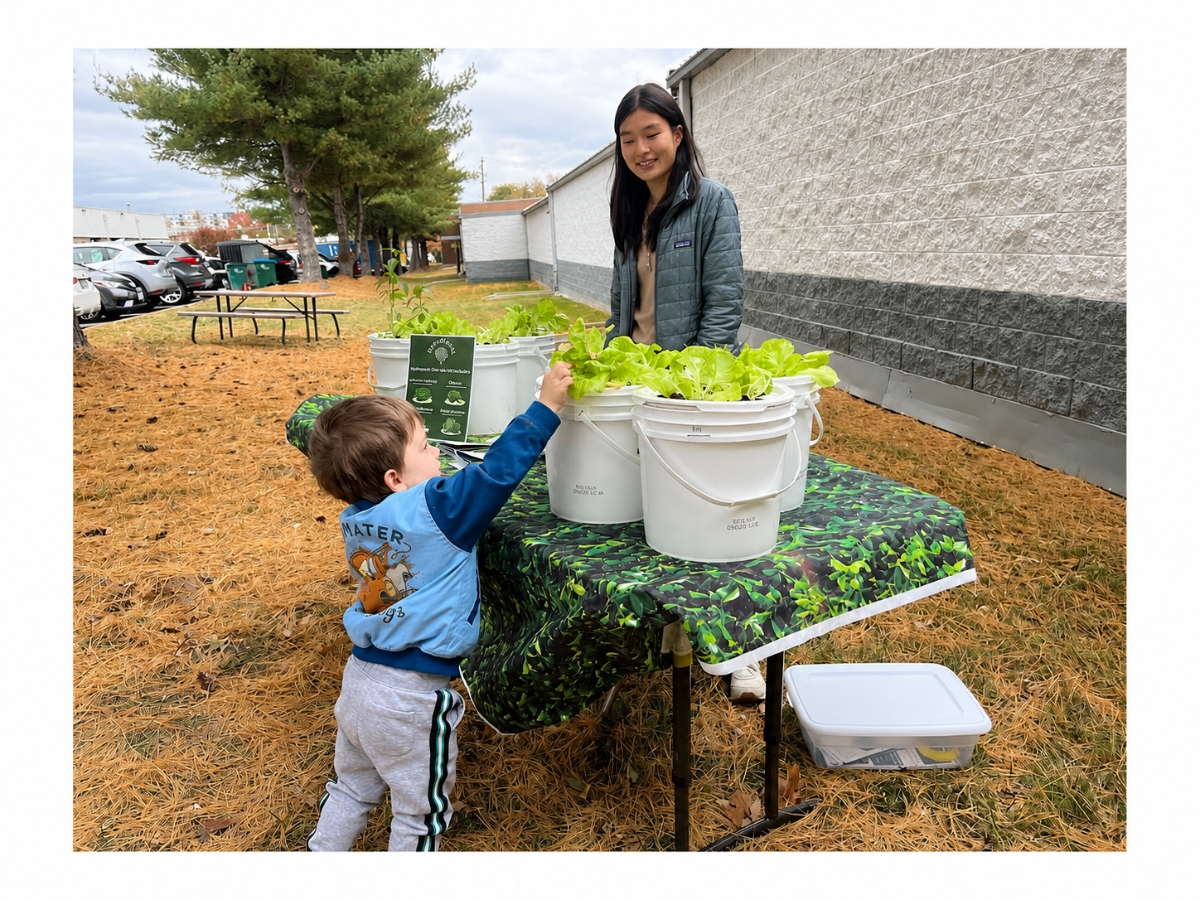
VIENNA, VA – Students in Vienna are empowering local families to grow their own produce and fight food insecurity through the student-led HydroHarvest project.
Founded by Madison High School junior Stella Hong in late 2024, HydroHarvest distributes hydroponic growing kits, organizes planting workshops and rescues surplus produce for donation to local food banks. At an event earlier in June, more than 60 students got to plant and take home their own vegetable seedlings.
The organization is built with sustainability in mind. Their grow buckets are made from recycled, food-grade containers sourced from local restaurants, helping reduce plastic waste.
Find out what's happening in Viennafor free with the latest updates from Patch.
Hong ultimately hopes to expand beyond Fairfax County and distribute toolkits and organize produce donations regionally and nationally. The organization now has a 3-person board to help envision the future, and a program to launch HydroHarvest chapters in other locations is in the works.
Hong spoke to Patch over email about what inspired her to start HydroHarvest, what she's learned, and where she hopes to take the organization.
Find out what's happening in Viennafor free with the latest updates from Patch.
Inspired by family
Hong says her grandfather inspired her interest in food security and sustainable practices and volunteering at George Mason’s President’s Park Greenhouse introduced her to hydroponics.
“Growing up, my grandfather taught me to respect my food and the land in which it comes from through gardening,” she said. “My grandfather maintained a large garden of cucumbers, tomatoes, eggplants, scallions, among other vegetables, and I loved to spend time in his garden with him.”
The pandemic reveals a new passion
The Covid-19 pandemic opened Hong’s eyes to food insecurity around her, she said. “I volunteered at a local food bank. And I saw the sheer amount of families in need. As an avid gardener and a Korean, I knew how important fresh food was for families. Not only nutritionally, but as a source of culture and community. I knew I wanted to do something to help, yet I also realized that traditional gardening excluded families who lived in apartments or cities. It could also be very time-intensive.”
Hydroponics makes gardening accessible, sustainable
Enter hydroponics. In hydroponic farming, plants get the nutrients they need to thrive not through soil, but through a nutrient solution. This means they can be grown in smaller spaces than traditional agriculture requires. “George Mason's Greenhouse grows lettuce and microgreens hydroponically, which is given to the dining hall to feed students. I was deeply inspired seeing such a large amount of people fed from a small greenhouse, and I subsequently interned at the greenhouse,” Hong explained.
Hong got the idea of creating a compact hydroponic gardening apparatus and reached out to The Sandwich Shop in Vienna to repurpose their old food-grade buckets into grow kits to give to families. “From there, HydroHarvest was created,” she said. The kits enable local households to grow food, and they also reflect her care for sustainability and the resilience agricultural systems will need in the face of climate change.
Washington area affluence masks food insecurity
Since starting HydroHarvest, Hong says she’s learned how pervasive, yet invisible, food insecurity really is. “Greater Washington is considered to be an affluent area, yet over 36 percent of households in Greater Washington struggle with food insecurity,” she notes. In addition, finding fresh food can be a challenge for the more than 19 percent of Greater Washington area residents who live in food deserts, meaning they're more than a mile from a supermarket or large grocery store.
Hong believes families deserve agency over their food choices. “When we give individuals the resources and skills to grow their own food in addition to the food itself, we are creating a system that addresses both the short-term and long-term effects of food insecurity. Families who have the resources and knowledge to grow their own food also have greater choices in the meals they cook and the food they eat,” she said.
Home garden kits inspire kids
Seeing HydroHarvest’s mission resonate with young people has been “incredibly rewarding,” Hong said. “Recently, we hosted a workshop at Vienna's Belong! organization, and I loved seeing the students’ excitement at getting to plant their own vegetables. We had one young girl come up multiple times to our workshop stand to plant more lettuce plants to take home! … I am always amazed at just how capable young people are once they become excited and engaged.”
Get involved with HydroHarvest
Hong would love to see even more community involvement with her foundation. She’s hoping to reach farmers and gardeners around Fairfax County with excess edible produce that HydroHarvest can collect and donate, as well as summer camps and youth programs that might want to host planting workshops. She says HydroHarvest also always welcomes volunteers.
A form to donate produce can be found here, and interested volunteers are encouraged to reach out through the website’s contact form.
Check out more about HydroHarvest here.
Get more local news delivered straight to your inbox. Sign up for free Patch newsletters and alerts.