Politics & Government
Lake Forest Animal Network. Part 6 - The City Responds
An analysis of the City's response

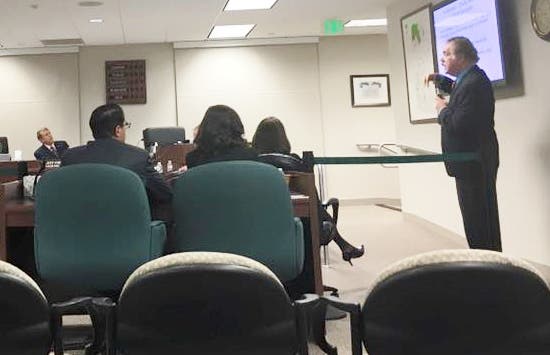
All this week we’ve been looking at a model for animal care services that will allow the City to move away from the County, from whom the City gets terrible service, inhumane care, and high kill rates. Monday we looked at the current situation with our contract with Orange County. Tuesday we looked at what an intensive analysis of the data suggests as the necessary service delivery. Wednesday we examined the way the model would function. Thursday we examined the budgetary implications of the service delivery model. Friday we looked at the advantages and disadvantages.
Thursday night the staff published their analysis of the model. Unfortunately the staff responded to an earlier version of the plan, and the plan and figures you saw this week were different from the plan that the staff evaluated. Nonetheless there were enough similarities to be able to respond.
HISTORY
Find out what's happening in Lake Forestfor free with the latest updates from Patch.
The staff at the City of Lake Forest historically has opposed doing anything about animal care except to use the County. In the past they produced flawed reports and City staff has even appeared at City Councils in other cities to oppose doing anything except use the County. They were slow to respond to the issues raised by the Grand Jury in 2015 and never truly answered the Council’s request to fully explore alternatives, which is why I had to go to the effort of developing this model. So it comes as no surprise that the City staff, once again oppose doing anything except staying with the County.
Putting aside the history, are there any issues raised in the City report that are warranted? Let’s see. Click Here to read for yourself. Let’s look at the report’s conclusions one-by-one
Find out what's happening in Lake Forestfor free with the latest updates from Patch.
PREVALENT MODEL
The report claims that working with the County is “the most prevalent model used by cities in Orange County”. In fact, the County only serves half the cities in Orange County, the other half use city and/or nonprofit services. By this time next year, RSM and LH may be linked to Mission Viejo (approved by the MV Council this week) and San Juan may be working with Dana Point, so the County will soon be contracting with fewer than half the cities. But regardless, being with the prevalent model is not necessarily a good thing.
LOGISTICAL AND COST ISSUES
The report says – “Overall, the model takes services currently provided by the County and divides them up between various organizations. This approach presents some logistical issues that likely increase staffing and operational costs.”
Dividing animal care services into animal control and animal care, and locating animal control within the City and animal care with a nonprofit is a model already in use in several cities (as noted in the report). None of the cities that used this model have abandoned it, so the model must be working. In fact, contrary to the conclusions in the report, this model may be less costly, since City salaries, benefits, and costs are considerably higher than the nonprofit model.
Conclusion – Reject this comment.
FURTHER CLARIFICATION
The report says – “Staff found areas that require further clarification regarding LFAN’s governance structure, intake policies, euthanasia policies, recruitment and training of personnel, and whether the organization has sufficient cash-flow to sustain its operations…”
This is not entirely true, but there is no question that the details need to be worked out. This is a conceptual model along with data and cost estimates to see whether or not there is the potential to move forward. This can easily be done by the staff.
Conclusion – Yes, more follow-up needs to be done.
ANIMAL WELFARE COMMISSION
The report says – “The City would need to appoint an Animal Welfare Commission and provide some level of staff support to develop policy recommendations regarding animal welfare issues and provide other analyses.”
This would be a good thing but it isn’t “needed”. The Commission could give us good advice about the dog park(s), animal issues in general, and the LFAN model as well. Other cities have animal welfare commissions. But the report is incorrect when it says “the City would need”. LFAN can exist without an Animal Welfare Commission, but an Animal Welfare Commission would be a good thing for the City.
Conclusion – Reject as there is no “need”.
MORE DATA
The report says – “Additional years of data are required to identify the trends in the animal population, thereby, resulting in a more reliable intake number projection.”
Absolutely. The more data the better. I used 5 years’ worth of intake and field service data, and one year of day-by-day analysis. Would we benefit from even more? Sure. But bear in mind, most decisions made by the City never have this much data, and yet the City spends millions of dollars. We are right now talking about a new Senior Center yet the City has not looked at how many unique people attend our programs, what the trend is over the past 5 years, etc.
Conclusion – Reject. More data is better, but not “required”.
DATA BASED DECISION MAKING
The report says – “The Proposal’s use of average daily number of animals provides a general barometer of the program’s activities; however, this metric cannot completely support the conclusions drawn from the data.”
Notice that the report says “completely support” but does not give any indication of what data would be needed apart from the data provided. In addition, the report neglects the fact that we have not merely “average daily number” but also range, and we use not only intake but also capacity. Just to use a comparison, Mission Viejo agreed to accept RSM and LH without knowing average daily capacity. In fact, this figure is more detailed than any report I have ever encountered and I personally have read hundreds of reports.
Conclusion - Reject
NO-KILL
The report says – “Should the Proposal pursue the “no-kill” model, which requires a save-rate of at least 90%, then the program could potentially experience higher than anticipated numbers of animals.”
“No kill” is a philosophy, not a number.
The proposal was designed to build in an anticipated higher number of animals going through the system, so the report is wrong. Could the increase be even higher than anticipated? Of course. Could it be lower? Of course.
Conclusion - Reject
REVENUE
The report says – “Staff found that the projections cannot be initially supported by evidence in the OCAC data. For example, the highest amount of revenue generated by the OCAC in the field services category was $375,000. The original Proposal included $540,000 in licensing revenue, including cat licenses.”
The projections are all explained. As well, there is a worst case scenario in which the projections are reduced. But the truth is that no one can project revenue. This year the County asked for an additional $60,000 from the City because their past projections were incorrect. No one can predict the future. Staying with the County subjects the City to the unknowns just as well as using the LFAN model.
Conclusion - Reject
STAFFING
The report says – “Staff believes that the original Proposal could potentially be understaffed and suggests additional positions based on additional research.”
The latest proposal was adjusted to alleviate the staff’s concern about under-staffing. By my judgment, we are now over-staffed, but it’s better to be over-staffed at the beginning.
Conclusion – Accept, but has been adjusted.
EVALUATION
The report says – “As noted, given that this is an unexplored model, staff cannot offer a comparison to similar programs. Staff believes that given the proposed program’s significant 4 importance (SIC) as a public safety and animal care services program, it would be prudent to undertake further analysis by an independent party that regularly evaluates programs similar to the one proposed in the event the City Council desires to advance the Proposal.”
If the program is “unexplored” how do you find “an independent party that regularly evaluates programs similar to the one proposed.” All the elements of this program have been tested and are well documented. What is unique is the removal of the “shelter” since the needs of the residents and animals do not warrant a shelter in the formal sense. Using a shelter operator, as the staff did, to evaluate a “no shelter” program hardly meets this criteria.
Conclusion - Accept
SUMMARY
Though some of the conclusions in the report are accurate, most are flawed or simply incorrect.
Incorrect conclusions
- · The County is the “prevalent” model. It isn’t.
- · Using nonprofit services are likely to be more expensive. They are likely to be less expensive.
- · There are logistical issues that are problematic. These issues have already been handled by several California cities.
- · An Animal Welfare Commission is “needed” in order to implement this plan. It would be nice to have regardless of this model, but it isn’t “needed.”
- · Additional years of data are “required” to identify the trends. The City has never had this much data before.
Flawed conclusions
- · The program could potentially experience higher than anticipated numbers of animals. A higher number was anticipated in the latest model, but regardless, the County cannot predict the future any more than anyone else can. No one knows if the animal count is going to go up or down, and this impacts the County as much as it impacts the City.
- · Staff cannot offer a comparison to similar programs. True, but each of the components in the program is tried and true and well-documented.
- · The original proposal was “understaffed”. That may have been true of the original proposal, but wasn’t true of the latest version.
- · Average daily number of animals is not a complete metric may be true, but it’s not the only metric used. The proposal contains capacity range as well as admission and outcome data. Taken together this is more data analysis than almost every other needs assessment in the animal care area.
Accurate conclusions
- · There needs to be further clarification regarding governance structure, intake policies, euthanasia policies, recruitment and training of personnel, etc.
- · It would be prudent to undertake further analysis by an independent party that regularly evaluates programs similar to the one proposed
Tomorrow we’ll look at some of the other issues raised in the staff report.
ABOUT THE AUTHOR
Dr. Jim Gardner is on the City Council for Lake Forest. You can check him out on LinkedIn and/or Facebook and you can share your thoughts about the City at Lake Forest Town Square on Facebook. His comments are not meant to reflect official City Policy.
Dr. Gardner has office hours every Tuesday from 4 pm to 6 pm at the City Hall. In addition, he holds a Town Hall meeting every quarter. The next meeting will be on March 26 at 2 pm at the Foothill Ranch Public Library.
X=